Waiting Times at Public A&E: What Category 4 and 5 Actually Mean
Walking into a crowded Hong Kong public hospital waiting room at 2 AM while nursing a high fever or a painful injury is a stressful rite of passage for many residents. I remember sitting on those hard plastic chairs at Queen Mary Hospital for seven hours, watching the digital clock tick toward dawn, wondering why I was being ignored. This guide solves the mystery of the triage system, explaining exactly why Category 4 and 5 patients wait the longest and how you can navigate the system more effectively.
The Triage Reality in Hong Kong Public Hospitals
If you have lived in Hong Kong for even a short time, you know that the public healthcare system, managed by the Hospital Authority, is both a marvel and a source of immense frustration. It is world-class in its clinical outcomes but often overwhelmed by the sheer volume of patients. When you arrive at an Accident and Emergency (A&E) department, you are not seen in the order you arrived. Instead, you are immediately funneled through a triage station where a nursing officer assesses your clinical condition.
This assessment determines your priority on a scale of 1 to 5. While the system is designed to save lives, it can feel incredibly dismissive to those on the lower end of the urgency scale. Understanding Healthcare in Hong Kong: Public vs Private Systems Explained (2027) is the first step in managing your expectations. The public system prioritizes "life over limb," meaning if you aren't in immediate danger of dying, you are automatically moved behind those who are.
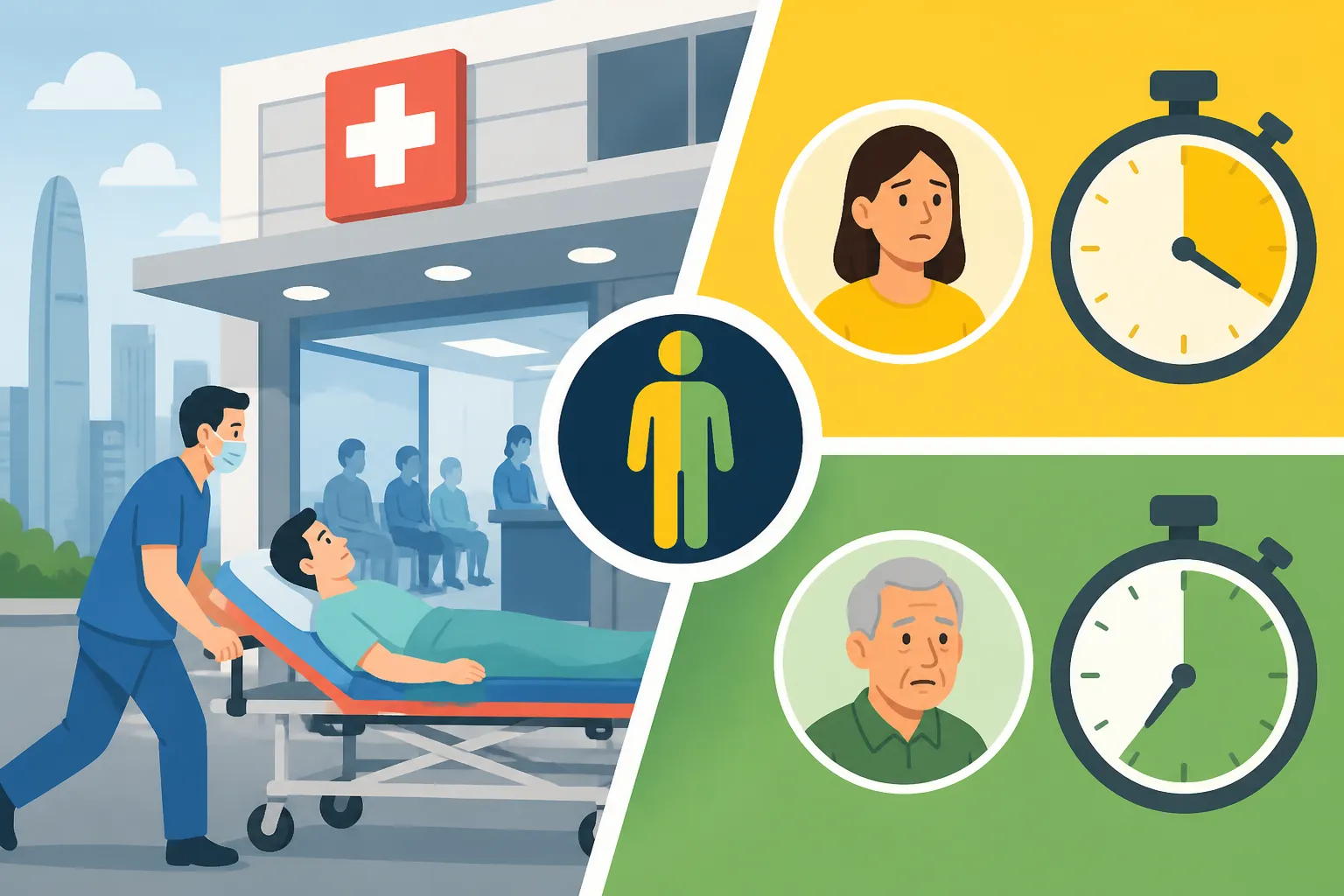
The triage process is governed by strict protocols. The nurse will check your vital signs—blood pressure, pulse, oxygen saturation, and temperature—and ask about your medical history. This is where your category is assigned. If you are assigned Category 1 (Critical), Category 2 (Emergency), or Category 3 (Urgent), you are the priority. However, the vast majority of walk-in expat patients find themselves labeled as Category 4 or 5. This is where the long wait begins, often stretching past the eight-hour mark during flu season or public holidays.
Decoding Category 4: Semi-Urgent Cases
Category 4 is officially labeled as Semi-Urgent. In the eyes of a triage nurse, this means your condition is stable, but you do require medical attention eventually. Think of this as the "grey area" of the A&E department. You aren't bleeding out, and you aren't having a heart attack, but you are clearly unwell or in pain.
Typical Conditions for Category 4
Common scenarios that land you in Category 4 include minor fractures, stable abdominal pain (like mild gastritis), or high fevers that haven't responded to over-the-counter medication but aren't accompanied by seizures or respiratory distress. If you’ve suffered a sports injury—perhaps a nasty sprain while hiking in Sai Kung—you will likely be placed here. While it feels like an emergency to you, the system views you as someone who can safely wait while the doctors stabilize a Category 1 patient from a car accident.
Why the Wait for Category 4 is Unpredictable
The biggest frustration with Category 4 is that there is no "target" waiting time that the hospital is legally bound to meet. For Categories 1 through 3, the Hospital Authority sets targets (e.g., 90% of Category 3 patients should be seen within 30 minutes). For Category 4, you are essentially at the mercy of how many "urgent" cases come through the door. If a string of ambulances arrives, your wait time resets. This is why having a plan like Private Health Insurance Plans Beyond VHIS for Expat Families or a global policy from Cigna Global can be a literal lifesaver, allowing you to bypass these queues by heading to a private facility instead.
Decoding Category 5: Non-Urgent Cases
Category 5 is the lowest priority. These are cases that, in a perfect world, should probably be handled by a primary care physician or a general practitioner rather than an emergency room. However, because public A&E fees are relatively low for HKID holders, many people use them as a "catch-all" clinic, especially late at night when private clinics are closed.
Typical Conditions for Category 5
If you are suffering from a common cold, a minor skin rash, a sore throat, or need a prescription refill, you will almost certainly be tagged as Category 5. Many people wait ten hours for a simple medical certificate for work because they didn't realize that Finding English-Speaking General Practitioners (GPs) in Central would have been a much faster, albeit more expensive, route. In the triage nurse's view, a Category 5 patient is someone whose condition will not deteriorate if they wait several hours.
The Psychological Toll of Category 5
The wait for Category 5 is often grueling. You will see people who arrived hours after you being called into the consultation rooms simply because their condition is more "interesting" to the triage algorithm. It is not uncommon for Category 5 patients at busy hospitals like Queen Elizabeth or Prince of Wales to wait upwards of 10 to 12 hours. During these times, it is worth considering if your condition can wait until the morning or if you have the resources to visit Private Hospitals in Hong Kong: Admission, Costs, and Insurance where the wait is usually measured in minutes rather than hours.
| Triage Category | Status | Target Waiting Time | Typical Examples |
|---|---|---|---|
| Category 1 | Critical | Immediate | Cardiac arrest, major trauma |
| Category 2 | Emergency | 15 Minutes | Impending stroke, severe burns |
| Category 3 | Urgent | 30 Minutes | Major bone fractures, severe pneumonia |
| Category 4 | Semi-Urgent | No Target | Minor fractures, stable fevers |
| Category 5 | Non-Urgent | No Target | Mild flu, skin rashes, sore throats |
Managing the Wait and Knowing Your Alternatives
If you do find yourself in a public A&E ward, there are a few tactical things you can do. First, check the "HA Go" app or the Hospital Authority website. They provide real-time updates on waiting times across all public hospitals. Sometimes, taking a taxi from a crowded hospital in Kowloon to a slightly less busy one in the New Territories can actually save you hours. You should also refer to the Hospital Authority (HA) Guide: Accessing Public Healthcare for Expats to ensure you have your HKID ready to secure the subsidized rate.
Using the HA Go App
The Using the HA Go App for Booking Public Outpatient Clinics is a tool every expat should have on their phone. While it won't help you jump the A&E queue, it can help you find nearby "General Out-patient Clinics" (GOPCs) that might have slots for non-urgent issues. If you are a Category 5, you are often better off booking a GOPC appointment for the next morning rather than sitting in a germ-filled waiting room all night.
When to Go Private
If you have international coverage through a provider like SafetyWing, the equation changes. Public A&E is excellent for trauma, but for semi-urgent "Category 4" issues, the comfort and speed of a private hospital are incomparable. Many expats carry a base level of local insurance but supplement it with SafetyWing or Cigna Global to ensure they have the option of private care for non-life-threatening emergencies. For those without high-end insurance, Hospital Authority Fees: Eligible Persons (EP) vs Non-Eligible Persons (NEP) are still very affordable, but the "cost" is your time.
Navigating the Financial and Administrative Hurdles
Before you even head to the A&E, you need to understand the cost structure. If you hold a valid HKID, you are an "Eligible Person." If you are a tourist or on a short-term visa without an HKID, the costs at a public A&E are significantly higher. You can find the specific breakdown in our guide on Accident and Emergency (A&E) Triage Categories in Public Hospitals.
The Importance of Documentation
Always bring your original HKID and, if possible, a list of any medications you are currently taking. If you are an expat with a complex medical history, having this information in English is helpful, as most doctors in the public system are fluent, though the support staff may primarily speak Cantonese. If the situation is dire and you need to call for help, knowing What to Say When Calling 999 for a Medical Emergency can help the dispatchers categorize you correctly before you even reach the hospital doors.
Payment Methods
Public hospitals are becoming more digital, but it is always wise to carry multiple forms of payment. While many now accept credit cards and mobile payments, some smaller clinics or specific hospital functions still prefer the Octopus card or cash. Ensure your Octopus is topped up before you leave the house; it’s one less thing to worry about when you're feeling miserable.
Practical Strategies for Category 4 and 5 Patients
If you are determined to use the public system as a Category 4 or 5, timing is everything. Generally, the busiest times are Monday mornings (when people seek medical certificates after the weekend), late evenings after work, and any time during a long public holiday like Chinese New Year. If your condition allows, Tuesday or Wednesday afternoons are often the quietest periods.
Always pack a "waiting kit." This sounds extreme, but given the 8-hour potential wait, having a power bank for your phone, a bottle of water, and a light jacket (hospital air conditioning in Hong Kong is notoriously freezing) will make the experience much more bearable. If you find your condition worsening while you wait—for example, if you were a Category 4 but start feeling dizzy or develop breathing difficulties—you must inform the triage nurse immediately. They can and will re-categorize you if your clinical status changes.
For those who simply cannot bear the wait, utilizing a global policy from Cigna Global allows you to walk into world-class facilities like the Matilda International Hospital or the Hong Kong Adventist Hospital. In these settings, the "triage" usually results in you being seen by a doctor within 20 to 30 minutes, regardless of whether you have a sore throat or a broken toe. This convenience is why many expats prioritize high-quality insurance like SafetyWing or Cigna Global as a non-negotiable part of their Hong Kong budget.
Summary of Emergency Contacts and Services
Before an emergency happens, save the local emergency number (999) and the addresses of the nearest hospitals to your home and office. If you live on the Island, you’ll likely head to Queen Mary or Ruttonjee. In Kowloon, it’s often Queen Elizabeth or Kwong Wah. Each has its own rhythm and wait times.
Remember that for minor ailments, the Pharmacies and Medication in HK: Prescriptions and OTC Rules can sometimes provide a quicker solution than a hospital visit. A registered pharmacist at a local Watsons or Mannings can often recommend over-the-counter treatments that save you a trip to the A&E altogether. However, never gamble with your health; if you feel something is seriously wrong, the public A&E is there to help, provided you have the patience to wait your turn.
Medical Information Disclaimer
The information provided in this article is for informational and educational purposes only and does not constitute professional medical advice, diagnosis, or treatment. Always seek the advice of your physician or other qualified health provider with any questions you may have regarding a medical condition. Never disregard professional medical advice or delay in seeking it because of something you have read in this guide. In the event of a medical emergency in Hong Kong, immediately dial 999 for assistance.