Overcoming Language Barriers with Pediatricians in the Public System
Standing in a crowded A&E ward at Queen Mary Hospital with a crying toddler is stressful enough without the crushing realization that the triage nurse is speaking Cantonese at breakneck speed. I once spent four hours nodding blankly during a midnight emergency visit before realizing I had completely misunderstood the dosage instructions for my son's nebulizer. This guide solves the communication hurdles you will inevitably face when navigating Hong Kong's public pediatric system as a non-Cantonese speaker.
Navigating the Hospital Authority Infrastructure for Children
The public healthcare system in Hong Kong, managed by the Hospital Authority (HA), is world-class in terms of clinical outcomes and affordability, but the administrative experience can feel like an impenetrable fortress for expats. While English is an official language, the reality on the ground at a busy public clinic in Sham Shui Po or Sha Tin is that Cantonese is the primary language of operation. For parents, this creates a layer of anxiety that often leads to misunderstandings regarding treatment plans and follow-up care.
The first hurdle is understanding your status within the system. To access the subsidized rates that make the public system so attractive, you must ensure you are Registering Your HKID for Subsidized Public Healthcare Rates. Without this, you fall into a different pricing bracket, which is detailed in our guide on Hospital Authority Fees: Eligible Persons (EP) vs Non-Eligible Persons (NEP). For children, their eligibility is typically tied to their dependency on a parent with a valid HKID, but you must present original birth certificates and visas during the initial registration at any public hospital’s patient registration counter.
In a public pediatric ward, the staff-to-patient ratio is often high. Doctors are highly trained—many have studied in the UK, Australia, or the US—and their medical English is usually excellent. However, the frontline staff, including triage nurses, healthcare assistants, and administrative clerks, may have varying levels of English proficiency. This is where the "language barrier" actually exists; it is rarely with the specialist consultant and almost always with the gatekeepers who manage the flow of patients and the execution of daily care.
Practical Strategies for Communication in Public Clinics
When you arrive at a public hospital for an emergency, you will first encounter the triage station. It is vital to understand the Accident and Emergency (A&E) Triage Categories in Public Hospitals because your ability to clearly articulate your child's symptoms determines how quickly you are seen. If you cannot explain the severity of a high fever or a persistent cough, your child might be placed in Category 4 or 5, leading to a wait of six hours or more.
One of the most effective ways to bypass initial verbal confusion is by Using the HA Go App for Booking Public Outpatient Clinics. This app is the digital backbone of the public system and offers a robust English interface. By using the app, you can book appointments for General Outpatient Clinics (GOPCs) without having to struggle through a phone booking system that is notoriously difficult for English speakers. Furthermore, the app stores your child's dispensed medication records, which allows you to show a pharmacist or a private doctor exactly what has been prescribed, eliminating the risk of miscommunication regarding drug names.
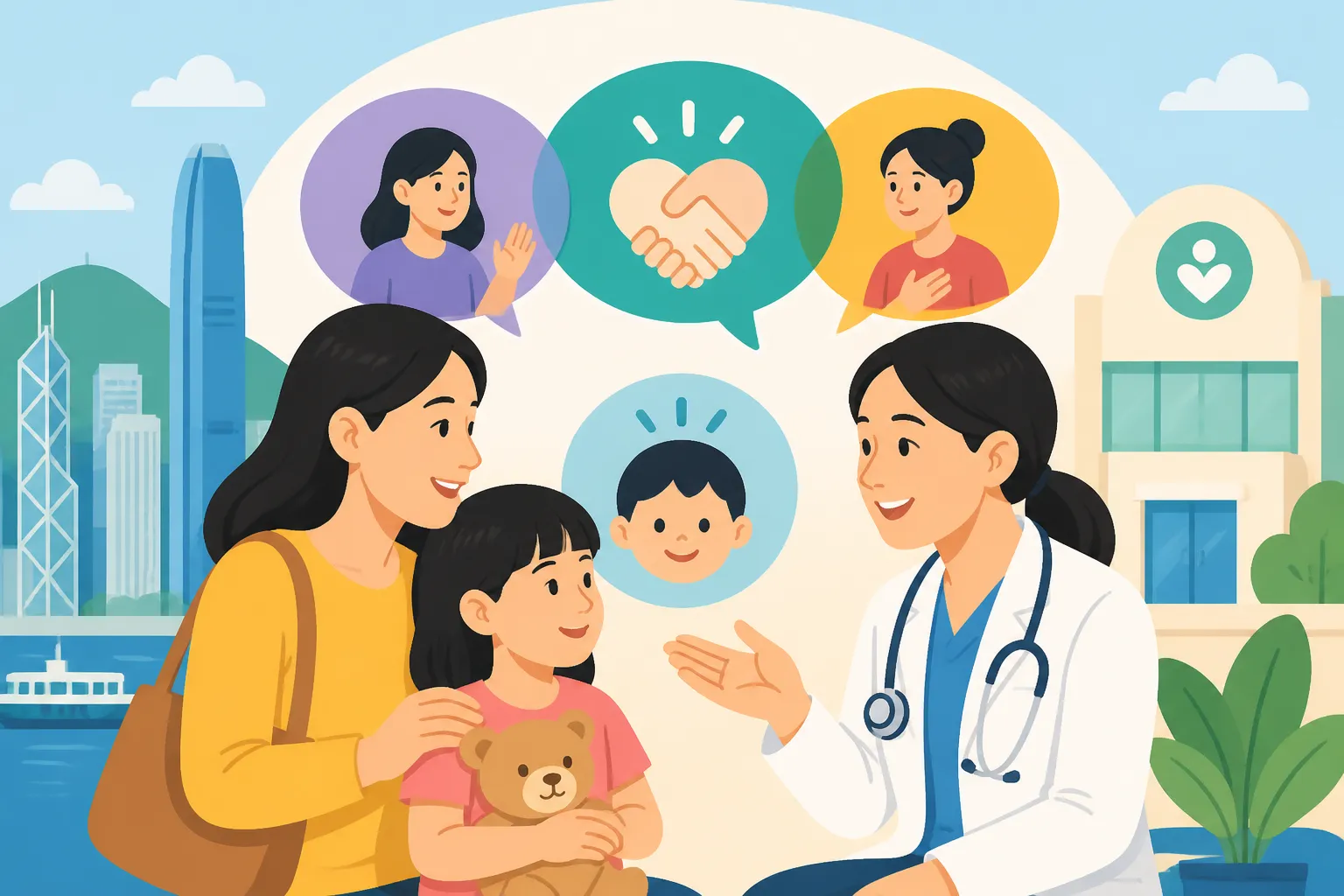
If you find yourself in a situation where the language gap is compromising care, you have a right to ask for an interpreter. The Hospital Authority provides free interpretation services in over 20 languages, including English, French, Tagalog, and Hindi. However, these are often provided via a telephone interpretation service rather than an in-person staff member. Do not be afraid to say, "I need an English interpreter, please," and wait for them to dial the service. It is far better to delay a conversation by ten minutes than to agree to a surgical procedure or a medication change that you don't fully understand.
| Communication Channel | Language Accessibility | Best Use Case |
|---|---|---|
| HA Go App | High (Full English Interface) | Booking appointments and checking lab results |
| Triage Nurses | Moderate to Low | Explaining immediate physical symptoms |
| Senior Consultants | High (Medical English) | Discussing long-term treatment and diagnosis |
| Ward Assistants | Low | Requesting basic needs like water or extra blankets |
| Pharmacy Staff | Moderate | Clarifying dosage and potential side effects |
Bridging the Gap with Private Support and Insurance
For many expat families, the "wait and see" nature of the public system, combined with the language friction, becomes a significant pain point. This is why many maintain a hybrid approach to healthcare. You might use the public system for major emergencies or specialized surgeries where the costs in the private sector would be astronomical, but rely on the private sector for routine pediatric care and general illnesses.
The ease of Finding Expat-Friendly Pediatricians and Family Doctors in areas like Central, Repulse Bay, or Tsim Sha Tsui cannot be overstated. In these clinics, the entire ecosystem is designed for English speakers, from the reception desk to the billing department. However, this convenience comes at a price. Without a robust insurance policy, a single consultation and a round of antibiotics can easily exceed HKD 1,500. For families who want to ensure they can skip the public queues and the language hurdles, having a plan from Cigna Global is a common strategy. Cigna Global provides the kind of comprehensive inpatient and outpatient coverage that allows you to access Private Hospitals in Hong Kong: Admission, Costs, and Insurance without a second thought about the bill.
If you are in Hong Kong as a digital nomad or on a shorter-term visa, you might look into SafetyWing. While SafetyWing is often associated with travel medical insurance, it provides a crucial safety net for families who find the public system's bureaucracy too difficult to navigate and need a way to fund visits to private clinics. Having this backup means that if you are struggling to communicate at a public hospital, you have the financial freedom to leave and head to a facility like the Matilda International Hospital or Hong Kong Adventist Hospital, where English is the primary language of all staff.
For those who are strictly using the public system, it is helpful to have a list of Finding English-Speaking General Practitioners (GPs) in Central who can provide a secondary opinion or a clearer explanation of a public hospital's findings. Sometimes, paying for a 20-minute private consultation just to have a doctor translate the "hospital-speak" from a public discharge paper into plain English is the best investment you can make for your peace of mind.
Essential Preparation for a Public Hospital Visit
Preparation is your greatest weapon against a language barrier. Never head to a public clinic or A&E without a "medical folder" for your child. This folder should contain their HKID (or birth certificate/visa), a list of all current medications, a record of their immunization history, and a written timeline of their current symptoms. Writing down symptoms—for example, "Fever started at 10 PM, reached 39.5 degrees, vomiting twice"—is far more effective than trying to explain it verbally to a busy nurse who may be juggling three other patients.
When you are in the consultation room, do not be afraid to use translation apps, but use them wisely. "Voice-to-text" translation can often mangle medical terminology. It is better to use a tool like Google Lens to translate Chinese labels on medication bottles or printed instructions. If a doctor tells you something you don't understand, ask them to write it down. Most doctors are happy to write the diagnosis or the name of a specialist in English, which you can then research later.
Finally, consider the role of Private Health Insurance Plans Beyond VHIS for Expat Families as a long-term solution. While the local Voluntary Health Insurance Scheme (VHIS) is excellent for tax benefits, it is often designed around local hospital ward standards. International plans from providers like Cigna Global are more attuned to the needs of the expat community, offering higher limits for private rooms where communication is generally much smoother and the environment is less chaotic than the public "big wards."
Even with the best insurance, there will be times—perhaps during a T8 typhoon or a major accident—when the public system is your only option. In those moments, remember that the medical care is excellent, even if the "service" and communication feel lacking. Stay calm, use your HA Go app, and insist on clarity before you leave the building. The system is designed to save lives, and as long as you are persistent and prepared, the language barrier is a hurdle you can certainly overcome.
For those who travel frequently around the region, remember that SafetyWing can also provide coverage for emergency medical evacuations if you happen to be outside of Hong Kong when a pediatric emergency strikes. Having that layer of protection, alongside a solid understanding of the local public system, ensures that your child is protected no matter where the language barriers might arise.
Disclaimer
The information provided in this guide is for educational and informational purposes only and does not constitute professional medical or legal advice. Hong Kong’s healthcare policies, Hospital Authority regulations, and insurance coverage terms are subject to change. Always consult with a qualified medical professional or a licensed insurance broker regarding your specific circumstances. We do not guarantee the accuracy of third-party services or the current availability of specific hospital staff.