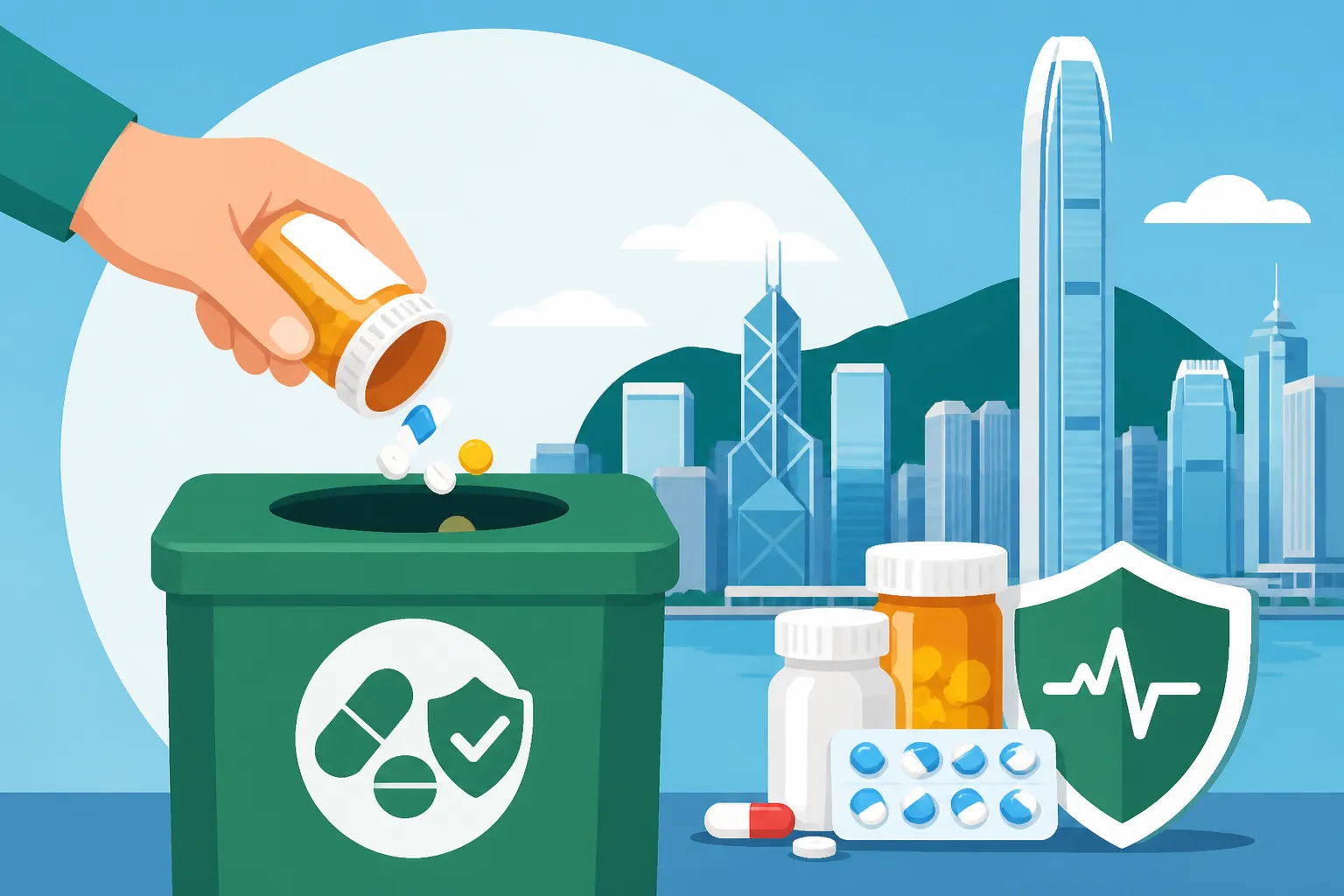
Where to Dispose of Expired Prescription Medications Safely in HK
You are staring at a cluttered medicine cabinet in your Mid-Levels flat, wondering if those antibiotics from three years ago are still safe or how to toss them without poisoning the harbor. I once spent an entire Saturday trying to find a pill dropbox only to realize Hong Kong does not make it as obvious as back home. This guide solves exactly how and where to safely dispose of expired medications in Hong Kong while protecting your family and the environment.
The Hidden Danger of Hoarding Meds in Hong Kong Humidity
We have all been there. You visit a doctor for a nagging cough, and you walk away with five different brown paper bags filled with pills, syrups, and powders. Because the medical culture here often involves dispensing exact counts of pills for a specific course, we end up with a mountain of leftovers. If you have been living here through a few summers, you know that the 90 percent humidity does more than just ruin your leather shoes; it wreaks havoc on chemical stability.
I remember finding a blister pack of common painkillers that had literally turned into a sticky, discolored mess after just one season in a non-dehumidified cupboard. This is a common struggle when Dealing with Mold Allergies and Eczema Flare-ups in HK Apartments because we tend to stock up on antihistamines and creams that expire faster than we can use them.
Beyond the risk of taking ineffective or degraded medication, the environmental impact in a city as dense as Hong Kong is massive. Our water treatment plants are sophisticated, but they are not designed to filter out complex pharmaceutical compounds. When you flush pills down the toilet or toss them into the regular trash without preparation, those chemicals eventually find their way into the marine ecosystem of the South China Sea. For those of us with comprehensive plans like Cigna Global, we often have access to high-end prescriptions that are quite potent, making it even more vital that they do not end up in the local water supply.
Official Disposal Channels and the Hospital Authority Reality
The first thing most expats do is head to the nearest public hospital, assuming there is a dedicated bin for old meds. Unfortunately, it is not always that straightforward. The Hospital Authority (HA) Guide: Accessing Public Healthcare for Expats notes that public hospitals are primarily set up to manage clinical waste generated within their own walls. However, there is a specific protocol if you have leftover medications from an HA facility.
If your medication was originally dispensed by a public hospital or an Outpatient Clinic, you can technically return the unused portions to the pharmacy department of that same cluster. I have found that if you approach the pharmacy counter at Queen Mary or Pamela Youde with a clear explanation, they are generally helpful, though they may ask to see your dispensing label. This is particularly important for controlled substances or heavy-duty psychiatric medications. If you are navigating Public vs Private Psychiatric Care: Waiting Times and Costs, you likely know that these medications require much stricter handling than a standard bottle of paracetamol.
For those using private facilities, the rules change slightly. If you are frequenting Private Hospitals in Hong Kong: Admission, Costs, and Insurance, you should check with their specific in-house pharmacy. Many top-tier private hospitals will accept returns of medications they dispensed, ensuring they are incinerated according to chemical waste standards. It is a bit of a "return to sender" system that requires a bit of organization on your part.
Navigating Community Pharmacies and Retailers
If you cannot make it back to the original hospital, your next thought is likely the big green and orange signs of Watsons or Mannings. This is where it gets tricky for us foreigners. While these stores are everywhere, only those with a "Rx" sign and a registered pharmacist on duty are equipped to give professional advice on disposal. You can learn more about this in my guide on The Difference Between Registered Pharmacies (Rx) and Drug Stores.
I have walked into several Watsons in Central with a bag of expired meds only to be told they cannot take them. The reality is that there is currently no city-wide, mandatory "take-back" program for community pharmacies in Hong Kong for general household medical waste. However, some individual pharmacists are willing to help you neutralize the meds or point you toward the nearest chemical waste collection point if the medication is particularly hazardous.
When you are out buying Over-the-Counter (OTC) Medicines in HK: Watsons, Mannings, and Rx, it is worth asking the pharmacist if they have a collection partner. Some high-end pharmacies in expat-heavy areas occasionally run "green pharmacy" drives. If you are covered by an international plan like Cigna Global, you might also have access to a dedicated concierge who can locate the nearest certified chemical waste handler for you, especially if you are disposing of specialty medications for chronic conditions.
The Expat Survival Guide to At-Home Disposal
Since Hong Kong lacks a ubiquitous "blue bin" for pills, many of us have to resort to the household waste stream. But please, do not just toss the bottle in the bin. There is a specific "safety protocol" I followed when I had to clear out a decade's worth of supplies before a big move. This method prevents kids, pets, or waste collectors from accidentally coming into contact with the drugs.
First, remove all personal information. Privacy is a big deal here, and you do not want your name and prescription details sitting in a communal trash room. Black out your name and the name of the clinic on the label. Next, for pills, do not crush them (this can release dangerous dust), but mix them with something deeply unappealing. In a high-rise, kitty litter or used coffee grounds work best. Place the mixture in a sealable plastic bag.
For liquids, the process is messier. If you are managing Pharmacies and Medication in HK: Prescriptions and OTC Rules, you might have large bottles of cough syrup or liquid supplements. Pour the liquid into a bag of sawdust or absorbent paper towels until it is fully soaked up, then seal it tightly. This prevents the liquid from leaking out of the trash bags and into the building's drainage system during the humid rainy season.
| Medication Type | Recommended Disposal Method | Where to Go |
|---|---|---|
| Public Hospital Prescriptions | Return to dispensing pharmacy | Original HA Hospital Pharmacy |
| Controlled Substances | Professional incineration only | Original Dispensing Doctor/Hospital |
| Standard OTC Pills | Household waste (mixed with coffee) | Residential Trash Room |
| Syringes / Sharps | Sharps container to clinical waste | Private Clinics or HA Hospitals |
| Antibiotics | Never flush; bag with absorbent material | Registered Pharmacist (Rx) |
Specialized Handling for Sharps and Chronic Care Meds
If you or a family member are Managing Chronic Conditions: Diabetes and Hypertension in HK, you likely deal with more than just pills. Syringes, lancets, and needles—collectively known as "sharps"—are classified as clinical waste in Hong Kong. It is illegal and dangerous to put these in the regular green trash bags.
I once had a neighbor whose domestic helper accidentally got pricked by a needle in a shared trash bin. It was a nightmare of blood tests and anxiety that could have been avoided. If you are an employer, part of your Health Requirements and Medical Exams for Domestic Helpers should involve educating your staff on how to handle medical waste in the home.
You should request a yellow "Sharps Box" from your doctor or hospital. Once full, these must be returned to a designated clinical waste collection point. Many private practitioners in Central or Tsim Sha Tsui will accept these boxes back from their patients. If you are a digital nomad or traveler using SafetyWing, you might be moving around frequently; in this case, always keep a portable, hard-shell sharps container in your kit to ensure you are not leaving dangerous waste in hotel bins.
International Move Prep: What to Do Before You Leave HK
If you are at the end of your 7-year journey and preparing to leave the territory, the "Great Medicine Purge" is inevitable. You cannot simply take everything with you, especially if you are Prescription Drug Laws: Bringing Foreign Medication into Hong Kong in reverse for your next destination. Most countries have strict limits on the quantity of meds you can import.
During my last relocation, I realized I had accumulated several boxes of specialized medications through How to Get Repeat Prescriptions from a Public Hospital Pharmacy. I had to coordinate with the Environmental Protection Department (EPD) for a one-time bulk disposal of certain chemical items. For the average expat, the best strategy is to start tapering off your refills three months before you leave and use the "coffee ground method" for the small leftovers.
If you have unused, unexpired, and sealed boxes of common medications, some local charities and NGOs occasionally accept them for underprivileged communities or for use in animal shelters, though the legalities are strict. Always consult with a professional at a clinic where you found Finding English-Speaking General Practitioners (GPs) in Central to see if there is a legal way to donate life-saving meds rather than wasting them. For those insured through SafetyWing, your travel coverage usually does not cover the "disposal" of meds, but their support team can often provide a list of local English-speaking facilities that follow international environmental standards.
Important Disclaimer
This guide is for informational purposes only and does not constitute legal or professional medical advice. Waste disposal regulations in Hong Kong can change, and you should always verify with the Environmental Protection Department or your healthcare provider before disposing of hazardous materials. The author is not responsible for any environmental or health issues arising from the use of the methods described.