Public vs Private Psychiatric Care: Waiting Times and Costs
Living in the high-pressure pressure cooker that is Hong Kong can take a toll on even the most resilient souls. I remember my second year in the city, overwhelmed by the relentless pace and the tiny apartment walls closing in, only to realize that finding mental health support was another mountain to climb. This guide navigates the complexities of public and private psychiatric care to help you find timely, affordable help.
The Reality of Mental Health Support in Hong Kong
When you first arrive, the city’s energy is infectious, but the "work hard, play hard" culture often masks a significant mental health burden. For expats, the isolation of being away from support networks, combined with the professional pressure of high-stakes industries, can lead to a quick decline in well-being. Validating your struggle is the first step; the second is understanding that the system here is split into two very different worlds.
Navigating the Cultural Stigma and the Expat Bubble
In Hong Kong, mental health has historically been a sensitive topic, often shrouded in a layer of social stigma that can make local colleagues hesitant to discuss it. While this is changing rapidly with the younger generation, it still affects how services are structured. As an expat, you might feel you are living in a bubble where everyone is "crushing it," making it even harder to admit when you are not okay. Many people wait until a total burnout before seeking help, simply because they didn't want to seem like the "weak link" in their firm.
The "Expat Bubble" also means that you are often directed toward high-end private clinics in Central or Tsim Sha Tsui. While these offer excellent care, they are not the only option. However, the cultural nuance of the local system can be jarring if you aren't prepared. In the public sector, the focus is often on high-volume, clinical management, which can feel impersonal if you are used to the long, conversational therapy sessions common in the West. Bridging this gap requires a clear understanding of what each system provides.
The Bifurcated System: Public vs. Private
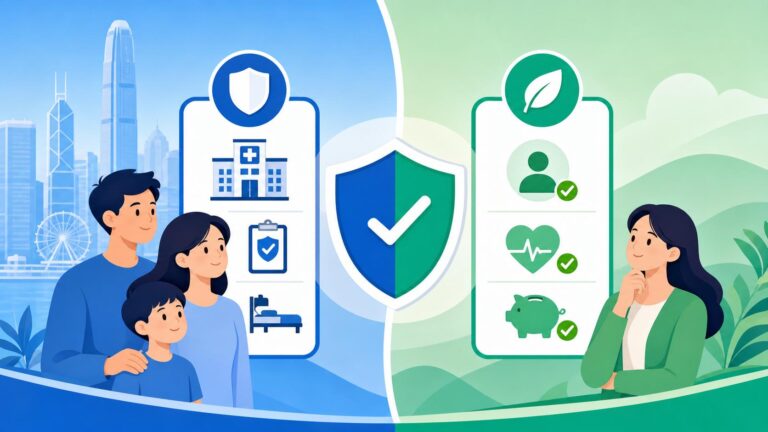
The Healthcare in Hong Kong: Public vs Private Systems Explained (2027) is a tale of two extremes. On one side, you have the Hospital Authority (HA), which provides heavily subsidized care for residents. On the other, you have a thriving private sector that caters to those with comprehensive insurance or deep pockets. The psychiatric landscape follows this exact divide.
In the public sector, psychiatrists are hospital-based and work within a triage system. You don't get to choose your doctor, and appointments are often months apart. In the private sector, you have the luxury of choice, English-speaking specialists, and appointments that can often be booked within the same week. The trade-off, as we will explore, is entirely financial. Understanding these two paths is essential because once you are in one, switching to the other can sometimes feel like starting from square one due to the lack of shared medical records.
Public Psychiatric Care: The Hospital Authority Route
For many, the public system is the only sustainable way to manage long-term psychiatric conditions, especially when expensive medications are involved. If you hold a valid HKID, you are considered an "Eligible Person," which grants you access to rates that are, quite frankly, unbelievable to those coming from the US or UK. However, the "cost" is often paid in time.
Understanding Triage and Waiting Times
The public psychiatric system operates on a strict triage basis. When you first present a referral letter—usually from a GP at a Hospital Authority (HA) Guide: Accessing Public Healthcare for Expats facility—a specialist nurse or doctor will categorize your case. There are three main categories: Priority 1 (Urgent), Priority 2 (Semi-urgent), and Routine.
If you are classified as Priority 1, you will generally be seen within two weeks. These are cases where there is an immediate risk of self-harm or harm to others. Priority 2 cases usually have a waiting time of about eight weeks. However, the vast majority of expat issues—moderate depression, anxiety, or ADHD management—fall into the "Routine" category. This is where the frustration begins. In some clusters, the waiting time for a routine psychiatric appointment can exceed 90 weeks. I remember helping a colleague navigate this, only to find that the wait in the Kowloon East cluster was nearly two years. It is a heartbreaking reality of a system stretched to its limits.
Costs and Registration for Eligible Persons
The financial relief of the public system is its greatest strength. For those with a HKID, the Hospital Authority Fees: Eligible Persons (EP) vs Non-Eligible Persons (NEP) are nominal. An initial specialist outpatient consultation costs roughly HKD 135, with subsequent follow-up visits costing about HKD 80. Medication is charged at a flat rate of HKD 15 per item, which is a lifesaver if you are prescribed modern antipsychotics or antidepressants that could cost thousands in the private market.
To enter this system, you cannot simply walk in. You must have a referral from a local doctor. You can get this from a private GP or a public General Outpatient Clinic (GOPC). Once you have the letter, you take it to the psychiatric clinic of the hospital cluster associated with your residential address. The administrative staff will then give you a date for your first assessment. It is a rigid process, but once you are "in," the system provides a safety net that ensures you will never be denied medication due to an inability to pay.
The Limitations of the Public System for Expats
While the cost is low, the public system has significant drawbacks for the typical expat experience. Firstly, the "consultation" is often very brief—sometimes only 10 to 15 minutes. The psychiatrist is focused on medication management and risk assessment, not "talk therapy." If you are looking for a deep dive into your childhood or complex cognitive behavioral therapy (CBT), you will likely be disappointed.
Furthermore, language can be a barrier. While most doctors in Hong Kong speak English, the supporting staff and the general environment of a public hospital can be overwhelmingly Cantonese-centric. There is also the issue of continuity; you may see a different doctor at every visit, which makes building a therapeutic alliance nearly impossible. For these reasons, many expats use the public system for their prescriptions but seek private help for their actual therapy.
Private Psychiatric Care: Speed, Choice, and Specialization
If you have the means or a high-quality insurance plan like those offered by Cigna Global, the private sector is a completely different world. Here, the focus is on the patient experience, privacy, and specialized care tailored to the international community.
Finding English-Speaking Psychiatrists and Psychologists
One of the biggest hurdles is knowing the difference between a psychiatrist (a medical doctor who can prescribe meds) and a psychologist (who provides talk therapy). In the private sector, you often need both. When Accessing English-Speaking Psychologists and Psychiatrists, you will find that most are clustered in Central. These practitioners often have Western training and a deep understanding of the specific stressors that come with expat life, such as "trailing spouse" syndrome or the pressure of the financial industry.
The speed of access is the primary reason people go private. You can usually get an appointment within days. For someone in the midst of a mental health crisis that isn't quite an "emergency" but is certainly "urgent," this speed is worth every cent. Many private clinics also offer multi-disciplinary teams, where your psychiatrist and psychologist actually talk to each other—a luxury you won't find in the public system.
Consultation Costs and Medication Markups
The cost of private care can be eye-watering. A single 50-minute session with a private psychiatrist in Hong Kong typically ranges from HKD 2,000 to HKD 4,500. Clinical psychologists are slightly cheaper, usually ranging from HKD 1,500 to HKD 3,000 per hour. If you require weekly sessions, your monthly bill can easily exceed HKD 10,000.
Then there is the medication. Unlike the public system’s flat fee, private clinics charge market rates plus a dispensing fee. For certain ADHD medications or newer-generation antidepressants, you could be looking at HKD 1,000 to HKD 2,000 per month just for the pills. Before committing to a private doctor, it is essential to check if your insurance, perhaps through Private Health Insurance Plans Beyond VHIS for Expat Families, covers outpatient psychiatric care, as many "base" plans actually exclude it.
The Benefits of Direct Access and Continuity of Care
The most significant benefit of the private route is the relationship you build with your provider. You see the same person every time. They know your history, your triggers, and your progress. This continuity is clinically proven to lead to better outcomes in mental health treatment. You also have direct access to your doctor via email or a clinic portal, which provides a level of reassurance that is absent in the HA system.
Additionally, private clinics are much more likely to offer specialized treatments that are not widely available in public hospitals, such as Transcranial Magnetic Stimulation (TMS), specialized trauma therapy (EMDR), or specific pediatric psychiatric support. If you are dealing with a niche issue, the private sector is likely your only option for targeted expertise.
Comparative Analysis: Public vs. Private at a Glance
| Feature | Public (Hospital Authority) | Private Clinics |
|---|---|---|
| Cost (Consultation) | HKD 80 – 135 | HKD 1,500 – 4,500 |
| Waiting Time (Routine) | 50 to 90+ weeks | 1 to 7 days |
| Medication Cost | HKD 15 per item | Market Price + Markup |
| Session Length | 10 – 15 minutes | 45 – 60 minutes |
| Doctor Consistency | Low (Rotates) | High (Same doctor) |
| Therapy Focus | Medication/Risk Management | Talk Therapy/Holistic |
| Language Access | Mostly English-speaking doctors | Full English environment |
When to Choose Public over Private
Choosing the public system is often a pragmatic decision based on long-term stability. If you have a chronic condition like Bipolar Disorder or Schizophrenia that requires lifelong medication and occasional hospitalization, the public system is excellent. The inpatient wards, while crowded, are staffed by some of the best medical minds in the region.
It is also the right choice if you are currently between jobs or your insurance doesn't cover mental health. I’ve known expats who started in the private sector but transitioned to the public system because they simply couldn't sustain the HKD 5,000-a-month out-of-pocket cost. If you plan to stay in Hong Kong for the long haul, getting onto a public waitlist now—even if you are currently seeing a private doctor—is a smart "Plan B."
The Hybrid Approach: Combining Both Worlds
Many savvy expats use a hybrid model. They might pay out-of-pocket to see a private psychologist for weekly CBT or "talk therapy" to address the root causes of their anxiety, but they use the public system for their psychiatric medication. This allows you to get the quality time and empathy you need from a therapist while taking advantage of the HKD 15 prescriptions at the public hospital.
To do this successfully, you need to be transparent with both doctors. You will need to bring your private reports to your HA appointments so the public psychiatrist knows what your therapist is working on. While the systems don't "talk" to each other digitally, a proactive patient can act as the bridge between them.
Insurance and Financial Planning for Mental Health
Mental health is one of the most frequently excluded items in standard health insurance policies. If you are moving to Hong Kong, reviewing your coverage is non-negotiable.
How International Coverage Handles Pre-existing Conditions
If you have a history of depression or anxiety, many insurers will classify this as a pre-existing condition. This means they may exclude any psychiatric claims for the first year or forever. However, premium providers like Cigna Global often have "moratorium" options or the ability to "buy back" coverage for pre-existing conditions after a certain period of symptoms-free living.
For digital nomads or those on shorter stays, SafetyWing provides a flexible alternative, though it’s crucial to read the fine print regarding mental health, as their focus is often on emergency medical travel insurance rather than long-term psychiatric care. Always ask your broker specifically about "Outpatient Psychiatric Benefits," as this is where the bulk of your costs will be.
Utilizing VHIS for Psychiatric Inpatient Care
The Voluntary Health Insurance Scheme (VHIS) is a government-backed initiative designed to improve private insurance standards. One of the mandatory benefits of any VHIS-certified plan is coverage for psychiatric treatment in local private hospitals. This is a huge win for residents.
However, there is a catch: VHIS vs Employer Group Medical Insurance: Do You Need Both? is a common question because VHIS generally only covers inpatient psychiatric care (when you are admitted to a hospital). It often does not cover the routine outpatient visits to a psychologist in Central. While it’s great to have for a crisis, it won't help with your monthly therapy bills.
Emergency Situations and Immediate Support
If you or someone you know is in an immediate crisis, the "waitlist" conversation becomes irrelevant. You need to know how to trigger the emergency protocols of the city.
Crisis Hotlines and A&E Triage for Mental Health
Hong Kong has several excellent 24/7 hotlines. The Samaritans and Suicide Prevention Services offer English-speaking volunteers who are trained in crisis intervention. If you are in immediate danger, you should go to the nearest Emergency Medical Services in HK: Calling 999 and A&E Wards unit.
At the Accident & Emergency (A&E) department, a triage nurse will assess you. If you are expressing active suicidal ideation, you will be moved to the front of the queue and seen by an on-call psychiatrist. In some cases, this can lead to an immediate admission to a psychiatric ward. While the experience of a public psychiatric ward can be intense—privacy is limited and the environment is very clinical—it is a safe place when you are at your lowest point.
Community Support and Expat-Specific Groups
Beyond clinical care, there are several NGOs and support groups that cater specifically to the expat community. Organizations like Mind HK provide extensive resources in English to help you navigate the system and find "vetted" practitioners. There are also informal support groups for everything from postpartum depression to "sober curious" meetups.
Finding people who understand the specific flavor of "Hong Kong Stress" is invaluable. Sometimes, talking to someone who knows exactly what it's like to work 80 hours a week while missing a family funeral back home is more therapeutic than a clinical session. Don't underestimate the power of community in a city that can often feel quite lonely despite the crowds.
Practical Steps to Get Started
If you’re feeling overwhelmed right now, don't try to solve the whole problem at once. Start with these three steps:
- See a GP: Book an appointment with a Finding English-Speaking General Practitioners (GPs) in Central doctor. Be honest about how you’re feeling. They can give you a referral letter, which is your "golden ticket" to both the public and private specialist systems.
- Check Your Policy: Call your insurance provider and ask exactly how much they cover for "Outpatient Psychiatric/Psychological services." Get the number in writing so you know your budget.
- Reach Out: If you're not ready for a doctor, call the Suicide Prevention and English Crisis Hotlines in HK (Samaritans). It’s free, anonymous, and they speak your language.
The mental health journey in Hong Kong is rarely a straight line. It’s more like navigating the winding streets of Sai Ying Pun—steep, confusing at times, but eventually, you find your way to a view that makes it all worth it. You don't have to carry the weight of this city on your own.
Disclaimer
The information provided in this article is for educational and informational purposes only and does not constitute professional medical advice, diagnosis, or treatment. Always seek the advice of your physician or other qualified health provider with any questions you may have regarding a medical condition or mental health concern. Never disregard professional medical advice or delay in seeking it because of something you have read in this guide. If you are in a life-threatening situation or an immediate crisis, please call 999 or visit the nearest emergency room immediately.