Organ Donation in HK: How Expats Can Register on the Central Register
When you first land in Hong Kong and begin the whirlwind of setting up your new life, your "to-do" list is likely dominated by the stress of finding an apartment that isn't the size of a shoebox or successfully navigating the HKID application. I remember sitting in the Wan Chai Immigration Tower for hours, clutching my paperwork and feeling like just another number in the system, completely forgetting that being a resident here also means making decisions about my long-term medical legacy. This guide will walk you through the nuances of the Central Organ Donation Register so you can ensure your wishes are respected in your new home.
The Reality of Organ Donation in the Hong Kong Context
Many expats arrive in the city assuming that their organ donor status from their home country—whether it was a heart on a driver’s license in the US or an "opt-out" registry in the UK—will magically follow them to the 852. Unfortunately, that is not the case. Hong Kong operates on a voluntary "opt-in" system, meaning if you haven't explicitly registered with the local authorities, the default assumption is that you have not given consent.
The waiting list for organ transplants in Hong Kong is notoriously long, particularly for kidneys and livers. For the international community, there is often a lingering question: "Does my status as a non-permanent resident or a temporary worker affect my ability to give?" The short answer is no; if you have a valid Hong Kong Identity Card, you are part of the community and your contribution is highly valued. However, the bureaucracy involved in making sure that contribution is recognized can be a bit of a headache if you don't know which buttons to click.
While you are navigating these administrative hurdles, it is also a good time to review your broader medical safety net. For those of us who travel frequently or are still in the "trial phase" of our expat journey, having a flexible plan like SafetyWing can provide peace of mind for general medical emergencies, though for long-term residents, a more robust solution like Cigna Global is often the gold standard for navigating both private and public hospital systems. You should also take a look at the Essential Health Checklist for Your First 30 Days in Hong Kong to ensure you haven't missed any other critical registrations.
Navigating the Central Organ Donation Register CODR
The Central Organ Donation Register (CODR) is the only centralized, reliable way for the Department of Health and medical staff to know your wishes if the unthinkable happens. In the past, people used to carry "organ donor cards" in their wallets. While those are still floating around, they are often lost or damaged during accidents. The digital register is what the doctors at Queen Mary or Prince of Wales Hospital will actually check.
Online Registration via the Official Portal
The most common way to register is through the Department of Health’s CODR website. It is a relatively straightforward process, but you will need your HKID number handy. One frustration expats report is the "address proof" requirement that pops up in various HK government interactions; fortunately, the organ register is less about where you live and more about who you are.
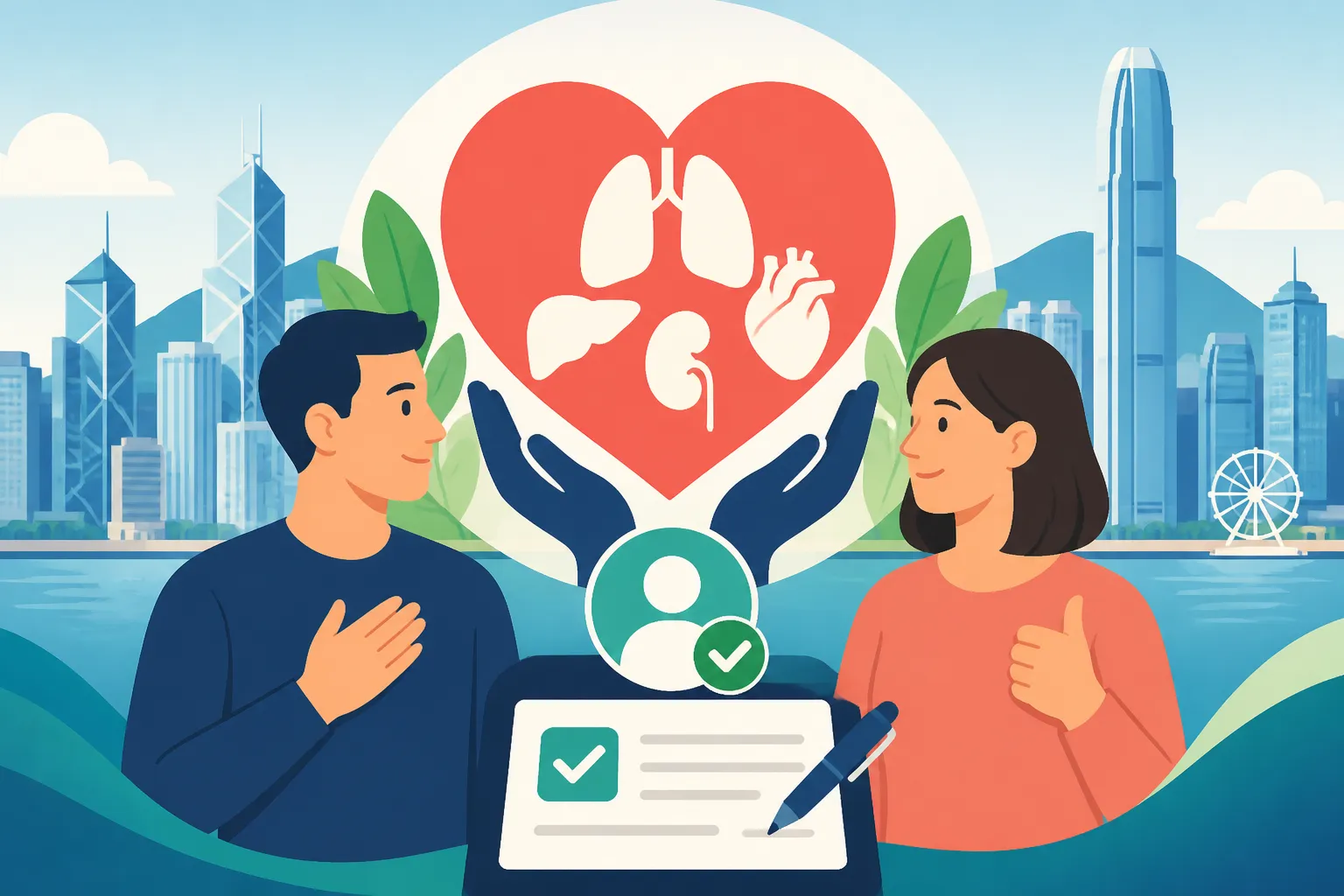
When you fill out the form, you can specify exactly which organs or tissues you are comfortable donating. This includes the heart, lungs, liver, kidneys, and even corneas or skin. For many, this level of granularity is comforting. Once you submit the form, you will receive a confirmation. I highly recommend saving a digital copy of this confirmation in a dedicated "HK Admin" folder on your phone or cloud storage.
The HA Go App Integration
If you have already started using the Hospital Authority (HA) Guide: Accessing Public Healthcare for Expats, you are likely familiar with the "HA Go" mobile app. This app is becoming the "everything" tool for healthcare in the city. You can actually register for organ donation directly through the app if you have a verified account.
The benefit of using HA Go is that it links your donor status directly to your patient record. This is incredibly helpful because if you ever find yourself in the public system, your preferences are immediately visible to the medical team. If you haven't set up the app yet, you can find tips in our guide on Using the HA Go App for Booking Public Outpatient Clinics. It requires a one-time verification at a hospital or clinic, which is a bit of a pain, but once it’s done, managing your health becomes significantly easier.
Paper Forms and Traditional Methods
For those who prefer a physical paper trail, you can still find registration forms at most public hospitals, many private clinics, and even some post offices. You simply fill it out and mail it back to the CODR office in Wan Chai. I’ve found that some older expats prefer this method because they feel the physical "receipt" is more tangible, but in a city that is rapidly digitizing, the online route is much faster and less prone to being "lost in the mail."
The Family Veto and Cultural Nuances
This is perhaps the most important section of this guide because it involves a cultural hurdle that catches many Western expats off guard. In many countries, your legal registration as a donor is a binding contract. In Hong Kong, the system places an enormous amount of weight on the "family's wishes." Even if you are registered on the CODR, medical teams will almost always seek the final consent of your next of kin before proceeding with any procurement.
Communicating with Your Next of Kin
Because of the family consent culture, your registration is only the first step. If your family doesn't know you’ve registered, or if they are uncomfortable with the idea because of their own cultural or religious beliefs, they could technically block the donation. This can lead to heartbreaking situations where an expat’s wishes are not honored because their family back home—or their spouse here—wasn't prepared for the conversation.
I’ve had these conversations over dinner with my own family, and while it’s awkward, it’s necessary. You need to explain to them that you have made a conscious choice to be part of the Hong Kong donor community. If your family is not with you in Hong Kong, make sure they have a copy of your registration. For those dealing with the emotional weight of living abroad, sometimes speaking with a professional can help in navigating these heavy topics; you might look into Mental Health in Hong Kong: Counseling and Expat Support Services for support.
Legal Status and the 7-Year Rule
A common myth among the expat community is that you have to be a Permanent Resident (the 7-year mark) to be a donor. This is entirely false. Whether you are here on a work visa, a dependent visa, or a student visa, you are eligible to register as long as you have an HKID. The system doesn't differentiate between a "Permanent" ID and a "Regular" ID when it comes to the gift of life. If you are still in the process of getting settled, make sure you understand the basics of Registering Your HKID for Subsidized Public Healthcare Rates as it is the foundation for all your medical interactions here.
Registration Methods Comparison Table
To help you decide which path is easiest for your current situation, I’ve broken down the three main ways to get on the register.
| Method | Requirements | Processing Time | Best For |
|---|---|---|---|
| CODR Online Portal | HKID Number, Email | Instant submission | Tech-savvy newcomers |
| HA Go App | Verified HA Account | Instant | Frequent users of the public system |
| Paper Form | Physical form, Postage | 2-4 weeks | Those who want a physical record |
| In-Person | Visit to CODR Office | Immediate | People already in Wan Chai for other admin |
Integrating Donation with Your Insurance and Healthcare Plan
When you think about organ donation, you are usually thinking about the very end of your journey, but it’s part of a larger conversation about how you want to be treated in the Hong Kong medical system. The public system here is world-class for trauma and emergency care, which is where organ donation scenarios usually arise. Understanding Emergency Medical Services in HK: Calling 999 and A&E Wards is crucial for any expat.
However, many of us prefer the comfort and speed of the private sector for everything leading up to an emergency. If you are covered by a high-end provider like Cigna Global, you likely have access to some of the Top Private Hospitals on HK Island: Matilda, Adventist, and Sanatorium. While private hospitals don't typically handle the actual transplant procurement (that’s almost always centralized in the public sector via the Hospital Authority), having private insurance ensures that your family is well-supported during a crisis.
For those on a tighter budget or those who are "digital nomads" passing through for a year or two, a plan like SafetyWing offers great flexibility. Just remember that no matter how good your insurance is, it doesn't automatically register you as an organ donor. That is a personal administrative task that only you can complete.
Common Obstacles for Expats in the Registration Process
Even with the best intentions, many expats get stuck in the "I'll do it tomorrow" loop. Part of this is the language barrier. While the CODR website and the HA Go app have English versions, some of the deeper "Terms and Conditions" or the follow-up correspondence can sometimes feel a bit "Lost in Translation."
If you ever feel overwhelmed by the medical jargon, it’s worth reading up on Healthcare in Hong Kong: Public vs Private Systems Explained (2027) to get a better handle on the terminology. Another hurdle is the fear of the unknown—some expats worry that if they are registered as donors, doctors might not try as hard to save them. This is a global myth that is as untrue in Hong Kong as it is anywhere else. The medical team trying to save your life is entirely separate from the transplant team.
Finally, don't forget that your medical needs in Hong Kong change as you age or as your family grows. If you are planning a family here, for instance, you’ll be looking at Maternity and Childbirth in HK: Public Wards vs Private Packages. Every stage of life in Hong Kong involves some form of medical registration, and the organ donor registry is just one piece of that responsible-adult puzzle.
Final Steps After You Register
Once you’ve successfully registered on the CODR, there are a few practical things you should do to ensure the process works smoothly:
- Notify your GP: If you have a regular family doctor, let them know. If you are still looking for one, check our list of Finding English-Speaking General Practitioners (GPs) in Central.
- Update your "Emergency Contact" on your phone: Both iPhones and Androids have a "Medical ID" section that first responders check. Explicitly state that you are a registered organ donor in Hong Kong.
- Keep your HKID on you: In Hong Kong, it is legally required to carry your HKID at all times anyway, but it's especially important here as it’s the key the hospital uses to look up your CODR status.
- Review your insurance: Ensure your family is aware of what your policy covers in terms of repatriation or local funeral services, which are often separate from the donation process. Private Health Insurance Plans Beyond VHIS for Expat Families can provide more context on these "extra" layers of protection.
Taking ten minutes out of your day to register might feel like a small thing amidst the chaos of moving to a new country, but it is one of the most impactful ways you can give back to the city that has become your home. It’s about more than just paperwork; it’s about becoming a true part of the Hong Kong community.
Medical Information Disclaimer
The information provided in this article is for general informational purposes only and does not constitute professional medical or legal advice. While we strive to keep the information up to date and correct, we make no representations or warranties of any kind about the completeness, accuracy, or reliability of the registration procedures or medical policies in Hong Kong. Always consult with a qualified medical professional or the Hong Kong Department of Health for specific advice regarding organ donation and healthcare.