APEC Business Travel Card (ABTC): Benefits for HK Executives
Frequent business travelers in Hong Kong often find themselves trapped in exhaustive immigration queues at Chek Lap Kok or across Southeast Asia, turning a short regional hop into a day-long endurance test. This guide solves that frustration by detailing how the APEC Business Travel Card (ABTC) acts as a powerful "fast-pass," streamlining your entry into 19 economies and removing the constant need for individual business visas.
Understanding the APEC Business Travel Card in Hong Kong
The APEC Business Travel Card is not just another piece of plastic in your wallet; for the seasoned Hong Kong executive, it is the ultimate symbol of regional mobility. It was designed by the Asia-Pacific Economic Cooperation forum to facilitate the "free flow" of business travelers between member economies. Essentially, it functions as a multi-entry visa and a priority pass rolled into one. When you hold an ABTC, you are granted the right to enter participating countries for business purposes without the usual bureaucratic friction that bogs down international commerce.
For many of us who have spent years navigating the Right of Abode (Permanent Residency): The 7-Year Journey, the ABTC represents the final piece of the administrative puzzle. While your permanent residency gives you freedom within Hong Kong, the ABTC extends that convenience across the Pacific Rim. It is important to realize that this isn't a "travel visa" for tourism in the traditional sense; it is specifically for "bona fide" business people who need to move quickly and frequently to attend meetings, inspect sites, or sign contracts.
The scheme currently includes 19 "fully participating" economies, including heavyweights like Japan, South Korea, Australia, and Singapore. While the United States and Canada are "transitional" members—meaning they don't offer visa-free entry through the card—they do allow ABTC holders to use the "fast-track" lanes at major airports. This distinction is crucial because it means even if you still need a visa for North America, the card remains a significant time-saver during peak travel seasons.
What exactly is the ABTC
Technically, the ABTC is a document issued to business travelers who are citizens of APEC economies, but Hong Kong holds a unique position. Because Hong Kong is a Special Administrative Region, it participates in APEC as its own entity ("Hong Kong, China"). This means that if you hold a Hong Kong Permanent Identity Card and a valid passport, you are eligible to apply through the Hong Kong Immigration Department. The card is usually valid for five years, or until your passport expires, whichever comes first.
The card itself has evolved significantly. While many veterans still carry the physical plastic card, the system has largely transitioned to the Virtual ABTC (VABTC). This digital version lives on your smartphone via a dedicated app, allowing you to present your credentials at immigration counters digitally. This shift has been a lifactor for those of us prone to losing physical documents during hectic trips. It also means that as soon as an economy grants you "pre-clearance," your digital card updates automatically, rather than you having to wait for a new plastic card to be printed and mailed.
Understanding the limitations is just as important as knowing the benefits. The ABTC does not replace your passport; it is a companion document. You must always carry your passport when traveling. Furthermore, the card does not grant you the right to take up employment in the destination country. If you are being posted to an office in Tokyo for a year, you will still need a proper work permit. The ABTC is strictly for short-term business visits, usually ranging from 60 to 90 days depending on the economy.
The Hong Kong advantage for cardholders
Hong Kong is perhaps the most efficient place in the world to be an ABTC holder. The Immigration Department here is incredibly streamlined compared to other member economies. If you have already gone through the process of Registering Your HKID for Subsidized Public Healthcare Rates or handled other local administrative tasks, you know that the "ImmD" is generally tech-savvy and responsive. For HK executives, the ABTC is often seen as a prerequisite for senior leadership roles because the ability to fly to a meeting in Jakarta or Seoul on a few hours' notice is a competitive necessity.
The "Hong Kong advantage" also extends to the integration with our local e-Channel system. Once you have your ABTC, your travel profile is already well-regarded by the authorities. While you already use the e-Channel to enter and exit Hong Kong, the ABTC allows you to use similar priority or automated lanes in other countries. This creates a seamless "gate-to-gate" experience where you can bypass the masses both at your departure in HKIA and your arrival at your destination.
Furthermore, the business culture in Hong Kong is deeply regional. Very few executives work solely within the 1,100 square kilometers of the territory. Most have supply chains in Mainland China, investors in Singapore, and clients in Australia. For someone who has recently transitioned from a Top Talent Pass Scheme (TTPS): The Fast-Track Work Visa to permanent residency, the ABTC is the logical next step to solidify your status as a regional professional. It signals to your peers and partners that you are a frequent, vetted traveler within the APEC network.
Participating economies and travel freedom
The list of economies participating in the ABTC scheme is extensive and covers the most vital markets in the world. As a Hong Kong-based executive, your most frequent destinations are likely on this list. Countries like China, Australia, Brunei Darussalam, Chile, Indonesia, Japan, South Korea, Malaysia, Mexico, New Zealand, Papua New Guinea, Peru, the Philippines, Russia, Singapore, Chinese Taipei, Thailand, and Vietnam all offer full participation.
| Economy | Entry Type | Standard Duration of Stay |
|---|---|---|
| Australia | Visa-free / Priority Lane | 90 Days |
| Japan | Visa-free / Priority Lane | 90 Days |
| Singapore | Visa-free / Priority Lane | 60-90 Days |
| Mainland China | Visa-free / Priority Lane | 60 Days |
| South Korea | Visa-free / Priority Lane | 90 Days |
| Thailand | Visa-free / Priority Lane | 90 Days |
Having this level of travel freedom changes how you plan your life. Instead of spending days waiting for a visa for Vietnam or dealing with the complexities of a Chinese business visa application, you simply pack your bags and go. For those managing complex lives, perhaps including Hiring a Foreign Domestic Helper in HK: Legal Rules and Costs, the last thing you want is more paperwork for your own travel. The ABTC cuts through that noise entirely, allowing you to focus on your corporate objectives rather than embassy appointment times.
However, keep in mind that "pre-clearance" is the key. When you apply, your details are sent to every single one of these 19 economies. They each do their own background check. You might get cleared by 15 of them within a month, while the remaining four take several months. In the old days, you had to wait for everyone to finish before getting your card. Now, with the virtual card, you can start using it for the economies that have already cleared you while you wait for the "laggards" to finish their internal processing.
Eligibility and Application Process for HK Residents
The barrier to entry for the ABTC is intentionally high to ensure the system isn't abused. You can't just be a casual traveler; you must prove that you are an active participant in regional trade. In Hong Kong, the Immigration Department acts as the gatekeeper, and they are quite thorough. They look for individuals who hold high-level positions or those who have a genuine, recurring need to travel for the benefit of their company’s international business interests.
For many expats, the first hurdle is residency status. You cannot apply for a Hong Kong-issued ABTC if you are only here on a temporary work visa. You must be a Hong Kong Permanent Resident holding a valid Hong Kong Permanent Identity Card. If you are still in your first few years here, perhaps still dealing with Health Clearances and Medical Requirements for HK Employment Visas, you will need to wait until you hit that magic seven-year mark and secure your Right of Abode before this path opens to you.
The application itself is handled through the "Other Visas and Permits" section of the Immigration Department. While you can submit documents online, the level of detail required is significant. You aren't just filling out a form; you are building a case for why you deserve this privilege. This often involves letters from your employer, proof of your company's business activities, and a clean criminal record. Any hiccup in your past, even minor immigration infringements, could jeopardize your chances.
Requirements for Hong Kong permanent residents
The primary requirement is that you must hold a Hong Kong Permanent Identity Card (HKID). If you have recently upgraded your status, ensure that your Hong Kong Identity Cards (HKID): Registration and Smart IDs information is fully up to date before you start the ABTC process. Along with your HKID, you must hold a valid passport. Interestingly, the ABTC can be linked to a Hong Kong Special Administrative Region (HKSAR) passport or a foreign passport, provided you have the right to reside permanently in Hong Kong.
Beyond the document check, you must not have been previously denied entry to any of the APEC economies. This is a crucial point. If you have a history of being turned away at the border in Australia or having a visa canceled in Korea, your ABTC application will likely be rejected during the pre-clearance phase. The system relies on mutual trust between nations, and they are very protective of who they allow into their priority lanes.
Lastly, there is the "bona fide business person" requirement. The ImmD defines this as a person who needs to travel frequently on short-term visits within the APEC region to fulfill business commitments. This excludes entertainers, musicians, professional athletes, or people who are physically working on-site (like construction workers). It is designed for the "white collar" executive, the consultant, the salesperson, or the business owner who is moving capital and ideas, not just labor.
Proving your business executive status
This is where the application becomes more subjective. You need to provide a letter of support from your company. This letter shouldn't just say "John is a good employee." It needs to explicitly state your job title, your responsibilities, and—most importantly—the frequency and necessity of your regional travel. If you can show that you traveled to four different APEC economies in the last twelve months, your case becomes much stronger.
Small business owners and entrepreneurs face a slightly higher burden of proof. You might need to provide your Business Registration Certificate and evidence that your company is actively trading with overseas partners. If you are a freelancer or a sole proprietor, proving this can be tricky. You might find it helpful to use services like RushTranslate to ensure that your international contracts or bank statements from overseas are accurately presented if they aren't originally in English or Chinese.
The ImmD also looks at the "nexus" of your business. Does your company actually have a reason to be in Chile or Russia? If your business is purely local—say, a neighborhood bakery—you won't qualify, even if you are very successful. The focus is on international trade. High-net-worth individuals who are here under the Capital Investment Entrant Scheme (CIES): Rules for Investors often qualify because their investment activities naturally involve cross-border financial movements and regional oversight.
The role of the Immigration Department (ImmD)
The ImmD is your sole point of contact for the application. They take your data, verify your Hong Kong status, and then act as a clearinghouse. Once they are satisfied with your local eligibility, they upload your profile to the central APEC system. From that moment, your "fate" is in the hands of 18 other immigration departments. The Hong Kong ImmD cannot speed up the process once it leaves their hands; they are at the mercy of the processing times in Manila, Tokyo, and Canberra.
During this waiting period, you can check your status online. The ImmD provides a portal where you can see a list of countries and a "cleared" or "pending" status next to each one. It’s a bit like watching a slow-motion race. Some countries are notoriously fast (often Singapore and Australia), while others can take months to respond. If you are in a rush, you can request the ImmD to issue your card as soon as a certain number of "priority" countries have cleared you, rather than waiting for all of them.
If your application is rejected by a specific economy, the ImmD will notify you, but they usually won't give a specific reason. This is because each sovereign nation has the right to refuse entry without explanation. However, a rejection from one economy (like Russia) does not mean you can't have an ABTC for the others. Your card will simply not list the economy that rejected you, and you will have to apply for a traditional visa if you ever need to visit that specific country.
Key Benefits of Holding an ABTC
The benefits of the ABTC can be summarized in two words: time and stress. In the life of a busy executive, these are your two most valuable—and scarce—resources. The card effectively turns the international arrivals hall into something that feels more like a domestic bus station. You bypass the "All Passports" queue, which, at airports like Jakarta's Soekarno-Hatta or Manila’s Ninoy Aquino, can save you literally hours of standing on hard floors in humid air.
For those of us who have lived through the Accident and Emergency (A&E) Triage Categories in Public Hospitals system in Hong Kong, we understand the value of being "triaged" to the front. The ABTC is the travel equivalent of being a Category 1 patient—the system moves around you to ensure you get where you need to be as fast as possible. This isn't just about vanity; it’s about making a 9:00 AM meeting after a red-eye flight, or getting home in time to see your kids before they go to sleep.
Beyond the airport experience, the card also provides significant financial savings over time. Business visas can be expensive, especially those that require multiple entries or "express" processing fees. When you multiply those costs across five or six countries over five years, the ABTC pays for itself many times over. It also removes the need to constantly send your passport away to embassies, which is a major risk if you are a frequent traveler who might suddenly need to fly elsewhere.
Expedited immigration clearance (E-channels)
The most visible benefit is the "APEC Lane." Almost every major airport in the member economies has a dedicated lane marked with the APEC logo. Usually, this is the same lane used by diplomats, airline crew, and first-class passengers. You simply walk up, show your ABTC (or the VABTC app) and your passport, and you are often processed in under 60 seconds. In places like Bangkok, where the general queue can snake through the terminal, this is a life-changing experience.
In recent years, many economies have integrated the ABTC with their automated E-Channel Enrollment for Faster Immigration Clearance systems. This means you don't even have to talk to an officer. You scan your passport, provide a fingerprint or a facial scan, and the gates open. Singapore’s Changi Airport and Hong Kong’s HKIA are the gold standards for this. As an ABTC holder, you are part of an elite "trusted traveler" pool, which means the technology is biased in your favor.
The psychological relief of knowing you have access to these lanes cannot be overstated. We’ve all had that sinking feeling when landing at a new airport and seeing three A380s worth of passengers ahead of us in the terminal. With the ABTC, that anxiety disappears. You know that as long as there is an APEC lane, you will be out of the airport and into a taxi while the rest of the plane is still trying to find the end of the line.
Visa-free entry and stay durations
The core of the ABTC is visa-free entry. For 19 economies, the card acts as a pre-approved business visa. This means no more filling out lengthy visa application forms, no more providing "invitation letters" for every single trip, and no more paying visa fees at the border. You simply present the card. The duration of stay is also quite generous—usually 60 to 90 days. This is far longer than most standard tourist visas, giving you plenty of time to conclude complex business negotiations.
For example, if you frequently visit Mainland China, the ABTC is a godsend. Traditional Chinese business visas can be cumbersome to renew and often require physical visits to the visa center in Wan Chai. With an ABTC, you can enter China for up to 60 days per visit, as many times as you like, for the duration of the card’s five-year validity. If you’ve ever used the Using the HA Go App for Booking Public Outpatient Clinics to manage your health, you'll appreciate how the ABTC similarly digitizes and simplifies a previously manual, painful process.
It is worth noting that the "stay duration" is for business purposes. While you can certainly grab dinner or visit a museum while you are there, you should always state "business" as your reason for entry if asked by an immigration officer. Using the card for a pure family holiday to a resort in Phuket is technically a gray area. Most officers won't mind, but if you are carrying surfboards and traveling with five kids, they might gently remind you that the card is for "business travel."
Priority lanes at major international airports
Even in countries where the ABTC doesn't provide visa-free entry, like the United States and Canada, the benefit remains significant. At major gateways like JFK in New York or LAX in Los Angeles, ABTC holders are permitted to use the "Fast Track" or "Global Entry" lanes. While you still need a valid US visa (like a B1/B2) in your passport, you don't have to wait in the massive lines for foreign visitors.
This priority access often extends beyond just immigration. In some airports, the APEC lane is also available at security checkpoints or even at customs. This "red carpet" treatment ensures that your transit through the airport is as frictionless as possible. For those of us who prioritize safety and efficiency, perhaps even using SafetyWing for our global health coverage, the ABTC fits perfectly into a lifestyle designed for high-performance international living.
| Airport | APEC Lane Location | Benefit |
|---|---|---|
| HKIA (Hong Kong) | Most Arrival/Departure Halls | Automated e-Channel |
| Narita (Tokyo) | Priority Lanes (Diplomat) | Human Officer / Fast Track |
| Sydney (Kingsford Smith) | Express Path | Fast Track Voucher usage |
| Changi (Singapore) | All Terminals | Automated Gates |
| Incheon (Seoul) | Dedicated APEC Lanes | Significant time saving |
Navigating the Application Timeline and Practical Hurdles
Applying for an ABTC is a marathon, not a sprint. The "waiting game" is the most common complaint among Hong Kong executives. Because the process involves nearly 20 different governments, it is inherently unpredictable. One colleague might get their full clearance in three months, while another might be waiting a year for Vietnam or Mexico to sign off. Managing your expectations is the first step to avoiding frustration.
While you wait, life in Hong Kong continues. You might be Navigating Medical Emergencies During T8 Typhoons or Black Rainstorms or managing your company’s year-end audits. The ABTC application sits in the background, a slow-moving digital file. It is important to keep your contact details updated with the ImmD. If you change your phone number or move to a new apartment, make sure to notify them, as they may need to reach out for additional documents or to tell you your card is ready for collection.
Another practical hurdle is the "passport link." Your ABTC is electronically tied to your specific passport number. If your passport has less than two years of validity left, you should strongly consider renewing it before you apply for the ABTC. If you get a new passport halfway through your ABTC's five-year life, you have to go through a process to update the card, which can be another administrative headache you don't need.
The pre-clearance waiting game
As mentioned, each economy does its own thing. There is no central APEC "boss" who can force a country to speed up. Some countries use the ABTC application as a chance to do a deep dive into your background. They might check against their own criminal databases, tax records, or previous visa histories. This is why the status "Pending" can remain on your profile for a very long time.
Don't let a few "Pending" statuses stop you. In the modern era, the Hong Kong ImmD will allow you to finalize your application once a certain number of economies have cleared you. You can choose to "lock in" the economies that have said yes and start using the card immediately. If the remaining countries eventually clear you, your Virtual ABTC app will update automatically. This is a massive improvement over the old system where you had to wait for everyone or pay for a "replacement" card later.
If you find that a specific economy is taking an unusually long time (more than six months), there isn't much you can do. You can try to contact the APEC branch of the HK ImmD, but they will likely tell you that the matter is out of their hands. It’s best to treat those "slow" countries as a bonus if they ever come through, rather than relying on them for an upcoming trip.
Using the virtual ABTC (VABTC)
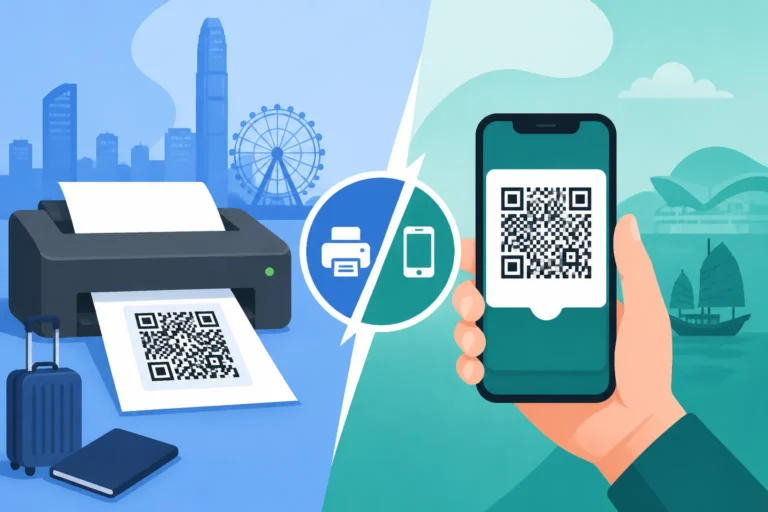
The Virtual ABTC is the new standard. Once approved, you receive an "Activation Code" from the ImmD. You download the "APEC Business Travel Card" app on your iPhone or Android and enter your details. The app displays a digital version of the card, complete with a QR code and a list of the economies that have granted you pre-clearance. When you arrive at an airport, you simply open the app and show the screen to the officer.
One concern people often have is: "What if my phone dies or I don't have internet at the airport?" The app is designed to work offline once you have logged in. It stores your card details locally. However, as a veteran expat, you know that technology can fail at the worst times. It is a good idea to keep a printed screenshot of your digital card and your approval letter in your carry-on bag, just in case a specific officer in a remote airport isn't yet familiar with the digital version.
The VABTC is also more secure. If you lose your phone, you haven't "lost" your card in the same way you would lose a plastic one. You can simply log in to the app on a new device. It also prevents the common issue of the "faded plastic" where the text on the back of the card becomes unreadable over years of use in a wallet. The digital version is always crisp and clear, ensuring no delays at the counter.
Common pitfalls and application rejections
The most common reason for a rejection at the local level is failing to prove the "business necessity." If your company is small or your role is ambiguous, the ImmD might ask for more evidence. They are particularly wary of "ghost companies" or people trying to get the card just for the status. Make sure your supporting documents are robust. If you are submitting financial records or contracts from non-English speaking APEC members, using RushTranslate ensures that the ImmD can actually read and verify your claims.
At the international level, rejections often stem from previous travel issues. If you overstayed a visa in Malaysia ten years ago, that record might still be in their system. Even if it was an honest mistake, they might deny your pre-clearance for the ABTC. Another pitfall is having a name that is common and shares a profile with someone on a "watch list." This can cause massive delays while the foreign government verifies that you aren't the person they are looking for.
Finally, ensure your passport information is perfectly accurate. A single typo in your passport number or the spelling of your name on the application form will result in an automatic mismatch at the border. If this happens, the card is useless, and you might even face questioning at immigration. Double-check every single character before you hit "submit" on your application.
Maintaining and Renewing Your Card
Once you have your ABTC, the maintenance is relatively low, but you can't just forget about it. The card is a live document. If your circumstances change—for example, if you leave your company or move out of Hong Kong—your eligibility might be affected. In theory, you are supposed to notify the ImmD if you are no longer a "bona fide business person" for the company that sponsored your application.
Renewal is another area where people get caught out. The ABTC is valid for five years, which feels like a long time until it isn't. The renewal process is essentially a fresh application. You have to prove your eligibility all over again, and you have to go through the pre-clearance process with all 18 other economies again. It is highly recommended to start the renewal process at least six months before your current card expires to ensure there is no gap in your travel capability.
If you are a frequent user of Telemedicine Apps in HK: DoctorNow and Virtual Consultations, you already appreciate the "set it and forget it" nature of digital tools. The ABTC is similar, but it requires a periodic check-in. Every few months, open the app to ensure it hasn't logged you out and that your list of cleared economies is still accurate. This prevents any nasty surprises when you are standing at an immigration counter in a foreign country.
What happens when your passport expires
This is the number one issue for ABTC holders. Your card is strictly tied to your passport number. If you renew your passport, your ABTC (even if it has years of validity left) becomes invalid. You cannot simply carry both passports and show the old one with the card. You must update your ABTC record with the new passport details.
In Hong Kong, this is done by submitting a form to the ImmD along with a copy of your new passport. They will then "re-link" your ABTC profile to the new document. This process is much faster than the initial application, but it still takes time. During this transition, you should not attempt to use the ABTC lanes, as the digital scan will show a mismatch. If you’ve ever had to handle Filing a Medical Complaint: The Medical Council of Hong Kong, you know that administrative corrections require patience.
To avoid this, try to synchronize your passport and ABTC cycles. If your passport has three years left, consider getting a new one before you apply for a five-year ABTC. This gives you five years of uninterrupted travel without having to worry about re-linking documents. It’s a small bit of planning that saves a lot of future annoyance.
Reporting a lost or stolen card
If you are still using a physical ABTC and you lose it, you must report it to the HK ImmD immediately. They will cancel the old card to prevent misuse and issue a replacement for a fee. If your phone with the VABTC is stolen, you should change your APEC account password and log out of all devices via the central portal.
Losing your travel credentials while abroad is a nightmare. This is why having a comprehensive backup plan is essential. Whether it’s having digital copies of your Hong Kong Work Visas: TTPS, GEP, QMAS, and IANG Explained documents or your ABTC approval letter, always have a "cloud" backup. Also, ensure your travel insurance, such as SafetyWing, is active, as they can often provide assistance or coverage for lost travel documents while you are overseas.
When you report a lost card, the ImmD will issue a new "Activation Code" for the virtual app. Once you activate the new one, the old one is automatically deactivated across the entire APEC network. This level of security is one of the reasons the card is so highly respected by immigration officers; they know that the system is tightly controlled and that a valid card on a screen or in a hand is a highly vetted credential.
Renewing after the 5-year validity period
As your five-year mark approaches, the ImmD won't necessarily send you a reminder. It is your responsibility to track the expiry date. The renewal process is identical to the initial application. You will need a new letter of support from your employer, updated business records, and a fresh set of photos.
One common mistake is assuming that because you were cleared once, you will be cleared again. Governments change, and so do their immigration policies. An economy that cleared you easily five years ago might have stricter rules today. This is especially true if there have been geopolitical shifts or changes in trade agreements. Treat the renewal as a serious task, not a mere formality.
If you have changed jobs during the five years, the renewal is the time to update all your corporate information. If you are now a director at a different firm, you will need that new firm to sponsor your renewal. The ImmD needs to see a continuous "nexus" of business activity. If you have retired or moved into a purely local role, you likely won't be able to renew your card, as the "bona fide business person" requirement will no longer be met.
Integrating ABTC into Your Expat Life in Hong Kong
The ABTC is part of a larger ecosystem of tools that make the expat life in Hong Kong manageable. When combined with the e-Channel, the Octopus card, and high-speed mobile data, it allows you to move through the world with a level of efficiency that is rare in other global cities. It’s about building a "seamless life" where the friction of borders is minimized.
As you settle into this high-mobility lifestyle, you'll find yourself making other adjustments. You might start using services like Pet-Journey if your regional role requires a semi-permanent move with your family and pets to another APEC hub like Singapore or Tokyo. You might also become more diligent about your Essential Health Checklist for Your First 30 Days in Hong Kong, ensuring that you have the right vaccinations for the diverse climates you are now visiting on a whim.
The card also changes your social and professional status. In the "H-Class" or business-class lounges of HKIA, you'll see the blue-and-white APEC logo on many phones and wallets. It’s a quiet nod between professionals who know the value of the system. It’s about being part of a regional community that values trade, movement, and efficiency above all else.
Travel insurance and safety considerations
Frequent travel increases your exposure to risks—not just health risks, but also travel delays and cancellations. While the ABTC gets you through the line faster, it doesn't stop the plane from being delayed or your luggage from going to another country. This is where a robust insurance policy becomes critical. For many of us, SafetyWing is the go-to for its flexibility and global coverage, which is essential when you might be in three different countries in a single week.
Beyond insurance, you should always stay informed about the safety and health situations in your destination economies. The ABTC allows you to enter, but it doesn't guarantee your safety once you are there. Use tools like the Using the HK Observatory App for Accurate Weather Warnings to track typhoons that might affect regional flights, and keep an eye on travel advisories from the Hong Kong government.
Also, remember that medical systems vary wildly across APEC. While you might be used to the Hospital Authority (HA) Guide: Accessing Public Healthcare for Expats in Hong Kong, the public hospitals in some other member economies might not meet the same standards. Always know where the nearest "expat-friendly" private hospital is in the city you are visiting, and ensure your insurance covers private care and emergency evacuation if necessary.
Document preparation and certified translations
Even with an ABTC, you might occasionally need to present other documents. You might be asked for proof of your business meeting or a copy of your company’s registration. If you are doing business in non-English speaking economies like Mexico, Japan, or Russia, having these documents professionally translated is a smart move. Using a service like RushTranslate ensures that your paperwork is taken seriously by local authorities and business partners.
It’s also wise to keep a "travel folder" (either physical or digital) that contains more than just your ABTC. Include your Applying for the HK Permanent Identity Card (PIC) confirmation, a copy of your contract, and your vaccination records. Sometimes, an immigration officer might be having a bad day and decide to ask more questions than usual. Being able to calmly produce a folder of well-organized, translated documents usually ends the questioning very quickly.
Finally, ensure your business cards are up to date and professional. In many APEC cultures, particularly in Japan and South Korea, the exchange of business cards is a vital ritual. Your card should reflect the same high status that your ABTC implies. It’s all part of the "executive package" that allows you to operate effectively in the diverse and complex markets of the Asia-Pacific.
Moving around with pets and family
While the ABTC is for you, your travel often impacts your family. If your business success leads to a regional relocation, you have to consider the logistics of moving your household. This is where services like Pet-Journey are invaluable. Moving a dog or cat between APEC economies like Hong Kong, Australia, and New Zealand involves a mountain of paperwork and quarantine rules that make an ABTC application look like child's play.
For your spouse and children, they won't have the benefits of your ABTC unless they also happen to be senior executives with their own cards. This means when you travel together, you will often have to make a choice: do you use the fast-track lane and wait for them on the other side, or do you stand in the long line with them? Most of us choose the latter for family harmony, but the ABTC remains a secret weapon for those solo business trips.
If your children are attending International Schools in HK: Curriculums, Debentures, and Applications, they are likely used to a global lifestyle. The ABTC is just another tool that supports that reality. It allows the breadwinner of the family to spend less time in airports and more time at home, which is perhaps the greatest "executive benefit" of all.
Disclaimer
The information provided in this guide is for general informational purposes only and does not constitute legal or professional immigration advice. Immigration policies for APEC member economies and the Hong Kong Immigration Department are subject to change without notice. Always consult the official websites of the relevant authorities or a qualified immigration consultant before making travel arrangements or submitting applications. Under no circumstances shall the author be liable for any loss or damage arising from the use of this information.