Air Quality and Health: Managing Asthma During High Pollution Days
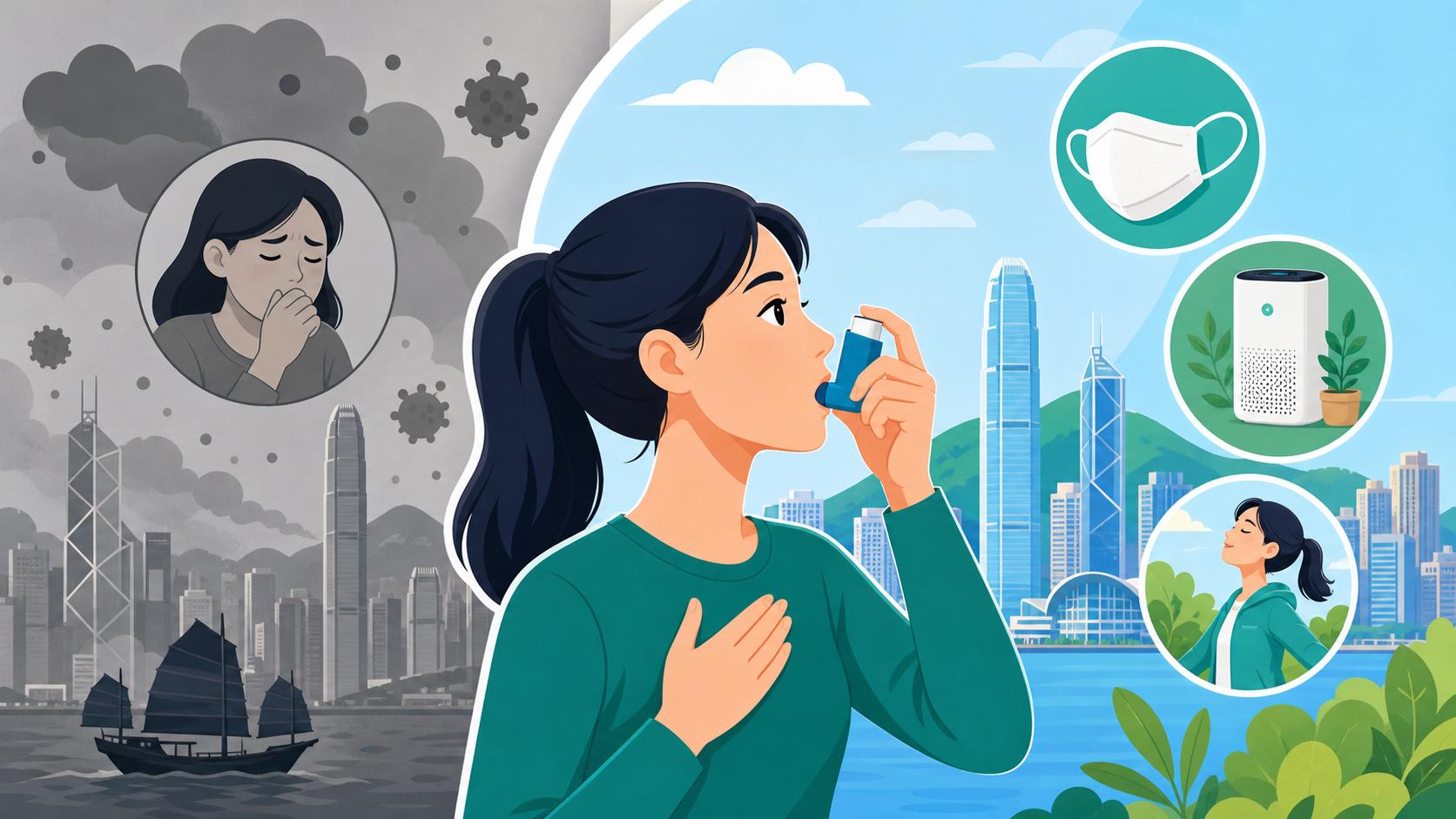
Stepping out of the MTR in Central only to be met by a thick, gray haze that makes your chest tighten is a rite of passage no expat wants. I still remember my first "Very High" pollution day near the Star Ferry; I thought I just had a cold, but my lungs were actually protesting the urban soup. This guide provides the survival strategies you need to manage asthma and respiratory health in Hong Kong's unique environment.
Understanding the Hong Kong Air Quality Health Index
When I first moved here, I kept looking for the standard international air quality numbers I was used to back home. Hong Kong uses its own system called the Air Quality Health Index (AQHI). Unlike older systems that just measured the concentration of pollutants, the AQHI is specifically designed to tell you the health risk. It’s calculated based on the cumulative additional health risk of daily hospital admissions for cardiovascular and respiratory diseases.
The scale runs from 1 to 10, plus a "10+" category for serious risk. For those of us with sensitive airways, the magic numbers to watch are 7 and above. When the index hits the "High" or "Very High" range, the government officially advises people with existing heart or respiratory illnesses to reduce outdoor physical exertion. In my experience, if you wait until the government tells you to stay inside, you might already be wheezing. You have to learn your own "trigger number."
What the Numbers Actually Mean for Asthmatics
The AQHI isn't just a generic warning; it’s a direct reflection of how much extra work your lungs have to do that day. A level of 1 to 3 is generally "Low," and you’ll feel the difference—the air feels crisp (as crisp as it gets here), and the peaks of Lantau are actually visible. Once you hit 4 to 6, the risk is "Moderate." If you have mild asthma, this is usually when you might start feeling a bit of "heaviness" after a long walk.
When the index hits 7 (High) or 8-10 (Very High), the health risk is real. For an asthmatic, this can mean an immediate increase in the use of rescue inhalers. On 10+ days, the air can look like a literal wall of smog. During these periods, even the walk from your apartment to the office can be enough to trigger an attack if you aren't prepared. I’ve learned to treat 10+ days like a snowstorm back home—staying indoors as much as humanly possible is the only real defense.
Regional Variations across the Territory
One of the most confusing things for newcomers is that the air quality in Hong Kong isn't uniform. You might check the app and see a 4 in Stanley but a 9 in Tuen Mun. This is due to the two main types of pollution we deal with: local emissions and regional smog. Roadside stations (like those in Causeway Bay, Central, and Mong Kok) measure the direct impact of traffic, while general stations measure the broader air mass.
If you live in the New Territories, especially in places like Yuen Long or Tuen Mun, you are much more susceptible to regional pollution blowing in from the Pearl River Delta. Conversely, if you are in the heart of the city, your main enemy is nitrogen dioxide from buses and cars trapped between skyscrapers. Understanding these patterns is vital. Before you plan a Saturday hike, check the specific station nearest to your trail, not just the general territory average.
Environmental Triggers Unique to Hong Kong Living
Living in one of the most densely populated places on Earth comes with specific respiratory challenges that you won't find in a suburban setting. The architecture of the city itself acts as a trap for pollutants. This phenomenon is known as the "street canyon effect." Tall buildings on both sides of narrow streets prevent the wind from flushing out vehicle exhaust, leading to pockets of extremely poor air quality at the ground level where we walk.
I’ve found that walking just one block away from a main arterial road like Hennessy Road can significantly change how my lungs feel. The concentration of particulates is highest near the ground, especially around the double-decker buses that dominate the landscape. For an asthmatic, these "canyons" are high-risk zones, especially during the humid summer months when the air is stagnant.
Humidity Mold and Cross-Border Smog
We can’t talk about asthma in Hong Kong without talking about the humidity. It’s not just the heat; it’s the fact that high humidity is a breeding ground for dust mites and mold. Many expats find their asthma worsens not because of the smog outside, but because of the spores inside. If your apartment feels damp, your lungs are likely feeling it too. It’s a constant battle that requires a dedicated approach to Dealing with Mold Allergies and Eczema Flare-ups in HK Apartments.
Beyond the local humidity, we also face seasonal shifts. During the winter months, the prevailing winds bring air from the north, which often carries industrial pollutants from the mainland. This "winter smog" can last for days, creating a persistent haze that doesn't clear until the wind shifts. For those of us with chronic conditions, this means your management plan needs to be year-round, adjusting for humidity in the summer and industrial particulates in the winter.
The Impact of the Vertical City
In Hong Kong, your health can literally depend on which floor you live on. While higher floors generally offer better air than the ground level, "stack effects" in older buildings can sometimes pull pollutants or allergens through ventilation shafts. However, for most, being above the 20th floor provides a slight buffer from the immediate roadside nitrogen dioxide.
The density also means that construction is constant. Whether it’s a massive government project or your neighbor renovating their flat, dust is an ever-present trigger. Concrete dust and paint fumes are notorious for setting off asthma symptoms. Being proactive about air filtration is not a luxury here; it is an essential part of Buying Dehumidifiers and Air Purifiers for HK Weather to ensure your home remains a safe zone.
Practical Strategies for High Pollution Days
When the AQHI starts climbing, your strategy needs to shift from "business as usual" to "protection mode." The goal is to minimize the volume of polluted air you inhale. This sounds simple, but in a city as fast-paced as Hong Kong, it takes conscious effort. One of the best tips I ever received was to utilize the city’s extensive network of elevated walkways and underground passages.
If you are commuting through Central or Admiralty, you can often travel several kilometers without ever stepping onto a polluted sidewalk. The "bridge" system connects major office towers and shopping malls, which are all climate-controlled and filtered. It might take five minutes longer than the direct route, but your lungs will thank you for the filtered air. On days when the smog is visible, I avoid street-level crossings entirely.
Masking Up for Lung Protection
While the blue surgical masks we all became accustomed to are great for germs, they do very little to filter out the fine particulate matter (PM2.5) that triggers asthma. If you are going to be outside for an extended period on a high-pollution day, you need a mask rated N95 or KF94. These are designed to filter out the tiny particles that can penetrate deep into your lung tissue.
It feels a bit overkill at first, especially when it’s 30 degrees and 90% humidity, but the difference in respiratory fatigue is noticeable. I keep a stash of KF94s in my work bag specifically for "Very High" AQHI days. Pro-tip: look for masks with a "breathing valve" if you find the standard ones too stifling in the heat, though keep in mind these don't protect others if you are sick.
Creating a Safe Haven at Home
Your apartment should be the place where your respiratory system gets to recover. This means keeping windows tightly shut on high-pollution days. Many people here make the mistake of "airing out" the flat, only to let in a layer of fine black dust. Instead, rely on your air conditioning and high-quality air purifiers.
A standard HEPA filter is the gold standard for removing PM2.5 and allergens from your indoor air. I personally run my purifiers 24/7 during the winter months. It’s also worth checking the filters on your air conditioning units once a month. You’d be surprised (and slightly horrified) at how quickly they turn black in Hong Kong. Keeping your indoor environment clean is the best way to ensure you aren't waking up with a tight chest every morning.
| Strategy Component | Recommended Action | Frequency |
|---|---|---|
| Air Monitoring | Check the HK AQHI App | Every morning and before exercise |
| Indoor Air | Run HEPA Air Purifier | Continuous (or on High Pollution Days) |
| Masking | Wear N95/KF94 Mask | When AQHI is 7+ or outdoors for 30+ mins |
| AC Maintenance | Clean/Replace Filters | Every 30 days during peak use |
| Commute | Use Underground/Bridge Networks | Whenever possible |
Navigating the Medical System for Respiratory Care
If you find that your asthma is becoming difficult to manage despite your best efforts, you need to engage with the medical system early. Don't wait for a full-blown emergency. Hong Kong has excellent respiratory specialists, but the system can be daunting if you don't know the "rules of the road." You have the choice between the highly efficient but crowded public system and the more personal but expensive private system.
For most expats, starting with a private GP is the easiest route. They can provide initial prescriptions and, more importantly, the referrals needed if you want to see a specialist. If you're looking for someone who understands the specific triggers for foreigners, Finding English-Speaking General Practitioners (GPs) in Central is a great place to start your search. They can help you establish an "Asthma Action Plan" that accounts for Hong Kong’s unique environmental spikes.
Working with Specialists and Insurance
Asthma is considered a chronic condition, and its long-term management can get pricey if you are paying out of pocket for specialist consultations and daily preventer inhalers. This is where having the right insurance coverage becomes critical. Brands like Cigna Global are popular among the expat community here because they offer comprehensive outpatient modules that cover chronic conditions, which some local basic plans might exclude or limit.
When you see a pulmonologist, be sure to bring a log of your symptoms and how they correlate with the air quality. This helps them tailor your medication—perhaps increasing your preventer dose during the peak pollution months of November through February. If you are a digital nomad or a shorter-term visitor, SafetyWing provides a flexible safety net, though you should always check their specific terms regarding pre-existing asthma management versus emergency flare-ups.
Public vs Private for Asthma Emergencies
In the event of a severe asthma attack that your rescue inhaler can't handle, you need to know where to go. Hong Kong's public Accident & Emergency (A&E) departments are world-class at handling acute crises. Even if you usually use private doctors, in a true life-threatening emergency, the public system is often the fastest and best-equipped.
However, for ongoing care, the public system has long waitlists for specialists. Most expats prefer to use the private sector for routine check-ups and then rely on Emergency Medical Services in HK: Calling 999 and A&E Wards for acute situations. Knowing which Private Hospitals in Hong Kong: Admission, Costs, and Insurance are closest to your home or office can save precious minutes during a flare-up.
Lifestyle Adjustments for Long-Term Management
Surviving as an asthmatic in Hong Kong isn't just about medicine; it's about changing how you live. One of the hardest adjustments for me was changing my exercise habits. Back home, I’d go for a run whenever I felt like it. Here, if I run at 6 PM along a busy road on a high-pollution day, I'm essentially asking for an attack.
The "Golden Rule" is to exercise early in the morning. Pollution levels, especially ozone, tend to build up throughout the day as the sun reacts with vehicle emissions. By 4 PM or 5 PM, the air quality is often at its worst. If the AQHI is high, move your workout indoors. Most residential complexes and many commercial gyms have air-filtered facilities. It's not as scenic as a harbor-side run, but it's much safer for your lungs.
Essential Apps and Tools for Daily Monitoring
You cannot manage what you do not measure. I highly recommend downloading the "AQHI" app by the Environmental Protection Department and the Hong Kong Observatory app. These two tools should be as essential as your wallet when you leave the house. Using the HK Observatory App for Accurate Weather Warnings allows you to track not just rain, but also the wind direction, which can give you a heads-up on whether smog from the north is heading your way.
There are also third-party apps like AirVisual that provide real-time PM2.5 data, which is sometimes more granular than the government's AQHI. I check these apps before I decide whether to walk to a meeting or take the MTR. Making it a habit to check the air quality before you step outside will eventually become second nature, just like checking the temperature.
Managing Medication and Supplies
One thing that caught me off guard was the availability of certain medications. Most standard asthma preventers and relievers are available, but the brand names might be different than what you are used to. You can find basic supplies at Over-the-Counter (OTC) Medicines in HK: Watsons, Mannings, and Rx, but for anything involving a steroid or a specialized inhaler, you will need a local prescription.
Always keep a spare inhaler in your office drawer and your gym bag. The humidity can sometimes affect the mechanical parts of older inhalers or the integrity of dry-powder versions. It’s also worth considering a portable nebulizer if you have severe asthma, especially during the peak "smog season." Being over-prepared is the only way to maintain your quality of life in this high-intensity environment.
Ultimately, living in Hong Kong with asthma is entirely possible, but it requires you to be your own health advocate. By understanding the Healthcare in Hong Kong: Public vs Private Systems Explained (2027), staying on top of the air quality data, and ensuring you have robust insurance like Cigna Global or SafetyWing, you can enjoy everything this incredible city has to offer without compromising your ability to breathe.
Disclaimer
The information provided in this guide is for educational and informational purposes only and does not constitute professional medical advice, diagnosis, or treatment. Always seek the advice of your physician or another qualified health provider with any questions you may have regarding a medical condition. Never disregard professional medical advice or delay in seeking it because of something you have read in this article. Individual sensitivities to air quality vary, and a personalized medical plan is essential for the safe management of asthma.