Over-the-Counter (OTC) Medicines in HK: Watsons, Mannings, and Rx
Finding yourself shivering with a fever in a cramped Mid-Levels apartment while neon lights pulse outside is a disorienting introduction to Hong Kong life. I remember my first bout of "HK flu" vividly, staring at rows of unfamiliar boxes in a brightly lit shop, desperately searching for a brand name I recognized from home. This guide serves as your roadmap to navigating the local pharmacy landscape, from the ubiquitous chains to the hidden "Rx" dispensaries.
Navigating the Hong Kong Pharmacy Landscape
When you step onto any major street in Hong Kong, you are likely to see three things: a 7-Eleven, a jewelry store, and a pharmacy. However, not all pharmacies are created equal. For a newcomer, the distinction between a "drugstore" and a "registered pharmacy" is the first hurdle to clear. If you are looking for specific advice or restricted medications, you cannot simply walk into any shop with a "Medicine" sign.
Watsons and Mannings: The Big Two
Watsons and Mannings are the Coca-Cola and Pepsi of the Hong Kong retail world. You will find them in almost every shopping mall and MTR station. These are large, clean, air-conditioned health and beauty chains that look very similar to a Boots in the UK or a CVS in the US. They carry everything from high-end skincare and diapers to basic snacks and, of course, medication.
Most larger branches of Watsons and Mannings have a dedicated pharmacy counter. You can identify these by the "Rx" symbol and the presence of a pharmacist in a white coat. These counters usually operate on a specific schedule, often slightly shorter than the store’s opening hours (typically 10:00 AM to 7:00 PM). If you need something more than basic cough drops, you must visit during these hours. These chains are generally the most expat-friendly because their staff almost always speak excellent English and are used to helping foreigners find equivalents to overseas brands.
The Local Rx Dispensary vs. The Medicine Store
Outside the major chains, you will see many independent shops. Pay close attention to the signage. A shop that displays the "Rx" logo (usually a red cross with the letters "Rx" inside or next to it) is a registered pharmacy. This means a qualified pharmacist is on-site for a certain number of hours per day. These local dispensaries can be slightly cheaper than the big chains and often carry a wider variety of specialized medications.
In contrast, many shops call themselves "Medicine Stores" or "Pharmacies" but lack the official Rx registration. These shops are allowed to sell "Over-the-Counter" (OTC) products like bandages, traditional oils, and basic pain relief, but they cannot legally dispense regulated medications or offer professional pharmaceutical advice. If you are managing a more complex situation, such as Managing Chronic Conditions: Diabetes and Hypertension in HK, it is essential to stick to registered pharmacies or hospital dispensaries.
Decoding the Rx System and Registered Pharmacists
In Hong Kong, the sale of medication is strictly regulated by the Pharmacy and Poisons Board. Unlike some neighboring countries where you might find "pharmacy-only" meds on a supermarket shelf, Hong Kong splits its products into three distinct categories. Understanding these will save you a lot of time and potential frustration at the checkout counter.
Identifying the Registered Pharmacist Logo
To ensure you are getting genuine medication and professional advice, look for the "Rx" logo on the storefront. By law, a registered pharmacy must display its certificate of registration and the name of the pharmacist on duty. I have found that building a relationship with a local "Rx" pharmacist in your neighborhood is one of the best ways to settle in. They can often help you interpret local labels and suggest the most cost-effective versions of your usual prescriptions.
Knowing How to Spot a Pharmacy with a Registered Pharmacist on Duty is a vital skill. If the pharmacist is away—perhaps on a lunch break—the pharmacy counter will be cordoned off, and the staff are legally prohibited from selling any regulated poisons or scheduled drugs until the pharmacist returns. This can be annoying if you’re in a rush, but it’s a strict safety measure enforced by the Department of Health.
Poison Schedules and Sale Restrictions
Don't let the word "Poison" alarm you; it’s just the legal terminology used for regulated substances.
- Category 1: These require a doctor's prescription. You must present a physical script from a Hong Kong-registered doctor to obtain these.
- Category 2: These do not require a prescription but must be sold by a registered pharmacist. These are usually kept behind the counter. You’ll need to ask for them, and the pharmacist may ask you questions about your symptoms.
- Category 3: These are general sales items. You can grab them off the shelf at Watsons, Mannings, or even 7-Eleven.
For example, if you are looking for Is Melatonin Available Over-the-Counter or Prescription Only in HK?, you will find it is generally treated as a health supplement and is widely available. However, something like a strong antihistamine might be tucked behind the pharmacist's desk. It is always worth checking Pharmacies and Medication in HK: Prescriptions and OTC Rules to see where your specific needs fall within these categories.
Common OTC Equivalents for Expats
One of the biggest headaches is the branding. Your go-to "Tylenol" doesn't exist here by that name, and "Advil" can be surprisingly hard to find on open shelves. Most medications in Hong Kong follow British naming conventions or have unique local brand names that have dominated the market for decades.
Pain and Fever Management
In Hong Kong, "Panadol" is the undisputed king of pain relief. It is the local brand for Paracetamol (Acetaminophen). You will see entire walls of the blue and white boxes, with variations for "Extra," "Sinus," "Cold and Flu," and "Menstrual." If you are specifically looking for Finding Ibuprofen and Paracetamol Brands in HK Convenience Stores, remember that Paracetamol is everywhere, but Ibuprofen (the active ingredient in Advil or Motrin) is often considered a "Category 2" drug.
While you can sometimes find Ibuprofen on the shelf in Mannings, many pharmacies keep it behind the counter. If you don't see it, just ask the pharmacist for "Ibuprofen" or the brand "Nurofen." Be aware that some pharmacists are cautious about dispensing Ibuprofen due to its potential for stomach irritation, so don't be surprised if they offer Panadol first.
Digestive Health and Stomach Issues
Hong Kong’s humidity and the abundance of street food can sometimes lead to "HK Belly." For indigestion, you’ll find "Gaviscon" and "Mylanta" are standard. For more acute issues, "Imodium" (Loperamide) is available behind the pharmacy counter. A local favorite you should know about is "Po Chai Pills." These are small vials of tiny herbal pellets used for everything from hangovers to diarrhea. While they aren't Western medicine, many expats swear by them after a few years in the city.
If your stomach issues persist, you might need to look into Finding English-Speaking General Practitioners (GPs) in Central to rule out something more serious like a bacterial infection. Having a robust insurance policy like Cigna Global can be a lifesaver here, as it allows you to bypass the long waits at public clinics and go straight to a private specialist who can prescribe stronger treatments than what you'll find at Watsons.
Traditional Chinese Medicine (TCM) Integration
You cannot talk about medicine in Hong Kong without mentioning Traditional Chinese Medicine (TCM). It is not uncommon to see a Watsons with a modern pharmacy on one side and a TCM counter—complete with dried herbs and a practitioner—on the other. For many locals, the two systems are used in tandem.
Western vs. TCM Approaches
When you have a cough, a Western pharmacist might suggest a suppressant or expectorant. A TCM practitioner, however, will want to know if your cough is "dry" or "phlegmy" and whether your body is "hot" or "cold." This can be a bit overwhelming for a newcomer. If you are curious but cautious, start with bottled herbal teas available at "Hung Fook Tong" stores in MTR stations. These are categorized by their health benefits, such as "Heat-clearing" or "Dampness-removing."
For those interested in a deeper dive, there are plenty of resources on Traditional Chinese Medicine (TCM) in HK: A Guide for Foreigners. Just be mindful that if you are taking Western medication for chronic issues, you should always consult your doctor before mixing in TCM herbs, as there can be significant drug interactions.
| Product Type | Common Western Brand | HK Equivalent/Brand | Availability |
|---|---|---|---|
| Pain/Fever | Tylenol | Panadol | Everywhere (Shelf) |
| Pain/Inflammation | Advil / Motrin | Nurofen / Ibuprofen | Rx Counter / Shelf |
| Antihistamine | Benadryl / Claritin | Clarityne / Zyrtec | Rx Counter / Shelf |
| Indigestion | Tums / Pepto | Gaviscon / Actal | Everywhere (Shelf) |
| Diarrhea | Imodium | Imodium / Po Chai Pills | Rx Counter / TCM |
| Cough / Cold | DayQuil | Coltalin / Panadol Cold | Everywhere (Shelf) |
The "Antibiotics" Misconception
Coming from some parts of the world, you might be used to being able to buy antibiotics over the counter. In Hong Kong, this is strictly illegal. The government is very aggressive about combating antibiotic resistance. You will not find a pharmacist who will sell you Amoxicillin or Azithromycin without a valid Hong Kong prescription.
If you suspect you have a sinus infection or strep throat, you must visit a doctor. Many expats are surprised by how quickly HK doctors prescribe medication; usually, a visit to a GP ends with you walking out with four or five different small bags of pills dispensed right there in the clinic. If you are wondering, Are Antibiotics Available Over-the-Counter in Hong Kong?, the answer is a firm "no." This is where having a plan like SafetyWing is useful for travelers or short-term residents, as it helps cover the costs of these mandatory doctor visits for what might seem like a simple ailment.
Bringing Medication into Hong Kong
If you are moving to the city, you might be tempted to bring a year's supply of your favorite OTC or prescription meds. While generally fine for personal use, there are strict limits and some very important legal traps to avoid.
Documentation and Customs Rules
For prescription medication, always carry the physical prescription or a letter from your doctor. Hong Kong Customs is generally looking for large quantities that suggest intent to sell, but having your name on the bottle is the best defense. You should also check Declaring Prescription Drugs at HK Customs: Forms and Limits before you pack your bags.
The CBD and Pseudoephedrine Alert
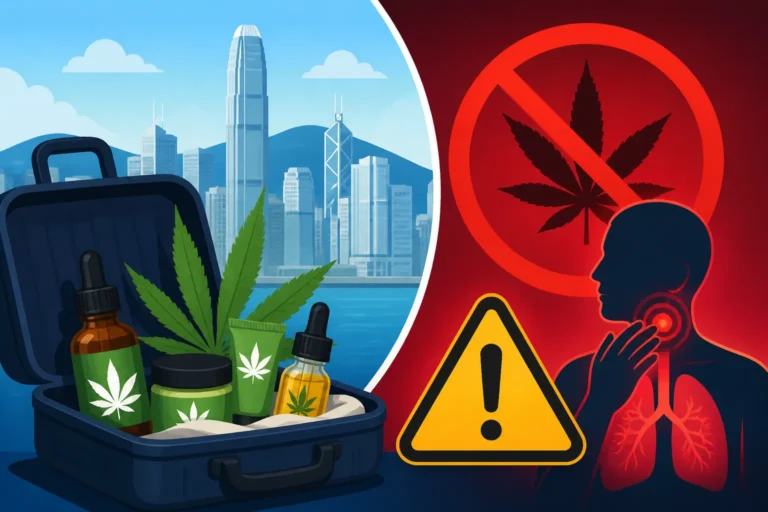
This is the most critical advice I can give: CBD is strictly illegal in Hong Kong. As of 2023, CBD is classified as a dangerous drug, similar to heroin or cocaine. If you have "calming" gummies, oils, or even skincare products containing CBD, do not bring them. People have been arrested at the airport for a single bottle of CBD oil.
Additionally, some "Cold and Flu" medications from the US or UK contain pseudoephedrine in high doses. While common overseas, some versions are more tightly controlled here. If you are unsure, stick to buying your cold meds locally. Most local brands like Coltalin are formulated specifically for the strains of virus common in the region anyway.
Practical Shopping Tips for Expats
To save money and avoid the "expat tax," there are a few tricks to shopping for meds in Hong Kong. First, sign up for the loyalty programs. Mannings has the "Mann Card" (linked to the yuu app), and Watsons has "MoneyBack." The points add up quickly, and they often have "Member Days" with 10% off everything.
Second, be wary of "Parallel Imports." In some local "Medicine Stores," you might see familiar brands with labels in Thai, Indonesian, or Greek. These are parallel imports—genuine products intended for other markets. While usually safe and cheaper, the instructions won't be in English or Chinese. If you aren't 100% sure of the dosage, stick to the official stock at the big chains or a reputable Registered Pharmacies (Rx) and Drug Stores shop.
Lastly, always check the expiry date. In the smaller, high-turnover shops in areas like Mong Kok, I've occasionally found boxes that are very close to their end date. The large chains are much more rigorous about rotating their stock. If you're heading out for a hike or a boat trip, it's also worth checking the Health & Medical hub for advice on sun protection and hydration, as the HK sun is much stronger than it looks through the haze.
Summary of Where to Go
- Minor Ailment (Headache, small cut, sore throat): Any Watsons, Mannings, or 7-Eleven.
- Specific OTC Need (Ibuprofen, strong antihistamines): A Watsons or Mannings with a pharmacist on duty.
- Cheaper Prescription Fills: A local "Rx" dispensary in a residential neighborhood (like Wan Chai or Sham Shui Po).
- Emergency / Late Night: 24-hour Watsons (select locations) or hospital A&E.
For those recently arrived, remember that your health is an investment. While OTC meds are great for a quick fix, don't hesitate to use your private insurance. Using a provider like Cigna Global ensures you're not just relying on a pharmacist's advice when you're feeling truly miserable. Navigating the system gets easier with time, but for those first few months, keep this guide bookmarked so you know exactly which sign to look for when the flu inevitably strikes.
Disclaimer
This guide is for informational purposes only and does not constitute medical advice. Hong Kong’s pharmaceutical laws and regulations can change. Always consult with a qualified medical professional or a registered pharmacist before taking any medication. For emergencies, please dial 999 or visit the nearest Accident and Emergency department.