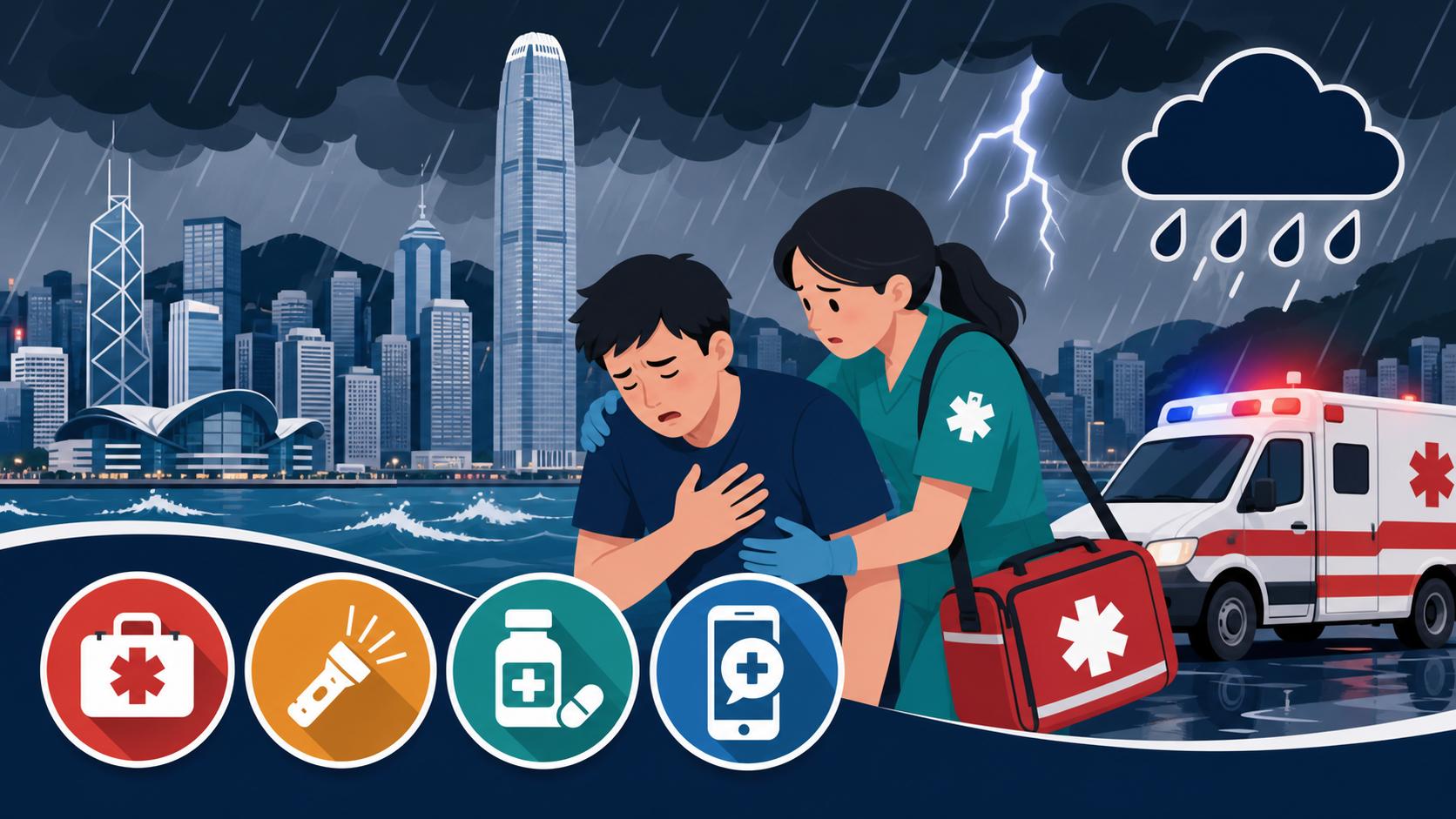
Navigating Medical Emergencies During T8 Typhoons or Black Rainstorms
Waking up to the low-frequency howl of the wind rattling your window frames is a classic Hong Kong experience, but it takes on a terrifying edge when someone in your household is suddenly clutching their chest or burning up with a high fever. I remember my first T8, pacing my tiny flat in Mid-Levels while my toddler’s temperature spiked, wondering if an ambulance could even reach us in those gusts. This guide navigates the complex logistics of accessing healthcare when the city effectively shuts down due to extreme weather.
Understanding the Hong Kong Storm Warning System and Its Medical Impact
Living in Hong Kong means becoming intimately familiar with the Hong Kong Observatory. The warning system isn't just a suggestion; it’s a legal and operational trigger that changes how the entire city functions. When a Typhoon Signal No. 8 (T8) or higher is hoisted, or when a Black Rainstorm Warning is in effect, the city enters a state of near-total suspension. For the uninitiated, this can be incredibly disorienting, especially when a medical need arises.
The T8 Signal: What Actually Shuts Down
When the T8 signal goes up, the city generally has a two-hour grace period before public transport begins to wind down significantly. Most private general practitioner (GP) clinics, specialist centers, and even some smaller private outpatient departments will close their doors. The reasoning is twofold: staff safety and insurance liability. If you had a 3:00 PM appointment for a routine check-up and the T8 is announced for 4:00 PM, expect a phone call telling you to stay home.
In my experience, the speed at which Hong Kong "deflates" during a T8 is staggering. MTR services continue but at reduced frequencies, and buses eventually stop running once the wind reaches a certain threshold. This makes Finding English-Speaking General Practitioners (GPs) in Central nearly impossible during the peak of the storm. If your medical issue is non-critical, your best bet is to hunker down and wait. However, for true emergencies, the public infrastructure remains the backbone of the city's survival.
Black Rainstorms: Flash Floods and Road Safety
While typhoons give us a bit of a "heads up," Black Rainstorm Warnings can be much more sudden. A "Black Rain" means that heavy rain has fallen or is expected to fall generally over Hong Kong, exceeding 70 millimeters in an hour. The primary danger here isn't the wind, but flash flooding and landslides. Roads can become impassable in minutes, particularly in areas like Happy Valley or the steeper parts of Hong Kong Island.
During a Black Rainstorm, you are officially advised to stay indoors. From a medical perspective, this means that even if a clinic is technically open, getting to it might be life-threatening. The Emergency Medical Services in HK: Calling 999 and A&E Wards are still operational, but response times can be hampered by flooded tunnels or debris. The water cascades down the Peak during these storms; it's a force that can stop even the sturdiest ambulance.
The Grace Period and the Two-Hour Rule
There is a standard "two-hour" rule in Hong Kong. When the Observatory issues a "Pre-no. 8 Special Announcement," it usually gives the public two hours to get home. During this window, you might still find a few pharmacies or clinics open, but they will be rushing to close. If you realize you are low on essential medication, this is your only window to act.
If the signal is lowered to a T3 or a Red Rainstorm, most services will resume within two hours of the announcement, provided it’s within normal business hours. If the signal is lowered after 4:00 PM, many private clinics will simply stay closed until the next morning. Understanding this rhythm is vital so you don't waste precious time wandering through a deserted shopping mall looking for a doctor.
Accessing Emergency Services: Calling 999 in High Winds
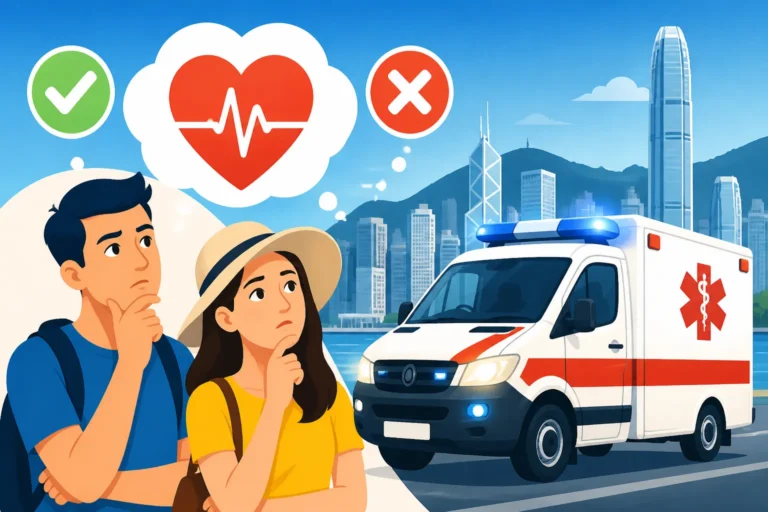
In a genuine life-or-death situation, the 999 system is your primary lifeline. The Hong Kong Fire Services Department (FSD), which manages the ambulance service, is incredibly well-trained for extreme weather. However, the way they operate changes slightly when the winds are screaming at 100 kilometers per hour.
Ambulance Response Times and Logistics
During a T8 or Black Rainstorm, ambulances are still dispatched, but they are subject to the same physical limitations as any other vehicle. High-sided vehicles like ambulances are vulnerable to strong crosswinds, especially on bridges like the Tsing Ma or the Stonecutters. If you are in a remote area like Sai Kung or parts of Lantau, fallen trees can block the narrow roads, requiring a fire crew to clear the path before the ambulance can reach you.
When you call for help, the dispatcher will ask specific questions to determine the severity. It’s important to know What to Say When Calling 999 for a Medical Emergency to ensure they prioritize your call correctly. They are looking for "life-threatened" cases (Category 1). If your situation is deemed less urgent, you might be told that there is a significant delay. This is where having a robust private insurance plan, like those offered by Cigna Global, can be a mental relief, even if the immediate physical access is limited by the weather.
Effective Communication with 999 Operators
In the heat of an emergency, the language barrier can feel insurmountable, but 999 operators in Hong Kong are generally bilingual in Cantonese and English. Be prepared to give your exact address, including the building name, floor, and flat number. In Hong Kong, building names are often more important than street numbers.
If you are a tourist or a new expat, you might wonder Is the Ambulance Free in Hong Kong for Tourists and Expats? The answer is yes—the emergency transport to a public hospital is a provided service, regardless of your residency status. However, once you arrive at the hospital, the billing differs. During a storm, don't let the fear of costs stop you from calling if someone is in danger. The priority is stabilization.
Triage and Waiting Times in Public A&E
Once the ambulance arrives at the public hospital, you will enter the Accident and Emergency (A&E) Triage Categories in Public Hospitals system. During extreme weather, the A&E departments often become crowded. Not only are they dealing with normal emergencies, but they also see an uptick in storm-related injuries—lacerations from broken glass, falls, or people injured by flying debris.
The triage system ranges from Category 1 (Critical) to Category 5 (Non-urgent). If you show up with a minor injury during a T8, expect a very long wait. The staff will be stretched thin, and they must prioritize those whose lives are at stake. I’ve sat in the Queen Mary Hospital A&E during a T10, and the atmosphere is one of focused, high-pressure efficiency. You are in good hands, but patience is a requirement.
Public vs. Private Care During Extreme Weather
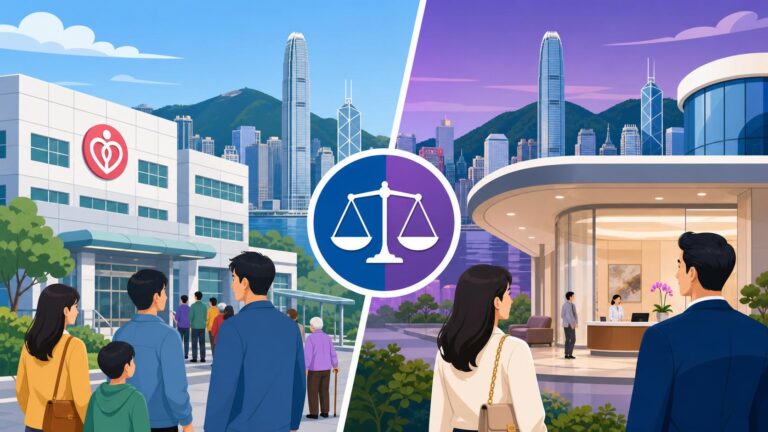
The choice between public and private healthcare in Hong Kong is a common debate for expats. During a storm, this choice becomes even more stark. While the public system never closes, the private system has more flexibility—and more limitations.
Seeking Care at Private Hospital Wards
Most major private hospitals, such as Matilda International Hospital or Hong Kong Sanatorium, keep their inpatient services and their 24-hour urgent care centers running during a T8. However, their outpatient clinics (where you would see a specialist for a non-emergency) will likely close. If you are already admitted to a private hospital, your care will continue as normal, though some elective surgeries might be postponed if the necessary consultants cannot safely reach the hospital.
If you decide to head to a private hospital during a storm, you must call ahead. You need to ensure they have a doctor on-site who can treat your specific issue. For those covered by SafetyWing, checking the local network of hospitals is a good prep step. Some private hospitals might even have limited shuttle bus services that stop once the T8 signal is hoisted, meaning you’ll have to rely on taxis—which are notoriously difficult to find and expensive during typhoons.
Surcharges and Hidden Costs of Storm-Day Visits
One of the "unspoken" realities of Hong Kong is the typhoon surcharge. While public hospitals maintain their standard fees, some private clinics and even a few private hospitals may apply an additional fee for consultations during a T8 or Black Rainstorm. This is often used to cover the extra costs of staff staying overnight or taking specialized transport.
Before you go, it's worth checking Healthcare in Hong Kong: Public vs Private Systems Explained (2027) to understand the baseline costs. During a storm, a "standard" consultation fee could easily double. Most comprehensive insurance plans like Cigna Global will cover these emergencies, but it's always stressful to deal with the paperwork later. Always keep your receipts and ask the hospital to specify that the visit occurred during a T8 warning to justify the higher cost to your insurer.
Outpatient Clinic Rescheduling and the Aftermath Rush
If the T8 signal is lowered on a Tuesday morning at 10:00 AM, the city will try to be back at work by noon. This creates a massive "logjam" at medical clinics. Everyone who missed their appointment during the storm will be trying to squeeze in. If you have a non-urgent need, I highly recommend waiting until the following day.
The Navigating the Private Specialist Network: Direct Access vs Referrals process becomes much more difficult in the 24 hours following a major storm. Phone lines will be jammed, and doctors will be rushing to catch up on surgeries. If you need a follow-up, use an app or online booking system if available, as the clinic staff will be overwhelmed with the sudden influx of patients.
Comparison of Medical Service Availability
| Service Type | Signal T1 / T3 / Amber Rain | Signal T8+ / Black Rain | Recovery Period (2-4 hours post-signal) |
|---|---|---|---|
| Public A&E | Fully Operational | Fully Operational (High Demand) | Fully Operational |
| Private Urgent Care | Fully Operational | Open (Call ahead) | Fully Operational |
| GP Clinics | Open | Usually Closed | Reopening gradually |
| Public Clinics | Open | Closed | Reopening gradually |
| Pharmacies (Chain) | Open | Mostly Closed | Reopening quickly |
| Ambulance (999) | Normal Service | Emergency Only (Potential Delays) | Resuming Normal Service |
Practical Preparation: Your Home Medical Survival Kit
Because getting to a doctor is so difficult during a storm, the best strategy is to be self-sufficient for at least 24 to 48 hours. This doesn't mean performing surgery on your kitchen table, but it does mean having the tools to manage minor issues until the wind dies down.
Essential Over-the-Counter Supplies
In the days leading up to typhoon season (typically May to September), you should audit your medicine cabinet. You need a solid grasp of Pharmacies and Medication in HK: Prescriptions and OTC Rules to know what you can actually stock up on. Essential items include fever reducers (Paracetamol/Ibuprofen), antihistamines for sudden allergic reactions, and basic wound care supplies.
New arrivals are advised to keep a "Storm Box." This should include rehydration salts—vital if someone gets a stomach bug while you are trapped inside. Also, consider the humidity; Dealing with Humidity and Mold in Your Apartment can actually trigger respiratory issues during a storm. If you or your children have asthma, ensure your inhalers are full and that you have a backup. A T8 is the worst time to realize your Ventolin is empty.
Telemedicine as a Lifeline
One of the great advancements in recent years is the rise of virtual consultations. Many expats now use Telemedicine Apps in HK: DoctorNow and Virtual Consultations as their first line of defense. During a storm, if you have a stable internet connection, you can speak to a doctor who can triage your symptoms via video.
While they cannot physically examine you, they can offer peace of mind or tell you definitively if you need to risk the journey to an A&E. Some telemedicine services can even arrange for medication delivery as soon as the T8 signal is lowered to a T3. It’s a fantastic middle ground that keeps you safe and dry while still getting professional medical advice. For frequent travelers or digital nomads using SafetyWing, these virtual options are often a built-in part of the service.
Handling Chronic Conditions and Repeat Prescriptions
If you have a chronic condition like diabetes or hypertension, the storm warning system adds a layer of stress. You must ensure you have at least a week’s supply of medication at all times during the summer months. If a T10 hits, the city can be paralyzed for over 24 hours, and it might take another day for your local pharmacy to restock.
If you are nearing the end of a prescription, don't wait for the "pre-T8" announcement to head to the hospital pharmacy. I’ve seen the queues at the Public Hospital Visiting Hours: What You Need to Know Before Going and the outpatient pharmacies; they become chaotic as a storm approaches. Get your refills done when the skies are clear. If you are caught short, your best bet is a 24-hour private hospital pharmacy, but be prepared to pay a premium for the convenience.
Financial Considerations and Insurance Claims
Navigating an emergency is hard enough without worrying about the bill, but in Hong Kong's dual-tier system, the financial aspect is always present. Documentation is your best friend when it comes to post-storm insurance claims.
Documenting the Emergency for Insurers
Insurers like Cigna Global are used to the unique weather patterns of East Asia, but they still require proof of medical necessity. If you had to take a taxi to the hospital during a T8, the driver likely charged you a flat rate (often HKD 200-500 above the meter). While the "extra" typhoon surcharge on a taxi is rarely covered by insurance, the medical fees themselves are.
Ask the attending physician to clearly state the time of admission. If the hospital adds a "Typhoon Surcharge" to your bill, make sure it is itemized. Take photos of the weather warnings on the HK Observatory app as a record. This might seem like overkill, but when you are filing a claim for several thousand dollars, having a "weather log" can prevent the insurer from questioning why you didn't just go to a cheaper daytime clinic.
Public Hospital Billing for Non-Eligible Persons
If you are a tourist or a new resident who hasn't yet received your HKID, you are considered a "Non-Eligible Person" (NEP) in the public system. This means your A&E visit will cost significantly more than the subsidized rate for residents. During a storm, the hospital will treat you first and bill you later.
Don't let the NEP status deter you from seeking help. The public hospitals are equipped to handle the most complex trauma and cardiac cases, which some private hospitals might not be. If you have international coverage through SafetyWing, your emergency room costs in the public system will generally be covered, even at the NEP rate. Just ensure you have your policy details accessible on your phone, as the hospital will need to know who is responsible for the bill once the immediate crisis has passed.
The Role of Corporate vs. Private Insurance
Many expats rely on their employer's group medical insurance. However, these plans often have "inner limits" that can be quickly exhausted during an emergency visit with storm surcharges. This is why many veteran expats maintain a top-up private policy with providers like Cigna Global.
A private policy often provides a higher level of "direct billing" support, which is a godsend when you are stressed. During a typhoon, the last thing you want is to be hunting for your credit card while a nurse is asking for a deposit. Check if your insurance provider has a 24-hour hotline and call them as soon as you are stable. They can often send a "letter of guarantee" to the hospital, allowing you to focus on recovery rather than the rising costs.
Disclaimer
The information provided in this guide is for general informational purposes only and does not constitute professional medical or legal advice. Hong Kong’s weather signals and healthcare policies are subject to change. Always follow the instructions of the Hong Kong Observatory and emergency services during extreme weather events. In a medical emergency, call 999 immediately. Your safety and health are paramount; do not delay seeking care due to the information read here.