What to Say When Calling 999 for a Medical Emergency
Imagine finding yourself in a high-pressure situation where a loved one is suddenly unresponsive in your Mid-Levels apartment, and the panic of the moment makes you forget even the simplest local procedures. I remember the paralyzing fear when my neighbor collapsed in the lobby; my mind went blank, and I fumbled through the call. This guide provides the exact steps and scripts you need to navigate calling 999 for a medical emergency in Hong Kong.
Understanding the Hong Kong 999 Emergency System
The 999 emergency line in Hong Kong is a highly efficient, multi-agency hub that handles police, fire, and ambulance requests. When you dial those three digits, your call is first answered by a Police Force operator. This is a critical distinction that often surprises newcomers. You must stay on the line while they ask which service you require. In a medical crisis, clearly state "Ambulance" immediately.
Who answers your call and the transfer process
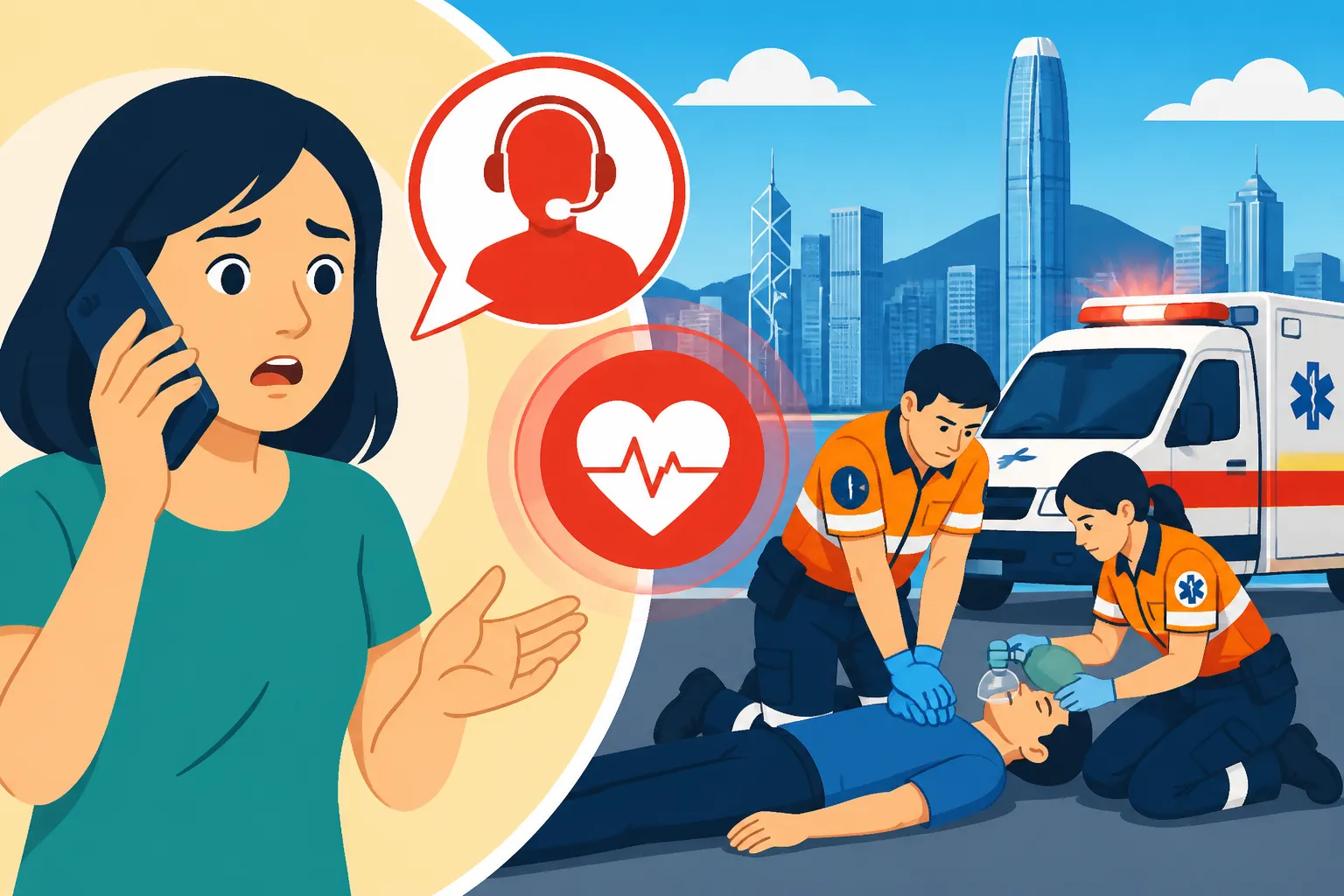
Once you specify that you need an ambulance, the police operator will transfer your call to the Fire Services Department (FSD) Communication Centre. This transfer usually takes only a few seconds, but in the heat of an emergency, those seconds can feel like an eternity. It is vital not to hang up during the clicking sounds or brief silence during the patch-through. The dispatchers at the FSD are trained in Emergency Medical Dispatch (EMD) protocols, meaning they will start giving you life-saving instructions over the phone while the ambulance is already on its way.
Many expats worry about language barriers, but the system is designed for a global city. While Cantonese is the primary language, all operators are proficient in English. If you are a tourist using a plan like SafetyWing, you might be worried about international roaming or connection quality, but emergency calls are prioritized by all local networks. For a deeper dive into the logistics of these services, you can refer to our guide on Emergency Medical Services in HK: Calling 999 and A&E Wards.
Dispatch times and expectations in a vertical city
Hong Kong is one of the most densely populated places on earth, and its verticality adds a layer of complexity to emergency response. The Fire Services Department has a performance pledge to arrive at the scene within 12 minutes for 92.5% of urgent calls. However, "arrival at the scene" often means the ambulance has reached the ground floor of your building. In a 60-story tower, it may take the paramedics several more minutes to navigate the lift system and reach your specific flat.
When you are on the phone, the dispatcher will ask for your address. Because of the city's complex layout, they need more than just a street name. They need the building name, the block number, the floor, and the flat letter. If you are out on a trail, try to locate the nearest distance post number on the hiking path. Understanding these nuances is part of the Essential Health Checklist for Your First 30 Days in Hong Kong.
Crucial Information to Provide During the Call
When the FSD operator takes over the call, they will follow a strict line of questioning. Being prepared with these answers can shave precious minutes off the response time. The very first thing they will ask for is your location. Even if they have GPS data from your mobile, the "vertical address" is something only you can provide.
Precise location and building details
In Hong Kong, many residential complexes have multiple phases and blocks with similar names. For example, if you live in Provident Centre in North Point, you must specify which block you are in. A typical script should sound like this: "I am at Block 7, Floor 22, Flat C, Provident Centre, 21-53 Wharf Road, North Point."
If your building has a security gate or a specific code, tell the operator. If you have a domestic helper or a family member available, send them down to the lobby to wait for the paramedics and hold the lift. This simple act can save three to five minutes of searching. If you are a guest in a hotel, provide the room number and the name of the hotel immediately. For those staying long-term, ensure your CPR and Choking First Aid Courses for Foreign Domestic Helpers are up to date so they can assist while you are on the phone.
Describing the medical condition and patient status
The dispatcher will ask, "What is the emergency?" and "Is the patient conscious and breathing?" Be as descriptive as possible but keep it brief. Instead of saying "He feels unwell," say "He is a 50-year-old male with severe chest pain and cold sweats."
The FSD uses a sophisticated dispatch system to prioritize calls. If the patient is in cardiac arrest or has a life-threatening airway obstruction, they will categorize the call as "Priority 1." If you are unsure about the severity, the dispatcher will guide you through a series of "Yes" or "No" questions. They might ask you to perform chest compressions; if so, stay on the line and follow their rhythm. You can learn more about how the public system handles these cases in our Hospital Authority (HA) Guide: Accessing Public Healthcare for Expats.
Contact details and callback numbers
The operator will ask for the phone number you are calling from. This is in case the line gets disconnected or the paramedics cannot find your unit. If you are using a foreign SIM card, make sure to include the country code, although using a local number is always preferred for reliability.
If you are a visitor covered by SafetyWing, keep your digital insurance card accessible, but do not worry about payment during the 999 call. In Hong Kong, the public ambulance service provided by the FSD does not charge the patient at the point of service, regardless of residency status. For more details on this, see Is the Ambulance Free in Hong Kong for Tourists and Expats?.
Overcoming Language Barriers and Cultural Nuances
While English is an official language and dispatchers are fluent, the stress of an emergency can sometimes lead to communication gaps. Speaking clearly, slowly, and avoiding slang is essential. In the heat of the moment, local names for landmarks might be more useful than the official English street names.
Communicating in English and basic Cantonese phrases
If you find yourself struggling to be understood, or if you are assisting a local person who does not speak English, knowing a few key Cantonese phrases can be a lifesaver. You do not need to be fluent, but the following terms are universally understood by emergency responders:
| English Term | Cantonese (Phonetic) | Purpose |
|---|---|---|
| Emergency | Gwan Gap | To signal urgency |
| Ambulance | Gyu Fa Che | To specify the service |
| Hospital | Yi Yun | To indicate destination |
| Heart Attack | Sum Jong Bang Faat | Specific medical condition |
| Unconscious | Wan Mai | Patient status |
| Help Me | Bong Bong Ngo | General plea for aid |
If you are a long-term resident with Cigna Global, you likely have access to premium support, but in a 999 scenario, the public system is the primary responder. For non-emergency situations where you need a doctor who speaks perfect English, you might look into Finding English-Speaking General Practitioners (GPs) in Central.
Cultural nuances and building security
In many Hong Kong "estates" or high-rise complexes, the security guards (locally called "ba-an") are the first line of defense. When you call 999, it is often helpful to also hit the intercom to your building’s management office. They can lock a lift for the paramedics' exclusive use, ensuring they don't stop at every floor on the way up.
Furthermore, be aware that Hong Kong paramedics are exceptionally professional but very direct. They will move quickly and may ask you to move out of the way. This isn't rudeness; it's the efficiency required in a city with such a high volume of calls. They will likely take the patient to the nearest public hospital with an Accident and Emergency (A&E) department. You cannot usually request a specific private hospital like Matilda or Sanatorium via a 999 ambulance.
What Happens After the Call: Triage and Transport
Once the ambulance arrives, the paramedics will stabilize the patient and prepare for transport. This is when the "triage" process begins. In Hong Kong, the public system is world-class for trauma and acute emergencies, often outperforming private facilities in life-or-death situations.
Public vs. Private ambulance options
It is a common misconception among expats that they can call 999 and be taken to a private hospital. Standard FSD ambulances will strictly take you to the designated public hospital within their catchment area. If you insist on going to a private hospital, you will generally need to arrange for a private ambulance service, which is not part of the 999 system.
| Service Type | Provider | Destination | Cost |
|---|---|---|---|
| Emergency (999) | Fire Services Dept | Nearest Public A&E | Free / Nominal |
| Non-Emergency | St. John Ambulance | Public or Private | Voluntary Donation |
| Private Transport | Private Hospitals | Specific Private Clinic | High (Insurance Reimbursable) |
For those with comprehensive coverage like Cigna Global, you may be able to transfer to a private ward once the patient is stabilized. You can read more about this in Private Hospitals in Hong Kong: Admission, Costs, and Insurance.
Understanding hospital destination rules
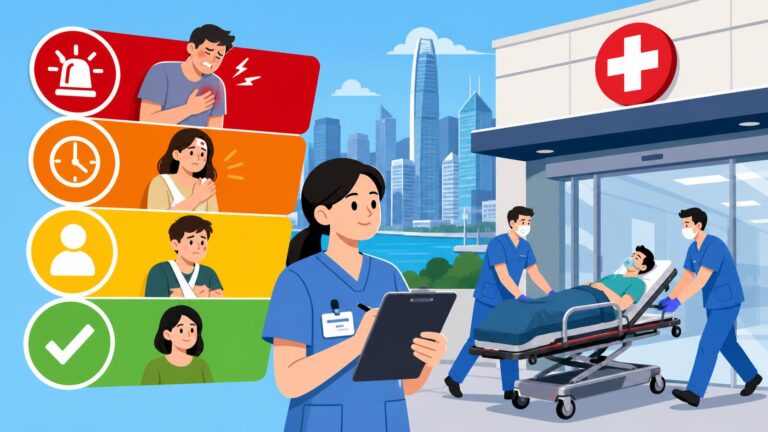
Hong Kong is divided into clusters by the Hospital Authority. Your location determines your hospital. If you are in Mid-Levels, you will likely go to Queen Mary Hospital. If you are in Causeway Bay, it will be Ruttonjee. These public hospitals use a strict triage system. Upon arrival at the A&E, the patient will be categorized from 1 (Critical) to 5 (Non-urgent).
If your condition is deemed non-urgent (Category 4 or 5), be prepared for a very long wait, sometimes exceeding 8 hours, as they prioritize 999 arrivals. This is explained further in Accident and Emergency (A&E) Triage Categories in Public Hospitals and Waiting Times at Public A&E: What Category 4 and 5 Actually Mean.
Preparing Your Household for a Medical Crisis
The best way to handle a 999 call is to prepare for it before it ever happens. This is especially true for expat families who may have elder dependents or young children. Having a "grab-and-go" folder near your front door can make the transition from home to hospital seamless.
Keeping an emergency folder and medical history
Your emergency folder should contain:
- Copies of HKID cards or passports for all family members.
- A list of current medications and known allergies.
- Your insurance policy details (e.g., your Cigna Global policy number).
- A written version of your home address in both English and Chinese characters (to show a taxi driver or neighbor if needed).
- Contact information for your primary care physician.
Paramedics will find this information incredibly helpful. In the chaos of a stroke or heart attack, you might forget the names of medications. Handing over a prepared list ensures no contraindications occur during emergency treatment.
Insurance and financial readiness
While the initial ambulance ride and emergency stabilization in a public hospital are very affordable for HKID holders, the costs can escalate if you are a non-resident or if you require long-term care. If you are traveling, SafetyWing provides excellent peace of mind for sudden illnesses. For residents, having a robust plan like Cigna Global allows you to move to a private room once the emergency phase has passed, which is often much more comfortable for recovery.
Don't forget to keep a small amount of cash or a topped-up Octopus card ready. While the ambulance is free, you may need a taxi to get home from the hospital later, and not all taxis in Hong Kong accept credit cards. Planning for these small details is a hallmark of a veteran expat. For more on managing these costs, see our guide on Registering Your HKID for Subsidized Public Healthcare Rates.
Important Medical Disclaimer
The information provided in this guide is for educational and informational purposes only and is not intended as medical advice. Always seek the advice of a qualified healthcare provider with any questions you may have regarding a medical condition. In a life-threatening emergency, dial 999 immediately. The author and this website are not responsible for any actions taken based on the information provided herein. Health policies and emergency protocols in Hong Kong are subject to change by the Department of Health and the Fire Services Department.