Public Maternity Wards: What to Pack for Your Hospital Bag
The moment you realize that a Hong Kong public hospital provides almost nothing but the bed and the medical expertise is a sharp wake-up call for many expats. I still vividly remember shivering in my thin hospital gown at Queen Mary, realizing I’d forgotten basic necessities like slippers and a thermos. This guide ensures you are fully prepared for the no-frills, highly efficient reality of the public maternity system.
The Reality of the Hong Kong Public Maternity Experience
Navigating the public system via the Hospital Authority (HA) is a journey in efficiency, but it is a far cry from the hotel-like luxury of private facilities. When you opt for the public route, you are choosing world-class medical safety, but you are also choosing a communal environment where space is at a premium. Unlike the experience detailed in Private Maternity Packages: Hidden Costs and Doctor Fees Explained, public wards are usually large, open rooms with six to eight beds separated only by thin curtains.
You need to understand that the staff are there to manage your clinical care, not to act as a concierge service. This means your hospital bag isn't just a collection of "nice-to-haves"—it is your life support system for the 48 to 72 hours you’ll likely spend in the ward. Because storage space is limited to a tiny bedside locker, you must be strategic. Many expats choose to have two bags: a small one for the labor room and a larger one that your partner can bring to the postnatal ward once you have been moved.
If you are currently weighing your options between systems, reading up on Healthcare in Hong Kong: Public vs Private Systems Explained (2027) can help clarify why many choose the public sector for the actual delivery while maintaining a private policy with a provider like Cigna Global for specialist consultations or second opinions. While the public system is incredibly affordable for HKID holders, the "comfort" gap is where your packing list becomes your best friend.
The Two-Bag Strategy
Public hospitals like Princess Margaret or Kwong Wah often have very strict rules about what you can bring into the actual delivery room. It is wise to pack a "Labor Essentials" bag that is small enough to sit on the corner of your bed. This should contain your identification, a charging cable, and immediate comfort items. The second, larger bag should stay in the car or with your partner until you are transferred to the postnatal ward.
This division is crucial because the labor rooms are high-traffic areas. You don't want to be rummaging through a giant suitcase for a lip balm while mid-contraction. Furthermore, the ward lockers are notoriously narrow. If you bring a hard-shell large suitcase, you might find it literally won't fit anywhere, forcing you to keep it under your bed where it’s hard to reach.
Why You Need a Robust Insurance Safety Net
Even if you are committed to the public system, having a comprehensive plan from Cigna Global is a common strategy for expats who want the best of both worlds. While your hospital bag covers your physical needs, a solid insurance policy covers the "what-ifs." For instance, if complications arise and you decide to transfer to a private facility for recovery, or if you need post-birth physiotherapy that the public system might have a long waitlist for, those private benefits are invaluable.
For those on a tighter budget or in between long-term contracts, SafetyWing provides an excellent alternative for basic medical coverage. While it may not cover the pregnancy itself if you are already expecting, it is a great safety net for general medical emergencies during your stay. Knowing you have that financial backing allows you to focus entirely on your "pink book" and your new arrival.
The Essential Packing List for Mom
The public hospital provides a gown, but it is often thin and ties at the back, which can be drafty and awkward for breastfeeding. Most hospitals require you to wear their gown during the actual delivery, but you can often transition to your own clothes in the postnatal ward. However, I’ve found that many nurses prefer you stay in the gown for easy medical checks. In that case, your "comfort items" become even more important.
One thing the Hospital Authority (HA) Guide: Accessing Public Healthcare for Expats won't emphasize enough is the air conditioning. HK hospitals are kept at what feels like sub-arctic temperatures to combat the outside humidity. A thick, front-opening cardigan or a pashmina is an absolute requirement. You want something that doesn't need to be pulled over your head, especially if you have an IV line or are navigating the early stages of breastfeeding.
Personal Hygiene and Postpartum Care
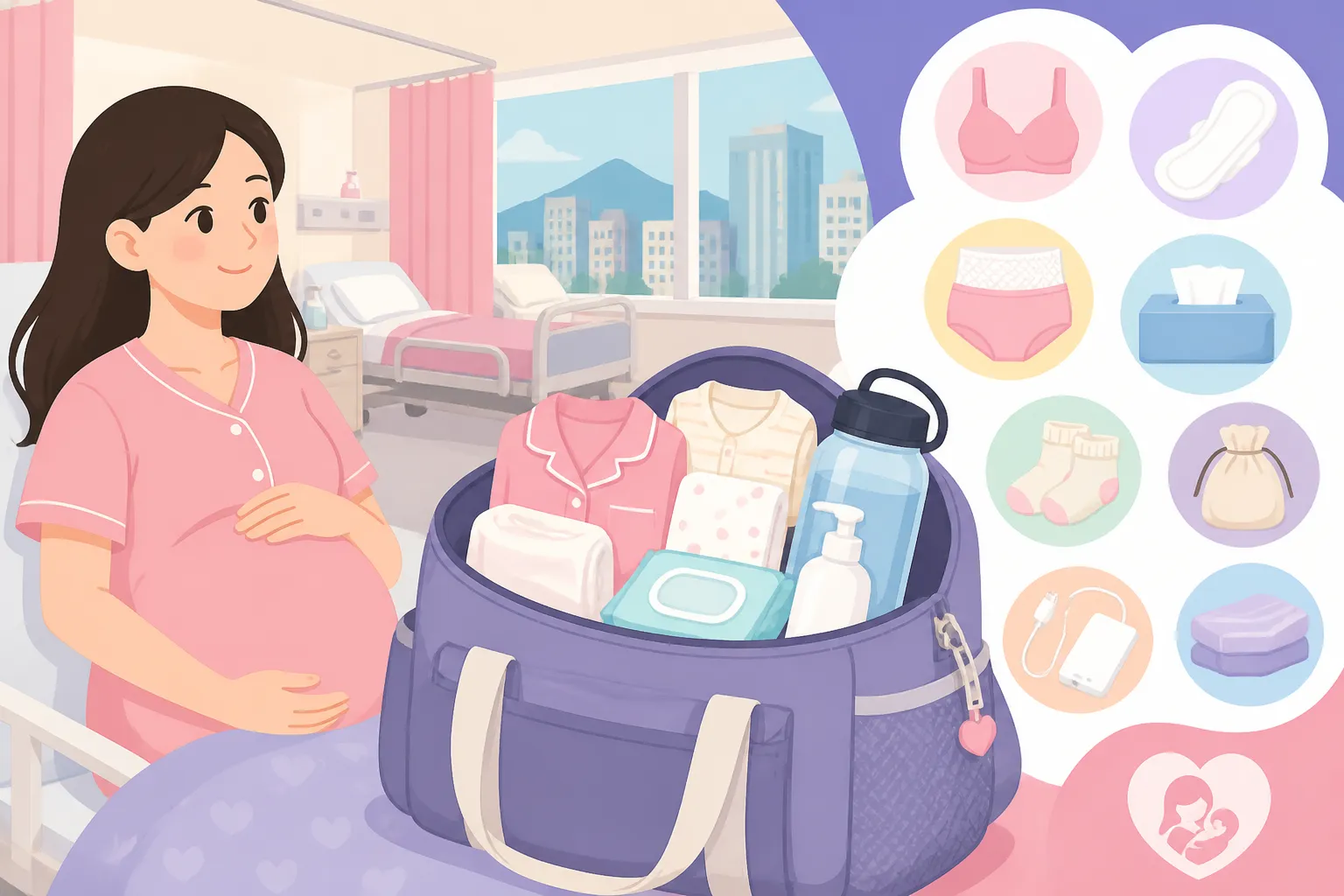
In a public ward, you are responsible for your own postpartum supplies. The hospital will not provide the giant maternity pads or the mesh underwear you see in movies. You need to head to a local pharmacy and stock up on the specific brands used here. For more on local shopping, check Pharmacies and Medication in HK: Prescriptions and OTC Rules.
| Item Category | Specific Requirement | Why You Need It |
|---|---|---|
| Maternity Pads | Adhesive, Extra Long (2-3 packs) | Hospital versions are often "loop" style and very uncomfortable. |
| Mesh Underwear | High-waisted, disposable (10 pairs) | Protects your actual clothes and holds giant pads in place. |
| Toiletries | Travel-sized shampoo, soap, toothbrush | Public bathrooms provide only basic hand soap. |
| Flip-flops | Waterproof with good grip | Essential for the shared communal showers. |
| Thermos | 1-Liter capacity | Public wards have hot water boilers, but no cold water dispensers. |
| Snacks | Energy bars, biscuits, dried fruit | The "dinner" at 5:30 PM will leave you starving by midnight. |
The "Comfort" Necessities
Shared wards are noisy. Between beeping monitors, crying babies, and the constant rustle of curtains, sleep is a luxury. I cannot emphasize enough the importance of high-quality earplugs and an eye mask. This is where your experience will differ significantly from Maternity and Childbirth in HK: Public Wards vs Private Packages, where you would have a private room and a remote to dim the lights.
Additionally, bring a long charging cable (at least 2 meters). The power outlets are often located behind the bed or in awkward positions designed for medical equipment, not iPhones. Since you’ll be spending a lot of time documenting your baby’s first hours and updating family via the HA Go App for Booking Public Outpatient Clinics, staying powered up is vital.
Preparing for Baby’s First Days
While the hospital provides a bassinet and basic blankets, you are generally expected to provide the consumables. This includes diapers and wet wipes. When I had my first at Queen Mary, I was surprised to find that the nurses expect a "diaper stash" to be kept at the end of the baby's bassinet. If you run out, you can’t just "buy" more from the ward; your partner will have to go to the nearest 7-Eleven or Manning’s.
The Nursery Essentials
Pack at least one full pack of newborn diapers and two packs of fragrance-free water wipes. In the humid HK climate, baby skin can be quite sensitive, so sticking to brands you trust is better than relying on whatever might be available in a pinch. You should also include a small bottle of hand sanitizer for your bedside, as the wall-mounted ones in the ward are often empty or located far from your bed.
Don't forget the "going home" outfit. Hong Kong tradition—and hospital rules—usually require the baby to be well-wrapped when leaving the building. Even in the middle of a July heatwave, the hospital staff will look at you with concern if the baby isn't in a onesie, a hat, and a swaddle blanket. The transition from the frigid hospital AC to the 34-degree humidity outside can be a shock to a newborn's system.
Documentation and Administrative Items
Before you even go into labor, ensure your "Yellow Book" (Maternal Health Record) from your Prenatal Care via the Maternal and Child Health Centres (MCHC) is at the very top of your bag. The doctors will not treat you without it. You also need your HKID card and, if applicable, your husband’s HKID or passport.
If you are a non-resident, be prepared for different pricing structures, which you can review in Hospital Authority Fees: Eligible Persons (EP) vs Non-Eligible Persons (NEP). Having your insurance details from Cigna Global or SafetyWing readily available is also wise, even if you are paying the subsidized public rate, as it may be needed if you require an emergency transfer to a private wing like the K-Block at Queen Mary.
Managing the Postnatal Transition
The first 24 hours after birth in a public ward are a whirlwind of checks, breastfeeding support, and very little rest. One thing that catches many expats off guard is the visiting hour's policy. Unlike private hospitals where partners can often stay, the public system is very strict. Generally, partners can only visit during two short windows per day. This means your bag needs to be self-sufficient because your "delivery man" (your partner) won't be there to hand you things throughout the night.
To understand the specifics of who can stay and when, read Can Husbands Stay Overnight in HK Public Maternity Wards?. Knowing these rules in advance helps you pack things that provide emotional comfort, like a printed photo of your family or a small tablet pre-loaded with shows to watch during the long, lonely night hours.
Staying Connected and Informed
During your stay, the nurses will perform the first rounds of vaccinations. It’s helpful to know what to expect, particularly regarding Getting the BCG Vaccine for Newborns in Hong Kong Hospitals, which is standard procedure here. Your hospital bag should have a dedicated folder or envelope to keep all the paperwork the hospital gives you upon discharge. You will need these documents for Registering Your Newborn's Birth at the HK Births Registry and for your first follow-up appointment for Child Developmental Screenings at Maternal and Child Health Centres.
Final Packing Tips from a Veteran
- Coins and Small Cash: Many public hospitals have vending machines for snacks or drinks. While most now take Octopus cards, having some cash is a safe bet.
- A Small Fan: While it’s usually cold, the "air" in a curtained-off cubicle can get very stagnant. A small, clip-on battery-operated fan can be a lifesaver.
- Plastic Bags: Bring several for dirty laundry. There are no laundry services for patients in public wards.
- Insurance Paperwork: Even for a public birth, keep a digital and physical copy of your Cigna Global or SafetyWing policy. If you need a "Sick Leave Certificate" for your employer that matches your insurance requirements, it's easier to ask while you are still admitted.
Living through a public hospital birth in Hong Kong is a "badge of honor" in the expat community. It is a raw, intense, and incredibly local experience. By packing correctly, you remove the stress of the environment and allow yourself to focus on the incredible medical care and the new life you are bringing home.
Disclaimer
The information provided in this guide is for informational purposes only and does not constitute medical or legal advice. Hospital Authority policies, visiting hours, and packing requirements can change without notice. Always consult with your healthcare provider or the specific hospital's admissions office for the most current regulations. Health insurance coverage depends on your individual policy terms; please verify coverage with your provider before admission.