Finding Ibuprofen and Paracetamol Brands in HK Convenience Stores
Finding yourself standing in the middle of a neon-lit 7-Eleven at 3 AM with a pounding headache or a rising fever is a rite of passage for many newcomers in Hong Kong. I remember my first week in a tiny studio in Sheung Wan, squinting at boxes of "Coltalin" and "Fortune Tablet," wondering which one wouldn't make me hallucinate. This guide solves the mystery of finding ibuprofen and paracetamol in Hong Kong’s convenience stores so you can get back to sleep.
Navigating the Convenience Store Medicine Aisle in Hong Kong
The first thing you will notice when walking into a 7-Eleven or Circle K (often called "OK" by locals) is that the layout is incredibly dense. Space is at a premium in Hong Kong, and the "medicine" section is usually a tiny, vertical strip of shelving located either near the umbrellas or right behind the cashier’s counter. Unlike back home, where you might find an entire aisle dedicated to wellness, here you are looking for a selection that fits into a space about the size of a microwave.
The 7-Eleven and Circle K Selection
In these convenience stores, the inventory is curated for "quick fixes." You will find a heavy emphasis on "Flu and Cold" packs because the local culture often prioritizes staying functional at work despite a sniffle. Brands like Coltalin and Fortune are ubiquitous. While these contain paracetamol, they also often contain antihistamines or decongestants that might make you drowsy or jittery. If you are looking for pure pain relief, you have to look closer at the active ingredient labels, which are thankfully printed in both English and Chinese.
The stock levels can also be highly localized. A 7-Eleven in a residential area like Mid-Levels will likely have a better supply of child-friendly syrups and standard painkillers than one in a purely commercial district like Central, where the shelves are dominated by energy drinks and hangover "cures." It is always worth checking Essential Health Checklist for Your First 30 Days in Hong Kong to ensure your home kit is stocked before an emergency strikes.
Identifying Local Branding for Common Painkillers
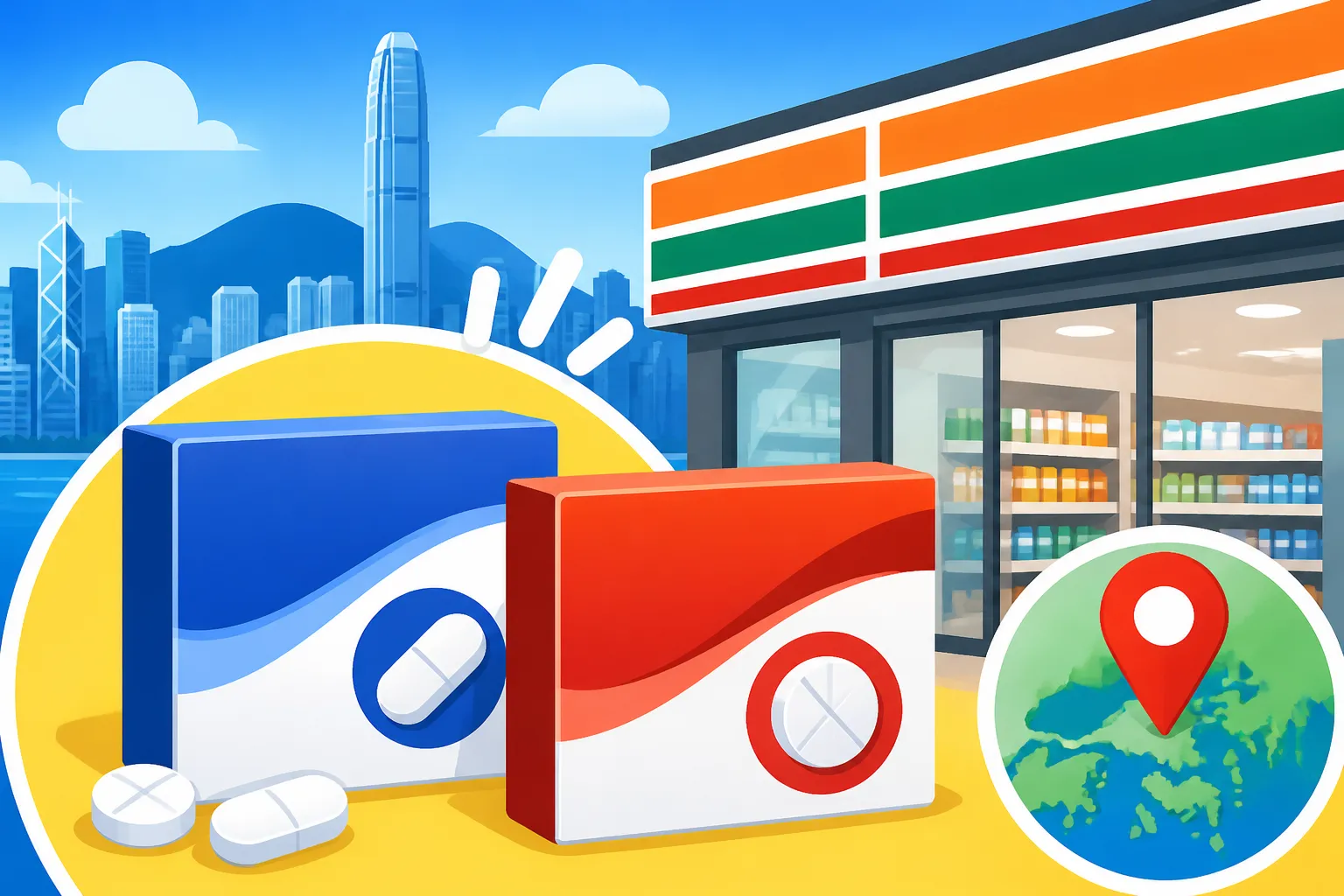
The undisputed king of paracetamol in Hong Kong is Panadol. It is so common that "Panadol" has become a genericized trademark; if you ask a shopkeeper for paracetamol, they might look confused, but ask for Panadol, and they’ll point you right to it. You will see several variations: Panadol Extra (with caffeine), Panadol Cold & Flu, and Panadol Joint. For simple pain or fever, the blue box (Optizorb) is the standard choice.
Local brands like Fortune (specifically Fortune Coltalin) are also reliable but read the box carefully. Many "Fortune" products are combination drugs. If you are an expat used to Western branding, the bright, cartoonish graphics on some local brands might make them look like candy or supplements, but they are indeed pharmaceutical-grade medications. Always check the milligrams per tablet, as the standard dose in Hong Kong is often 500mg for paracetamol.
Packaging Differences and Translation Tips
Hong Kong packaging is unique because it must cater to a bilingual population. One side of the box will be in Traditional Chinese, and the other will be in English. However, the font size for the English "Active Ingredients" list can be frustratingly small. If you are unsure, look for the word "Analgesic" (pain reliever) or "Antipyretic" (fever reducer).
Most convenience store staff speak basic English, but medical terminology can be a stretch. If you can’t find what you need, showing a picture of the brand on your phone is the most effective way to communicate. Be aware that most medications in convenience stores are sold in small "blister packs" of 10 or 12 tablets rather than large bottles of 100. This is partly due to the humidity in Hong Kong, which can degrade pills in open bottles quickly. This is one of the many quirks of Pharmacies and Medication in HK: Prescriptions and OTC Rules.
Paracetamol vs Ibuprofen What is Actually Available
One of the biggest shocks for expats from the US, UK, or Australia is that ibuprofen (Advil/Nurofen) is significantly harder to find in convenience stores than paracetamol. While paracetamol is available almost everywhere—including vending machines in some MTR stations—ibuprofen is often classified differently under Hong Kong’s pharmacy laws, depending on the dosage and packaging.
Finding Paracetamol Acetaminophen in HK
As mentioned, paracetamol is the standard go-to. You will find it in every 7-Eleven, Circle K, and even most small "Mom and Pop" grocery stores. Because it is so accessible, it is the first line of defense recommended by local doctors for everything from a post-hiking ache to a post-brunch headache. If you are managing your health through a provider like Cigna Global, they will often suggest keeping a supply of paracetamol at home to avoid unnecessary clinic visits for minor ailments.
The price for a pack of 10-12 tablets usually ranges from HKD 35 to HKD 55. If you go to a supermarket like Wellcome or ParknShop, you can find slightly larger boxes, but the "mega-bottles" common in North America are virtually non-existent here. For long-term residents, it is often more cost-effective to buy in bulk from Over-the-Counter (OTC) Medicines in HK: Watsons, Mannings, and Rx locations rather than the corner convenience store.
The Quest for Ibuprofen in Convenience Stores
If you are looking for Advil or Nurofen (Ibuprofen), you might be out of luck at a standard convenience store. Hong Kong law requires certain dosages of ibuprofen to be sold only in shops with a "medicine seller" license. Many 7-Elevens do not carry it at all, or they only carry very small, lower-dose packs. If you absolutely need an anti-inflammatory, you are better off heading to a Mannings or Watsons.
When you do find it, it will likely be the brand Nurofen. Advil is less common but can be found in specialized expat pharmacies in Central or Tsim Sha Tsui. If your pain is severe enough that standard ibuprofen isn't working, you may need to consult a professional. You can find many Finding English-Speaking General Practitioners (GPs) in Central who can provide stronger prescriptions if necessary. For those on a budget or traveling, SafetyWing provides excellent support for finding local care when OTC options fail.
Dosage and Strength Variations to Watch Out For
In Hong Kong, the standard tablet of paracetamol is 500mg. The maximum daily dose is typically 4,000mg (8 tablets), but always follow the specific instructions on the local box. Interestingly, some local "fast-acting" versions contain sodium bicarbonate to speed up absorption, which might be something to avoid if you are on a salt-restricted diet.
Ibuprofen is usually sold in 200mg tablets. It is rare to find 400mg tablets over the counter without speaking directly to a pharmacist. If you are used to higher doses, do not simply double up without checking the other ingredients in the pill. Some Hong Kong painkillers include "Phenylephrine" for congestion, which can increase your heart rate. If you are ever in doubt about a reaction, knowing the location of Emergency Medical Services in HK: Calling 999 and A&E Wards is vital.
Legal Restrictions and When to Find a Pharmacist
The regulatory environment in Hong Kong is quite strict, despite the city's reputation for being a free market. The government categorizes medicines into different "Schedules." Some are "Over the Counter" (OTC), some are "Pharmacy Only" (requiring a pharmacist to be present), and some are "Prescription Only." Convenience stores only carry the most basic OTC items.
| Medication Type | Brand Name Example | Availability | Recommended Store |
|---|---|---|---|
| Paracetamol (500mg) | Panadol | High | 7-Eleven, Circle K, Supermarkets |
| Ibuprofen (200mg) | Nurofen | Moderate | Mannings, Watsons, Rx Pharmacies |
| Cold & Flu (Mixed) | Coltalin / Fortune | High | All convenience stores |
| Aspirin | Bayer | Low | Rx Pharmacies |
| Child Paracetamol | Calpol / Panadol | Moderate | Mannings, Watsons |
Why Some Stores Do Not Carry Stronger Painkillers
If you find yourself in a 7-Eleven and the staff tells you they have "no more medicine," it might not be a stock issue. It might be a licensing issue. Shops without a registered pharmacist on duty are legally limited in what they can sell. This is why you won't find things like codeine-based painkillers or certain high-strength anti-inflammatories in a convenience store.
This restriction is actually a safety measure. The government wants to ensure that "Part 1 Poisons" (a scary-sounding category that includes many common meds) are dispensed with professional advice. If your condition is chronic, you should check Prescription Drug Laws: Bringing Foreign Medication into Hong Kong to see if you can simply import your preferred brand from home legally.
The Difference Between Registered Pharmacies Rx and Drug Stores
In Hong Kong, there is a very important distinction between a "Drug Store" and a "Pharmacy." You will see many shops with a red and white cross or a "RX" logo. Only shops with the "RX" logo and a displayed "Registered Pharmacist" certificate are authorized to sell a full range of medications. Many "Drug Stores" (often called 'Yao Fong' in Cantonese) look like pharmacies but actually just sell cosmetics, snacks, and basic OTC meds.
To get the best advice, you should learn How to Spot a Pharmacy with a Registered Pharmacist on Duty. These professionals are almost always fluent in English and can recommend a local equivalent to a brand you might be missing from home. They can also clarify if your symptoms require a trip to the Hospital Authority Fees: Eligible Persons (EP) vs Non-Eligible Persons (NEP) clinics or a private hospital.
After Hours Access Emergency Dentists and AE
Convenience stores are your only option at 2 AM, but what if the Panadol doesn't work? If you have a dental emergency, for example, a convenience store will only provide temporary relief. You will need to look for Emergency Dentists in HK: What to Do on a Sunday or Public Holiday for actual treatment.
For non-dental emergencies, if your fever is dangerously high and the OTC meds aren't helping, the public Accident & Emergency (A&E) wards are available 24/7. However, be prepared for long wait times if your condition is not life-threatening. If you have international coverage through a provider like Cigna Global, you might find it much faster and more comfortable to head to a private hospital’s 24-hour outpatient clinic instead.
Practical Tips for Managing Pain as an Expat
Living in Hong Kong means adapting to the climate and the pace of life, both of which can contribute to headaches and minor pains. The humidity can cause dehydration-related headaches, and the "work hard, play hard" culture often leads to burnout. Having a strategy for medication is part of the survival kit.
Building a First Aid Kit for Your HK Apartment
Don't wait until you're sick to explore the aisles of 7-Eleven. My advice is to build a "Hong Kong Survival Box." It should include a box of Panadol (blue), a box of Nurofen (if you can find it), and perhaps some "Po Chai Pills" (a local herbal remedy for stomach issues that even most expats swear by).
Keep your kit in a cool, dry place. The Hong Kong summer can reach 95% humidity, which can make pills go soft or lose their potency if they aren't kept in their blister packs. If you are moving here, ensure this kit is part of your Essential Health Checklist for Your First 30 Days in Hong Kong.
Using Telemedicine for Quick Prescriptions
If you can’t get to a store or if the convenience store options aren't enough, Hong Kong has a burgeoning telemedicine scene. Apps like DoctorNow or even services provided by private insurers can get a doctor to speak with you via video call. In many cases, they can arrange for medication (including stronger ibuprofen or even antibiotics) to be delivered to your door via a courier within a few hours.
This is a game-changer for expats who are too sick to navigate the MTR to find an "RX" pharmacy. Just be sure to check if Are Antibiotics Available Over-the-Counter in Hong Kong? (the answer is generally no, you need that prescription from the video call). Using these apps is often covered by comprehensive plans from Cigna Global, making the process seamless.
Understanding Medical Insurance Coverage for Medication
Finally, it is worth noting that while a HKD 40 pack of Panadol isn't going to break the bank, chronic medication or high-cost painkillers can add up. Most expat insurance plans focus on inpatient care, but many offer "outpatient" riders that cover the cost of prescriptions.
If you are a digital nomad or a frequent traveler, a plan from SafetyWing is excellent for emergency coverage, but if you are a long-term resident, a dedicated Hong Kong plan is better for covering the "day-to-day" stuff like prescriptions. Always keep your receipts from the pharmacy (though 7-Eleven receipts are rarely accepted by insurers for medical claims). Knowing The Difference Between Registered Pharmacies (Rx) and Drug Stores will help you ensure you are buying from a legitimate source that provides the proper documentation for any potential claims.
Medical Disclaimer
The information provided in this article is for educational and informational purposes only and is not intended as medical advice. Always seek the advice of a qualified healthcare professional regarding any medical condition or treatment. The author is an expat blogger, not a doctor, and the availability of medications in Hong Kong is subject to change based on local regulations.