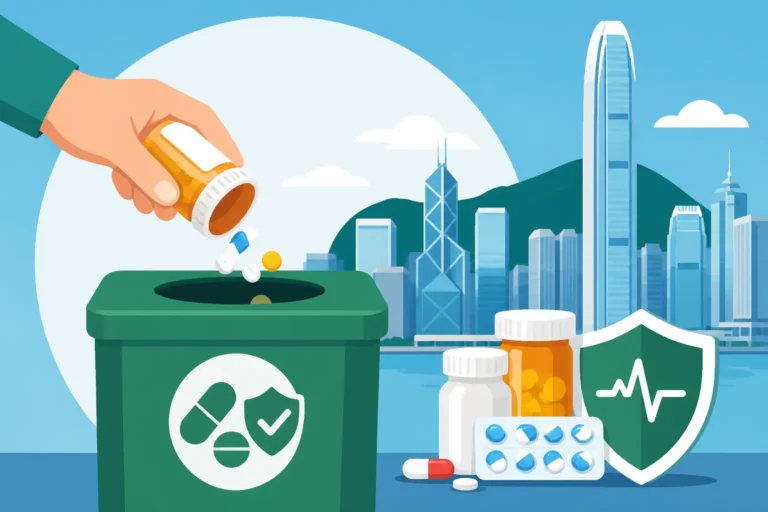
The Difference Between Registered Pharmacies (Rx) and Drug Stores
Standing on a humid street corner in Mong Kok with a pounding sinus headache, you see three different shops within twenty yards all displaying boxes of flu medicine and red-and-white crosses, yet they offer completely different levels of medical care. I remember my first week living in a tiny studio in Sheung Wan when I tried to buy a simple Ventolin inhaler at what I thought was a pharmacy, only to be met with a blank stare and a pointer toward a shop three blocks away. This guide will solve the pervasive confusion between "Rx" registered pharmacies and local drug stores so you can find the right medication without the exhausting legwork.
Decoding the Neon Signs: The Rx Symbol vs. The Medicine Store
The first thing you’ll notice in Hong Kong is that "pharmacies" seem to be as common as 7-Elevens. However, there is a strict legal distinction that governs what a shop can call itself and, more importantly, what it can sell to you. If you are used to the regulated systems in Europe or North America, the visual noise of Hong Kong’s retail landscape can be overwhelming. You might see a shop with "Medicine" in huge letters, but if it doesn't have the "Rx" logo, it isn't a pharmacy in the way you expect.
To protect yourself and ensure you are getting genuine medication, you must look for the "Authorized Seller of Poisons" (ASP) sign. While the word "poisons" sounds terrifying to a newcomer, it is simply the traditional legal terminology used by the Hong Kong Department of Health to categorize regulated drugs. A shop with this designation is a registered pharmacy. They are the only ones allowed to display the "Rx" logo and the red-and-white "Pharmacy" or "Dispensary" cross.
Beyond the signs, the physical presence of a pharmacist is the ultimate divider. I’ve learned the hard way that just because a shop looks professional doesn't mean there is a medical expert behind the counter. Registered pharmacies are legally required to have a registered pharmacist on duty for at least part of their operating hours. If you are navigating the Essential Health Checklist for Your First 30 Days in Hong Kong, learning to spot these logos should be at the top of your list.
Registered Pharmacies (Rx): The Only Place for Controlled Meds
When you enter a registered pharmacy, you are entering a space regulated by the Pharmacy and Poisons Board of Hong Kong. These establishments are authorized to sell the full spectrum of medications, including those that require a doctor’s prescription. If you have moved to the city with a complex medical history, having a high-quality insurance plan like Cigna Global can be a lifesaver, as it often covers the higher costs associated with the brand-name medications found at these reputable Rx outlets.
Professional Consultation and Safety Standards
The most significant advantage of an Rx pharmacy is the pharmacist. These individuals have undergone rigorous training and are registered with the government. They aren't just retail clerks; they are your first line of defense against drug interactions. When I was struggling with a recurring chest infection, it was a local pharmacist in Central who pointed out that the cough syrup I’d bought at a convenience store would react poorly with the antibiotics I had just been prescribed.
You can reliably find these experts in the Pharmacies and Medication in HK: Prescriptions and OTC Rules section of major chains like Mannings and Watsons. However, be aware that the "Pharmacy" counter within these large stores often has different operating hours than the main shop. If the pharmacist has gone home for the evening, the pharmacy counter will be literally locked or roped off, even if you can still buy shampoo and snacks in the rest of the store.
Handling Controlled and Prescription Substances
If you need anything beyond basic painkillers—think blood pressure medication, asthma inhalers, or specialized skin creams—you must go to an Rx pharmacy. They are the only ones permitted to handle "Part 1 Poisons." This includes medications that require a prescription and those that are "pharmacist-only" (meaning you don't need a script, but the pharmacist must personally supervise the sale).
For expats, this is particularly relevant when Finding Ibuprofen and Paracetamol Brands in HK Convenience Stores, as the dosages allowed in non-pharmacy settings are often much lower. If you need the "good stuff" for a real ailment, look for the Rx sign. This is also where you would go if you were Finding ADHD Diagnoses and Medication (Ritalin/Concerta) in HK, as these are highly controlled substances that a standard drug store cannot legally stock.
Drug Stores and Medicine Stores: The Neighborhood Convenience
In contrast to the Rx pharmacies, you will see hundreds of "Medicine Stores" or "Drug Stores" (often called "Listed Sellers of Poisons" or LSP). These shops are a staple of Hong Kong life, often packed to the rafters with everything from diapers and Japanese sunscreen to dried abalone and Tiger Balm. While they are incredibly convenient for household essentials, they are legally restricted in the types of medication they can provide.
What They Can and Cannot Sell
A drug store is only allowed to sell "Part 2 Poisons" and over-the-counter (OTC) products. This generally includes mild cold and flu medicine, some digestive aids, and low-dose painkillers. They cannot sell antibiotics, nor can they sell most chronic disease medications. If you walk into one of these shops asking Are Antibiotics Available Over-the-Counter in Hong Kong?, the answer should legally be a firm "no," and they should direct you to a registered pharmacy or a doctor.
The confusion arises because many of these shops use names that sound like pharmacies. They might call themselves "Something Medicine Company" or "Global Drug Store." To an expat, this sounds like a pharmacy. But without that Rx logo, they do not have a pharmacist on staff. If you are a traveler using a flexible plan like SafetyWing, you might find these stores useful for a quick pack of Band-Aids or some rehydration salts, but don't expect them to fill a prescription from back home.
Why They Are Popular Despite Restrictions
Despite the lack of a pharmacist, these drug stores are beloved by locals and savvy expats alike because they are often significantly cheaper than the big-name Rx chains for non-medical items. I frequently visit my local medicine store for household cleaning supplies and imported toiletries that cost double the price at a fancy supermarket.
However, a word of caution: because these stores are less stringently regulated than Rx pharmacies, you should be careful about where you buy "niche" health products. While most are perfectly legitimate, there have been occasional reports of counterfeit "grey market" supplements in some of the more tourist-heavy areas of Kowloon. If you are Buying Health Supplements: iHerb vs Local HK Retailers, sticking to the registered Rx pharmacies or reputable online platforms is usually the safer bet for your health.
The Pharmacist Presence: Timing Your Visit
One of the most frustrating hurdles I encountered when I first moved here was the concept of "pharmacist hours." In many Western countries, if the pharmacy is open, the pharmacist is there. In Hong Kong, a registered pharmacy might be open from 9:00 AM to 10:00 PM, but the pharmacist might only be on duty from 10:00 AM to 7:00 PM.
By law, "Part 1 Poisons" can only be sold when the pharmacist is physically present. If you show up at 8:00 PM with a valid prescription, the staff may be forced to tell you to come back the next day. This is why it is vital to know How to Spot a Pharmacy with a Registered Pharmacist on Duty before you make the trek. Most pharmacies will display a small plaque or sign indicating the name of the pharmacist and their specific duty hours.
If you have a global health plan like Cigna Global, you might also have access to telehealth services that can help bridge the gap when you can't reach a physical pharmacist. But for physical prescriptions, timing is everything. I’ve learned to always call ahead to my local Rx shop in Mid-Levels if I’m heading there near closing time.
Comparing Registered Pharmacies and Drug Stores
To help you decide where to go, I’ve broken down the key differences in this table:
| Feature | Registered Pharmacy (Rx) | Drug Store / Medicine Store (LSP) |
|---|---|---|
| Official Logo | Rx logo + "Authorized Seller of Poisons" | "Listed Seller of Poisons" (No Rx logo) |
| Pharmacist on Staff | Yes (Registered & mandatory hours) | No |
| Prescription Meds | Yes (Antibiotics, BP meds, etc.) | No |
| Controlled OTC Meds | Yes (Stronger cold/flu, inhalers) | No (Only mild Part 2 poisons) |
| General OTC Meds | Yes (Panadol, Strepsils, etc.) | Yes |
| Personal Consultation | Professional medical advice available | Retail advice only |
| Price Point | Generally higher for brands | Often cheaper for toiletries/basics |
Understanding "P" Labels and Medication Categories
Hong Kong uses a "P" labeling system that can be quite helpful if you know what to look for. When you are browsing the Over-the-Counter (OTC) Medicines in HK: Watsons, Mannings, and Rx, check the packaging.
- P1 (Part 1 Poisons): These can only be sold in an Rx pharmacy under the supervision of a pharmacist. Some require a prescription, while others are "behind the counter."
- P2 (Part 2 Poisons): These can be sold in both Rx pharmacies and drug stores. They are generally considered safe for self-medication for minor ailments.
- Non-Poison/General Sale: These are your basic items that you can find in supermarkets, convenience stores, or even vending machines.
If you are Finding an English-Speaking TCM Practitioner for Chronic Pain, you might find that Traditional Chinese Medicine (TCM) shops have their own separate registration system. They often sit somewhere between a drug store and a pharmacy, focusing on herbs rather than synthetic "poisons." It’s a fascinating world, but it’s separate from the Rx system we are discussing here.
Navigating the Prescription Landscape as an Expat
If you are arriving with a prescription from your home country, be prepared: most Hong Kong pharmacies cannot legally fill a foreign prescription directly. You will likely need to visit a local GP or specialist to have the script "converted" into a Hong Kong version. This is a standard procedure and is part of the Prescription Drug Laws: Bringing Foreign Medication into Hong Kong that keep the system safe.
For those on a long-term assignment, using a comprehensive provider like Cigna Global ensures that these doctor visits for "script refills" are covered. If you are just passing through and realize you forgot your medication, SafetyWing can be a great backup for finding an urgent care clinic where a doctor can write you a local prescription that any Rx pharmacy can then fulfill.
Don't forget to ask for a "medical certificate" or a formal receipt if you plan to claim the cost back. Also, if you are a regular at a public hospital, you should know How to Get Repeat Prescriptions from a Public Hospital Pharmacy, as the process is quite different from the private retail experience. Public pharmacies are often much cheaper but involve significantly longer wait times.
Tips for a Smooth Experience at a Hong Kong Pharmacy
To save you the "foreigner's frustration" I felt during my first year, keep these tips in mind:
- Bring the Box: If you are looking for a specific brand from home, bring the empty box or a clear photo of the ingredients (generic name). Many brands have different names in Asia.
- Ask for the Pharmacist: Don't just ask the person stocking the shelves. Specifically ask, "Is the pharmacist on duty?" if you need medical advice.
- Check the Expiry: In smaller drug stores, always double-check the expiry date on the box. While rare, items in the back of the shelf can sometimes sit there longer than in high-turnover Rx shops.
- Language: In expat-heavy areas like Central, Tsim Sha Tsui, or Discovery Bay, pharmacists will speak excellent English. In more local areas, have your Google Translate ready for specific symptoms.
- Special Requirements: If you are a parent, you’ll be pleased to know that Rx pharmacies are the best place for child-specific dosages. If you are an employer, you might also need these pharmacies when arranging Health Requirements and Medical Exams for Domestic Helpers.
Knowing whether to turn left into a drug store or right into an Rx pharmacy can be the difference between a quick fix and a wasted afternoon. Hong Kong's medical system is world-class, but it rewards those who know the local rules of the road. Whether you're just looking for some Is Melatonin Available Over-the-Counter or Prescription Only in HK? or need life-saving medication, look for the Rx sign and the "Authorized Seller of Poisons" plaque to ensure you're in the right place.
Disclaimer
This guide is for informational purposes only and is based on the personal experiences of expats living in Hong Kong. It does not constitute professional medical or legal advice. Regulations regarding pharmacy licensing and medication categories can change; always consult the Hong Kong Department of Health or a qualified medical professional for specific health concerns or legal requirements.