Finding an English-Speaking TCM Practitioner for Chronic Pain
Dealing with chronic pain in a city that never stops is exhausting, especially when Western treatments feel like they are only scratching the surface. I remember pacing my tiny flat in Mid-Levels with a nagging back injury, feeling completely lost while trying to decode local clinic signs. This guide helps you find reliable, English-speaking Traditional Chinese Medicine practitioners in Hong Kong to manage your pain effectively.
Understanding the Role of TCM in Hong Kong Modern Healthcare
Living in Hong Kong, you quickly realize that Traditional Chinese Medicine (TCM) isn't just an "alternative" or "fringe" option; it is a fundamental pillar of the local healthcare landscape. It is common to see people moving between a Western specialist for an MRI and a TCM practitioner for acupuncture in the same afternoon. This dual-system approach is one of the city's unique strengths, but for an expat, the entry point can be intimidating. You aren't just looking for a doctor; you are looking for someone who can bridge the cultural gap between Eastern philosophy and Western medical terminology.
The integration is so deep that many Private Hospitals in Hong Kong: Admission, Costs, and Insurance actually have dedicated TCM departments. If you are struggling with a sports injury or a repetitive strain from long hours at a desk in IFC, you might find that while Physiotherapy and Chiropractic Care for Sports Injuries in HK helps with structural alignment, TCM focuses on the "Qi" or energy flow and blood circulation that facilitates long-term healing. The goal of an English-speaking practitioner is to explain these concepts without the conversation getting lost in translation, ensuring you feel comfortable with the needles, herbs, and heat treatments being proposed.
The Integration of Eastern and Western Diagnostics
One of the first things you will notice when visiting an expat-friendly TCM clinic in Central or Tsim Sha Tsui is the practitioner's willingness to look at your Western medical reports. A high-quality English-speaking practitioner won't dismiss your surgeon's notes or your blood test results. Instead, they use them as a baseline. When I first sought help for a chronic shoulder issue, my practitioner asked to see my previous scans before even checking my pulse. This hybrid approach is a hallmark of the modern Hong Kong TCM experience.
This synergy is also reflected in the Traditional Chinese Medicine (TCM) in HK: A Guide for Foreigners. You will find that many practitioners have degrees from both local universities like HKU or CUHK and international institutions. This background is crucial for expats because it means the doctor understands your lifestyle—the stress of a high-pressure finance job, the humidity-induced inflammation, and the common travel-related ailments that affect foreign residents.
Why Language Matters in Chronic Pain Management
Chronic pain is subjective and deeply personal. Describing the difference between a "dull ache," a "stabbing sensation," or a "radiating heat" requires a level of nuance that a language barrier can easily destroy. If you cannot communicate exactly how your pain fluctuates with the weather or your stress levels, the treatment may not be as targeted as it needs to be. Finding an English-speaking practitioner ensures that your "patient history" is recorded accurately, which is the foundation of any TCM prescription.
Furthermore, many expats are already Managing Chronic Conditions: Diabetes and Hypertension in HK. An English-speaking TCM doctor will be able to discuss potential interactions between your Western medications and the herbal teas they might prescribe. This safety aspect cannot be overstated. You need a doctor who can read the labels on your prescription bottles and provide a complementary treatment plan that doesn't put your health at risk.
Essential TCM Treatments for Chronic Pain Relief
When you step into a TCM clinic for the first time, the variety of tools can be overwhelming. It is not just about needles. For chronic pain, practitioners often use a combination of modalities to tackle the issue from multiple angles. Understanding these tools helps you ask the right questions during your consultation and helps you determine if the proposed plan aligns with your comfort level.
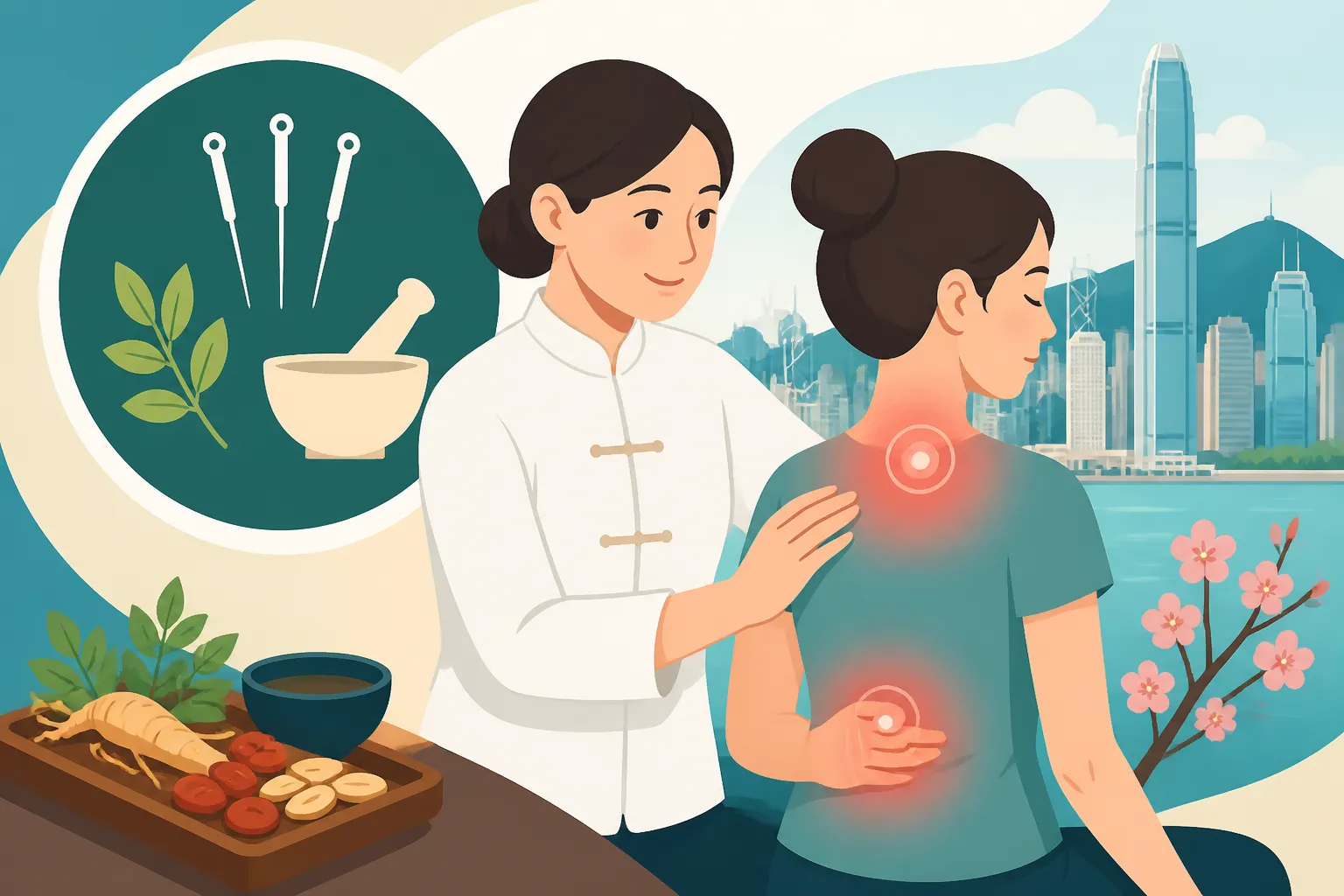
Most expat-friendly clinics will start with acupuncture, but they may also suggest moxibustion (burning dried mugwort near the skin), Tuina (a form of Chinese therapeutic massage), or cupping. Each has a specific purpose. For instance, if you are dealing with the notorious "Hong Kong neck" from looking at your phone during long MTR commutes, a combination of acupuncture and cupping might be the fastest way to release that deep-seated tension.
Acupuncture and Its Modern Application
Acupuncture is the most sought-after TCM treatment for expats. It involves the insertion of hair-thin needles into specific points on the body to stimulate the nervous system and release natural pain-relieving chemicals. In Hong Kong, you will find that English-speaking practitioners are very adept at explaining the "De-Qi" sensation—that heavy, tingly feeling that signifies the treatment is working. It can be startling the first time you feel it, but having a doctor who can guide you through the sensation in English makes a world of difference.
If you are following an Essential Health Checklist for Your First 30 Days in Hong Kong, you might want to scout out a clinic that offers "electro-acupuncture." This is a modern variation where a small electric current is passed through the needles. It is particularly effective for stubborn chronic pain in the lower back or knees, providing a more continuous stimulation than manual needle manipulation.
The Role of Herbal Medicine and Topical Plasters
Beyond the physical treatments, TCM relies heavily on herbal formulas. For chronic pain, these are often aimed at "moving the blood" and "dissipating stasis." In the past, this meant boiling foul-smelling roots and barks for hours. Thankfully, most modern clinics catering to tourists and expats provide "granules"—powdered herbs that you simply dissolve in hot water. They still don't taste great, but the convenience is a lifesaver for a busy professional.
Topical treatments are also a big part of the pain-management toolkit. You might be prescribed herbal plasters that look like large Band-Aids but are infused with potent anti-inflammatory herbs. These are fantastic for lingering joint pain. However, be aware that some of these can be quite strong; if you have sensitive skin, you might want to check with your practitioner or even Finding Dermatologists for Acne and Pigmentation Treatments if you develop a reaction to the adhesive or the herbs.
| Treatment Type | Primary Use for Pain | Common Sensation | Duration |
|---|---|---|---|
| Acupuncture | Nerve pain, muscle tension, headaches | Tingling, heaviness, "De-Qi" | 20–40 mins |
| Cupping | Deep muscle soreness, back pain | Suction, warmth, "bruising" | 10–15 mins |
| Tuina Massage | Joint mobility, chronic stiffness | Intense pressure, stretching | 30–60 mins |
| Moxibustion | Cold-related pain, arthritis | Gentle, penetrating heat | 15–20 mins |
| Herbal Granules | Internal inflammation, systemic pain | Bitter taste, warming | Ongoing |
Navigating Insurance and Costs for TCM
One of the biggest hurdles for expats is figuring out how to pay for these treatments. TCM can range from very affordable at public clinics to quite expensive at high-end private practices in Central. If you are used to the Hospital Authority (HA) Guide: Accessing Public Healthcare for Expats, you might find that public TCM clinics are incredibly cheap but often have a language barrier and long wait times. For chronic pain that requires regular visits, most expats prefer private practitioners.
This is where your insurance coverage becomes critical. Not all plans are created equal when it comes to "alternative" medicine. If you have a premium international plan from providers like Cigna Global, you will often find that TCM and acupuncture are covered under your outpatient benefits, provided the practitioner is registered with the Chinese Medicine Council of Hong Kong. Always check your specific policy wording before booking a series of ten sessions.
Direct Billing vs. Reimbursement
In the world of Hong Kong private healthcare, convenience is king. High-end clinics often offer direct billing for major insurers. This means you only pay your co-pay (if you have one) and the clinic handles the rest. If you are using a plan like SafetyWing, which is popular with digital nomads and frequent travelers, you may need to pay upfront and submit a claim for reimbursement. Make sure you ask the clinic for a "formal receipt" (not just a credit card slip) and a brief medical report if your insurer requires it.
Some expats choose to supplement their employer-provided insurance with the Voluntary Health Insurance Scheme (VHIS): Coverage and Tax Benefits. While VHIS is primarily focused on hospital stays, some "Flexi" plans include outpatient TCM benefits. If you are planning to use TCM as your primary method for managing chronic pain, it is worth looking into whether your insurance, perhaps managed through Cigna Global, covers the cost of herbal supplements, as these can add up to several hundred dollars per week.
Questions to Ask Regarding Coverage
When you call a clinic to book, don't just ask if they speak English. Ask specifically about their registration and your insurance. You should ask: "Is the practitioner a Registered Chinese Medicine Practitioner (RMP) or a Listed Chinese Medicine Practitioner?" This distinction is important for insurance claims. Most international providers, including SafetyWing, will only reimburse treatments from Registered practitioners.
Additionally, ask: "Does the consultation fee include the cost of seven days of herbs, or is that extra?" In many Central-based clinics, the consultation and acupuncture might be one price, but the herbs are billed per gram. It is quite common for a single visit to cost between HKD 800 and HKD 1,500 once everything is totaled. If you are on a budget, you might consider Registering Your HKID for Subsidized Public Healthcare Rates to access the government-subsidized TCM clinics, though you may need a Cantonese-speaking friend to help you navigate the initial registration.
Finding the Right Practitioner in Your Neighborhood
Hong Kong's geography often dictates where you seek care. If you live on the Island, you are spoiled for choice in Central and Admiralty. If you are in the New Territories, your options for English-speaking specialists might be more limited to major regional hubs. Finding the right fit is a bit like dating; you might need to try a few different practitioners to find one whose communication style and treatment philosophy match yours.
If you are already Finding English-Speaking General Practitioners (GPs) in Central, ask them for a recommendation. Many Western doctors in Hong Kong have a "shortlist" of TCM practitioners they trust for referrals. This is particularly common for patients who have exhausted traditional physical therapy and are still looking for answers to their chronic pain.
Central and Mid-Levels: The Expat Hubs
This area has the highest concentration of English-speaking TCM doctors. Many of these practitioners have spent time studying or practicing in the UK, USA, or Australia. The clinics here are designed to feel like high-end spas or modern medical suites, which can be less intimidating for someone new to TCM. You can expect a high level of English proficiency, not just from the doctor but also from the front-desk staff.
However, the "Central premium" is real. You will pay more for the convenience and the language skills. Many of these clinics also specialize in "lifestyle" ailments common to the expat community, such as stress-induced neck pain, insomnia, and digestive issues related to the local diet. If you are looking for a comprehensive approach, check if the clinic offers TCM Acupuncture and Cupping: Integration with Western Medicine as a combined service.
Kowloon and the New Territories
In areas like Tsim Sha Tsui or West Kowloon, you will find excellent practitioners, often located in large commercial buildings like the World Commerce Centre. These clinics may be slightly more affordable than those in Central but still offer excellent English services. As you move further into the New Territories, you might need to rely on university-affiliated clinics, such as those run by Baptist University (HKBU). These are world-class facilities where many of the senior consultants speak English, though the administrative process might feel a bit more "local."
Regardless of where you go, always verify their credentials. The Hong Kong government maintains a public register of practitioners. A quick search can confirm if your chosen doctor is in good standing. This is a step widely recommended for newcomers who are still navigating their Health Checklist for Your First 30 Days in Hong Kong. It provides that extra layer of security when you are trying a treatment that might feel unfamiliar.
Preparing for Your First Appointment
The first TCM consultation is much longer than a typical Western GP visit. The practitioner will ask about everything—your sleep, your digestion, your thirst, and even your emotional state. They will also perform the "four examinations": looking, listening/smelling, asking, and touching. The "touching" part includes the famous pulse diagnosis, where the doctor feels the pulse on both wrists to determine the state of your internal organs.
Don't be surprised if the doctor asks to see your tongue. In TCM, the tongue is a map of the body's internal health. If you are coming in for chronic back pain, the doctor might look at the coating and color of your tongue to see if there is "dampness" or "heat" contributing to the inflammation. It feels strange the first time, but it is a vital part of their diagnostic process.
What to Wear and What to Bring
For acupuncture and cupping, you need to wear loose-fitting clothing. Most expat-friendly clinics will provide a gown or shorts, but it is easier if you come prepared. If you have chronic pain in your legs or back, the doctor will need easy access to those areas. Also, try not to brush your tongue on the morning of the appointment, as the natural coating provides important diagnostic clues for the practitioner.
Bring a list of all your current medications and supplements. This is where your insurance details from Cigna Global or SafetyWing should be handy, as well as any notes from your Western doctor. If you have been Does Private Medical Insurance Cover TCM and Acupuncture in HK? and found that you need a GP referral for your claim to be valid, make sure you bring that paperwork with you as well.
Managing Expectations for Chronic Pain
TCM is rarely a "one-hit wonder" for chronic pain. Unlike a steroid injection that might mask the pain instantly, TCM works cumulatively. Your practitioner will likely suggest a course of 6 to 10 sessions. You might feel a significant improvement after the third or fourth visit, but it is important to finish the course to address the underlying "root" of the pain rather than just the "branch" (the symptoms).
It is often explained that the first session is for diagnosis, the second and third are for testing your body's response, and the subsequent sessions are where the real healing happens. Be patient with the process. If you are used to the fast pace of Hong Kong, the slow, methodical nature of TCM can be a refreshing change of pace, provided you go in with the right mindset.
Traditional Chinese Medicine (TCM) Disclaimer
This article is for informational purposes only and does not constitute medical advice. Traditional Chinese Medicine (TCM) involves the use of herbal products and physical interventions that may interact with Western medical treatments or pre-existing conditions. Always consult with a qualified, registered medical professional or a Registered Chinese Medicine Practitioner in Hong Kong before starting any new treatment for chronic pain. Neither the author nor this publication assumes liability for any adverse reactions or complications resulting from the use of information contained in this guide. For emergencies, always dial 999 or visit the nearest Accident and Emergency department.