Heatstroke Prevention during HK’s Extreme Summer Weather
Stepping out of a chilled MTR station into the July humidity of Hong Kong feels exactly like hitting a literal wall of wet, hot bricks. I’ll never forget the time I tried to hike Dragon’s Back at noon and ended up dizzy and shivering despite the thirty-five-degree heat. This guide provides a battle-tested roadmap for preventing heatstroke during our brutal summers.
Understanding the Hong Kong Heat: More Than Just Temperature
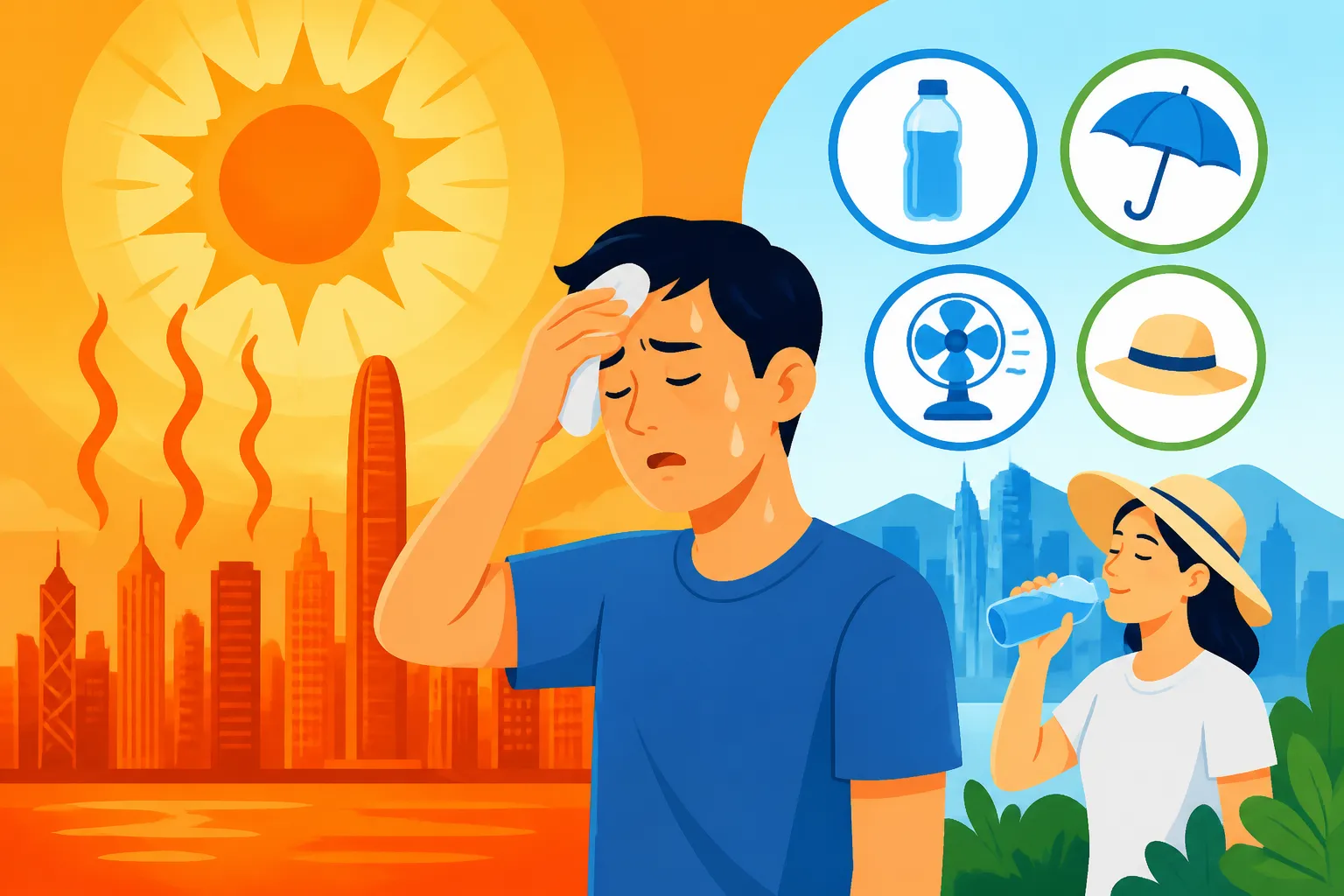
In Hong Kong, the temperature reading on your weather app is rarely the full story. We live in a subtropical climate where the "RealFeel" or Heat Index is driven primarily by stifling humidity that often hovers above 80%. When the air is this saturated, your body’s primary cooling mechanism—the evaporation of sweat—simply stops working. You aren't just hot; you are essentially simmering in a humid envelope that refuses to let your internal temperature drop.
The Hong Kong Observatory (HKO) is your best friend during these months. They issue a "Very Hot Weather Warning" when the risk of heatstroke becomes significant. It is important to realize that these warnings aren't just suggestions for tourists; they are serious indicators that the healthcare system expects an uptick in emergency admissions. If you are new to the city, you might be tempted to push through the heat to maintain your fitness routine or explore the outlying islands, but the urban heat island effect makes places like Mong Kok or Causeway Bay even more dangerous than the trails. Concrete and glass trap solar radiation during the day and bleed it back into the streets at night, meaning there is often no reprieve even after the sun goes down.
Navigating these conditions requires a shift in mindset. You have to learn to respect the "wet bulb" temperature, which measures the lowest temperature a surface can reach through evaporative cooling. In extreme HK summers, we get dangerously close to thresholds where the human body cannot survive outdoors for extended periods without intervention. This is why having robust coverage from providers like Cigna Global is so essential for expats; you want to know that if the heat does get the better of you, you have immediate access to the best private facilities without a second thought.
Recognizing Heat-Related Illnesses in an Urban Jungle
The transition from "uncomfortably hot" to "medical emergency" happens much faster than most people realize. In my second year here, I watched a colleague collapse during a simple ten-minute walk to lunch because they had ignored the early signs of heat exhaustion. It starts with heavy sweating, a rapid pulse, and a nagging sense of fatigue. If you don't find air conditioning and hydration immediately, this quickly spirals into heatstroke, which is a life-threatening condition where your core temperature rises above 40°C.
One of the most confusing aspects of heatstroke is that you might actually stop sweating. Your skin becomes hot and dry, and you may experience confusion, slurred speech, or even seizures. In a city as crowded as Hong Kong, it can be easy to blend into the crowd, but if you feel yourself becoming disoriented, you must act. This is where knowing the protocols for Emergency Medical Services in HK: Calling 999 and A&E Wards becomes a literal lifesaver. Do not wait to see if you "feel better" in five minutes.
For those traveling or here on short-term assignments, SafetyWing offers a great safety net, as heat-related incidents can happen to even the most seasoned travelers who underestimate the HK sun. Whether you are a digital nomad or a long-term resident, the reality is that our public hospitals are excellent, but they become incredibly busy during heatwaves. Understanding Accident and Emergency (A&E) Triage Categories in Public Hospitals can help you manage your expectations regarding wait times if your condition is stable but still requires monitoring.
| Condition | Primary Symptoms | Immediate Action Required |
|---|---|---|
| Heat Cramps | Muscle pains, spasms, heavy sweating | Stop activity, drink water/electrolytes, rest in shade |
| Heat Exhaustion | Dizziness, nausea, heavy sweating, weak pulse | Move to A/C, loosen clothes, apply cool wet cloths |
| Heatstroke | High body temp (40°C+), confusion, no sweat | Call 999 immediately, move to shade, ice packs |
Practical Prevention Strategies for Daily Life
Surviving a Hong Kong summer is an art form that locals have perfected over decades. The first rule is to "mall-hop." The city is designed with interconnected, air-conditioned walkways and shopping centers for a reason. If you need to get from Point A to Point B, mapping a route through the cool interiors of Landmark or IFC isn't just about luxury; it’s a strategic cooling maneuver. If you find yourself caught out in the heat, remember that Public Libraries in HK: Borrowing Books with Your HKID offer free, highly effective air conditioning and a place to rest without the pressure to buy a coffee.
Hydration in this city needs to be proactive, not reactive. By the time you feel thirsty, you are already dehydrated. Carry a reusable bottle and utilize the growing number of "Bonaqua" water stations or the free fountains in public parks. However, water alone isn't always enough when you're losing salts through constant perspiration. I always keep a few sachets of electrolyte powder in my bag, which you can easily find while Finding Ibuprofen and Paracetamol Brands in HK Convenience Stores. Drinking a Pocari Sweat from a 7-Eleven is a classic Hong Kong experience for a reason—it works.
Clothing also plays a massive role. Forget heavy denim or dark polyesters. The veteran expat wardrobe consists almost entirely of linen and high-tech moisture-wicking fabrics. If you are working in a corporate environment, the "Standard Chartered" or "HSBC" look often involves a suit, but many firms now allow for "Smart Casual" during the peak summer months to mitigate heat stress. If your office still requires formal wear, carry your blazer and only put it on once you are safely within the 19-degree sanctuary of your office building. This is a key part of the Essential Health Checklist for Your First 30 Days in Hong Kong that often gets overlooked by newcomers.
Managing Outdoor Activities and Workplace Safety
If you are an avid hiker or runner, summer in Hong Kong is the time to embrace the "early bird" or "night owl" lifestyle. Setting off for a hike at 10:00 AM in August is an invitation for disaster. Most experienced residents are off the trails by 9:00 AM or wait until the sun begins to set. Even then, the humidity remains high, so your pace should be significantly slower than what you’re used to in cooler climates. If you are training for a marathon or a trail race, consider moving your sessions to a gym or using the air-conditioned tracks available in some sports centers.
For those whose work requires them to be outdoors, the Labour Department has introduced a "Heat Stress at Work" warning system. It uses a three-tier system (Amber, Red, and Black) to dictate mandatory rest breaks. Even if you aren't a construction worker, paying attention to these levels is wise. If you are managing a team, ensure they have access to shaded areas and plenty of cool water. Ignoring these guidelines doesn't just risk health; it can lead to legal complications. For individual expats, having a comprehensive plan from Cigna Global ensures that if a workplace heat incident occurs, the diagnostic and recovery process is streamlined.
When planning your weekend, think about the transport you use. The "Ding Ding" (the historic Hong Kong Island trams) are iconic and cheap, but most do not have air conditioning. On a thirty-four-degree day, the breeze from the windows is just more hot air. Opt for the MTR or air-conditioned buses if you are feeling the heat. If you are traveling with family and need to know Is the Ambulance Free in Hong Kong for Tourists and Expats?, the answer is generally yes for emergencies, but you will be taken to a public hospital. For those with SafetyWing, you might have more flexibility in seeking private follow-up care if the initial emergency is stabilized.
Emergency Protocols and Professional Care
If you see someone—or find yourself—stumbling, acting confused, or complaining of a throbbing headache after being in the sun, you must act within seconds. Move the person to the nearest air-conditioned shop or a shaded area with a breeze. Fan them vigorously and apply cold water to their skin. In Hong Kong, 7-Eleven and Circle K sell bags of ice; buy two and place them under the armpits and around the groin area to cool the large blood vessels.
Knowing What to Say When Calling 999 for a Medical Emergency is crucial because the operators need to know if it is a suspected heatstroke so they can prioritize the ambulance. While waiting, do not try to force the person to drink water if they are unconscious or vomiting, as this can lead to choking. Focus entirely on external cooling. Once the paramedics arrive, they will likely take the patient to the nearest public A&E. Hong Kong’s public system is world-class at treating environmental emergencies because they see them so frequently.
After the initial crisis has passed, recovery from a heat-related illness can take days or even weeks. Your body’s ability to regulate temperature will be compromised for a while. This is a good time to use the Using the HA Go App for Booking Public Outpatient Clinics to schedule follow-up checks on your kidney function and electrolyte balance. Long-term expats often prefer Healthcare in Hong Kong: Public vs Private Systems Explained (2027) because the private sector can offer more personalized, faster follow-up care for the fatigue and "brain fog" that often follows a major heat event.
Vulnerable Populations: Kids, Seniors, and Pets
We often forget that children and the elderly are at a much higher risk because their bodies don't regulate temperature as efficiently. If you have kids in school here, you’ll notice that many outdoor PE classes are moved indoors or canceled during "Very Hot Weather" warnings. Keep a close eye on your children during weekend playdates at the park. They get distracted and forget to drink, and their smaller body mass means they heat up much faster than adults.
Similarly, if you are bringing your dog to Hong Kong, you need to be extremely careful. Brachycephalic breeds (like pugs or bulldogs) are particularly susceptible. I see far too many people walking their dogs on the searing hot pavement of Hennessy Road at midday. If the pavement is too hot for your hand, it’s too hot for their paws. Stick to early morning walks and consider "doggy shoes" or cooling vests if you must be out.
Lastly, always have your insurance details handy. Whether it’s a quick check-up covered by SafetyWing after a dizzy spell or a more serious admission handled through Cigna Global, having your paperwork in order reduces stress in a crisis. The Hong Kong summer is a beast, but with the right preparation and a healthy dose of respect for the humidity, you can navigate it safely and even enjoy the vibrant energy the "sunny" season brings to the city’s beaches and pools.
Disclaimer
The information provided in this article is for educational and informational purposes only and does not constitute professional medical advice, diagnosis, or treatment. Always seek the advice of your physician or another qualified healthcare provider with any questions you may have regarding a medical condition. Never disregard professional medical advice or delay in seeking it because of something you have read in this guide. In the event of a medical emergency in Hong Kong, immediately dial 999 for assistance.