Does Medical Insurance in HK Cover Pre-Existing Conditions?
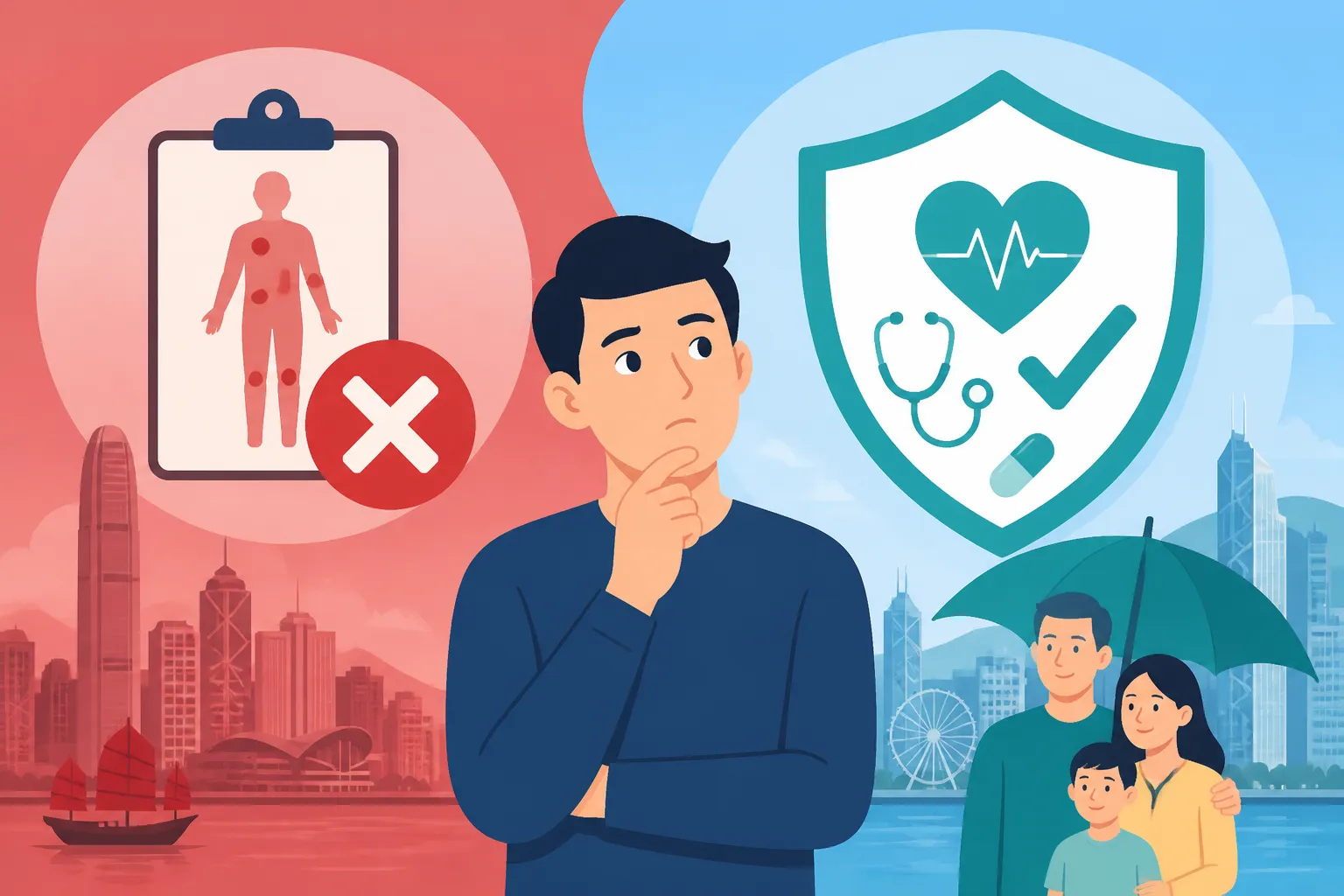
The nightmare of moving to Hong Kong with a chronic health history is the sudden realization that the private medical "safety net" you expected might have massive holes in it. I remember the sinking feeling in my gut when a local broker told me my recurring sports injury would be permanently excluded from my new policy. This guide settles the confusion around how Hong Kong insurers treat pre-existing conditions and outlines your realistic options for securing comprehensive care.
Understanding How Hong Kong Insurers Define Pre-Existing Conditions
In the context of the Hong Kong insurance market, a pre-existing condition is generally defined as any illness, injury, or physical condition that existed, or for which you sought medical advice, before the start date of your policy. While this sounds straightforward, the implementation is often much more rigid than what many expats are used to in Europe or North America. In Hong Kong, the private system is built on risk assessment, and insurers are notoriously meticulous about your medical history.
The "Awareness" Trap is something many newcomers fall into. Insurers often look for conditions that "manifested" even if you didn't receive a formal diagnosis. If you had persistent headaches six months before signing your policy and those headaches later turn out to be something serious, the insurer might argue it was a pre-existing condition because the symptoms were present. This is why being honest during the application is vital, as a non-disclosure can void your entire plan later.
Furthermore, there is a distinct difference between chronic and acute conditions. Chronic conditions like hypertension or diabetes are often viewed as high-risk "red flags" that lead to permanent exclusions or heavy premium loadings. Acute conditions, like a broken arm that healed five years ago, are usually ignored. However, the line between the two can be blurry. For instance, asthma might be well-managed, but it can still lead to a "respiratory exclusion" on a standard local policy. Understanding these nuances is the first step in navigating Healthcare in Hong Kong: Public vs Private Systems Explained (2027) effectively.
Coverage Options: Exclusions, Loadings, and Moratoriums
When you apply for medical insurance in Hong Kong with a known condition, the underwriter will typically come back with one of three decisions. The most common is a "Policy Exclusion." This means the insurer will cover everything else but will refuse to pay a single cent for anything related to your pre-existing condition. If you have a thyroid issue, any consultation, medication, or surgery involving the thyroid is entirely your financial responsibility.
The second option is "Premium Loading." Here, the insurer agrees to cover the condition but at a significantly higher cost. It is not uncommon to see premiums jacked up by 25% to 100% depending on the severity of the condition. For many expats, this is a bitter pill to swallow, but it provides the peace of mind that even Top Private Hospitals on HK Island: Matilda, Adventist, and Sanatorium will be accessible if complications arise.
The third, and perhaps most complex, is "Moratorium Underwriting." This is frequently offered by international providers such as Cigna Global or SafetyWing. Instead of a deep dive into your medical records at the start, they apply a waiting period—usually two years. If you remain symptom-free and don't require treatment or advice for that condition during those two years, it may eventually be covered. This is a gamble, but for someone with a dormant condition, it can be a way to eventually secure full coverage.
| Underwriting Type | Disclosure Requirement | Impact on Coverage | Best For |
|---|---|---|---|
| Full Medical Underwriting | Complete medical history required | Clear exclusions or loadings from day one | People who want total certainty on what is covered |
| Moratorium Underwriting | No initial history required | Condition covered after ~2 years of "no symptoms" | Dormant conditions or those who hate paperwork |
| VHIS Standard Underwriting | Standardized questionnaire | Partial coverage for "unknown" conditions | Budget-conscious residents with local ID |
| Group Medical (MHD) | None (usually) | Full coverage including pre-existing | Employees of large corporations |
The Role of VHIS and International Plans
The introduction of the Voluntary Health Insurance Scheme (VHIS) changed the landscape for residents. Unlike older traditional plans, VHIS-certified plans offer a level of protection for "unknown pre-existing conditions." If you didn't know you had a condition when you signed up, the policy must provide partial coverage after a waiting period. This is a significant win, but it doesn't solve the problem for "known" conditions you are already treating. For a deeper look at the tax benefits of these plans, you can read about Voluntary Health Insurance Scheme (VHIS): Coverage and Tax Benefits.
For many expats, the limitations of local VHIS plans lead them back to international providers. Brands like SafetyWing are particularly popular for digital nomads or those in transition because of their flexibility. However, for long-term residents with complex health needs, Cigna Global often provides the robust underwriting required to manage chronic issues over decades. International plans are generally more expensive, but they offer higher limits and "Global Portability," meaning your coverage follows you if you move from Hong Kong to Singapore or London.
When comparing options, you must ask: VHIS vs Employer Group Medical Insurance: Do You Need Both? Often, the answer is yes. Your employer's group plan might cover your pre-existing conditions because large companies negotiate "Medical History Disregarded" (MHD) clauses. This is the "Holy Grail" of insurance for anyone with a health history. However, the moment you quit your job, that coverage vanishes. Having a "top-up" or "portable" plan alongside your corporate coverage is a strategic move many veterans in the city swear by.
Practical Strategies for Expats with Health History
If you are currently managing a condition, your first move should be to maximize your employer's benefits. Corporate plans in Hong Kong are often much more generous regarding pre-existing conditions than individual ones. If your employer provides a plan with an MHD clause, use it for all your specialist visits and Pharmacies and Medication in HK: Prescriptions and OTC Rules. This allows you to manage Managing Chronic Conditions: Diabetes and Hypertension in HK without dipping into your own savings.
If you are a freelancer or working for a small startup without great benefits, you may need to rely on the public system for your specific excluded condition while using private insurance for everything else. This is a "hybrid" approach. You pay the subsidized Hospital Authority Fees: Eligible Persons (EP) vs Non-Eligible Persons (NEP) for your chronic medication and checkups at a public clinic but keep your private insurance for emergencies, accidents, or unrelated surgeries to skip the public waitlists.
Another strategy is to look for a "Transfer of Cover." Some insurers will allow you to switch to their plan and waive the waiting periods for pre-existing conditions if you can prove you were continuously covered by another reputable provider for several years. This requires meticulous record-keeping. Always keep copies of your previous policy schedules and claim histories. If you are pregnant or planning to be, be especially careful, as Maternity Packages at Private Hospitals: What to Budget in 2026 almost always carry a 10-to-12-month waiting period before any pregnancy-related costs (including pre-existing complications) are covered.
Finally, don't overlook the power of a good insurance broker. Hong Kong has thousands of them, but you need one who specializes in the expat market and understands the nuances of underwriting. They can "shop around" your medical history anonymously to different providers like Cigna Global to see who offers the most favorable terms before you ever submit an official application. This prevents you from having a "rejected" application on your record, which can make it even harder to get coverage in the future.
Navigating the Public System for Excluded Conditions
When the private market turns its back on your pre-existing condition, the Hong Kong public system becomes your best friend. As long as you have a valid HKID, you are entitled to heavily subsidized care. The quality of clinical care in public hospitals is world-class; the "price" you pay is simply time and lack of comfort. You won't get a private room, and you might wait months for a non-urgent specialist appointment, but you will never be denied life-saving treatment due to a pre-existing condition.
The process usually starts at a Government General Outpatient Clinic (GOPC). You can use the "HA Go" app to book appointments, though it can be competitive. Once you are in the system, you can be referred to specialists for your specific condition. This is particularly helpful for those who require expensive, long-term medication that private insurers refuse to cover. To ensure you are paying the resident rates, make sure you've followed the steps for Registering Your HKID for Subsidized Public Healthcare Rates as soon as you arrive in the city.
In summary, while medical insurance in Hong Kong is strict about pre-existing conditions, it is not impossible to navigate. Between the protections of VHIS for unknown issues, the MHD clauses in corporate group plans, and the robust (if crowded) public system, you can build a comprehensive healthcare strategy. Just remember to be transparent on your applications, consider international providers like Cigna Global or SafetyWing for more flexible underwriting, and always have a backup plan for the conditions the private insurers won't touch.
Disclaimer
This article is for informational purposes only and does not constitute professional legal, financial, or medical advice. Insurance policies and Hospital Authority regulations in Hong Kong are subject to change. Always consult with a licensed insurance broker or legal professional before signing any binding agreements.