Voluntary Health Insurance Scheme (VHIS): Coverage and Tax Benefits
If you have ever spent six hours sitting on a plastic chair in a public hospital waiting room while nursing a high fever, you know the true cost of Hong Kong’s healthcare divide. I remember my first year here, staring at a private hospital bill that looked more like a mortgage payment, wondering why nobody had explained how the local insurance system actually works. This guide settles that confusion by breaking down the Voluntary Health Insurance Scheme (VHIS) so you can secure your health and your wallet.
What is the VHIS and Why Does it Exist in Hong Kong
The Voluntary Health Insurance Scheme, or VHIS, is a government-backed initiative designed to regulate the private medical insurance market in Hong Kong. For years, the city’s private insurance landscape was a bit of a "Wild West." Policies were often filled with dense legalese, hidden exclusions, and premiums that could skyrocket the moment you actually needed to use the plan. When the government launched VHIS, they weren't just adding another product to the shelf; they were creating a set of minimum standards that all "certified plans" must follow.
The primary goal of this scheme is to nudge more people—both locals and expats alike—to use the private healthcare sector for non-emergency surgeries and specialist care. By doing so, the government hopes to alleviate the crushing pressure on the Hospital Authority (HA) Guide: Accessing Public Healthcare for Expats. If you have a HKID, you are eligible for the public system, but the wait times for elective procedures can be years. VHIS is the bridge that makes private care accessible and predictable, ensuring that when you see a doctor, you aren't surprised by a rejected claim later.
One of the most comforting aspects of VHIS for an expat is the transparency. Before this scheme, comparing two insurance policies was like comparing apples and spaceships. Now, because every VHIS plan must meet a baseline of coverage, you can actually see where one provider offers more value than another. It provides a level of consumer protection that was sorely missing in the early 2010s, giving you the confidence to navigate the Healthcare in Hong Kong: Public vs Private Systems Explained (2027) without fear of financial ruin.
How the Government Standardizes Your Protection
The "Voluntary" part of the name refers to the insurers and the consumers—no one is forced to buy it, and no company is forced to sell it. However, if an insurance company wants to label a product as a "VHIS Certified Plan," they must adhere to strict rules set by the Health Bureau. This includes "Guaranteed Renewal" up to the age of 100. In the old days, if you developed a chronic condition, an insurer might simply refuse to renew your policy the following year. With VHIS, that fear is gone.
Another standardization is the inclusion of "Unknown Pre-existing Conditions." In a standard commercial policy, if you had an undiagnosed issue at the time of signing, the insurer would often deny the claim. VHIS plans are required to cover these, albeit with a tiered reimbursement schedule over the first three years. This shift in power from the insurer back to the patient is a massive win for anyone planning to stay in the territory long-term.
The Shift Toward Private Sector Utilization
Hong Kong’s public system is world-class for emergencies, but for anything else, the queue is the enemy. By standardizing VHIS, the government has made it easier for you to look at Private Hospitals in Hong Kong: Admission, Costs, and Insurance as a viable first choice rather than a luxury you can't afford. The scheme specifically targets those middle-income earners and expats who might be hesitant to pay for private care out of pocket.
When you hold a VHIS policy, you aren't just buying insurance; you are buying a "fast pass" to the city’s top specialists. This reduces the burden on the public wards and ensures that the public system remains available for those who truly need it most. It’s a symbiotic relationship that, while not perfect, has significantly improved the way we manage our health in this high-pressure city.
Standard vs Flexi Plans: Deciphering the Options
When you start shopping for a VHIS policy, you will find two main categories: Standard Plans and Flexi Plans. Think of the Standard Plan as the "Basic Economy" of insurance. It covers exactly what the government requires—no more, no less. It is designed for those who want a safety net at the lowest possible premium. On the other hand, Flexi Plans are the "Business Class" upgrades. They take the base of the Standard Plan and add higher benefit limits and extra perks.
The Standard Plan has a fixed benefit schedule. For example, it might cover up to HKD 750 per day for a room and board in a hospital. In a city where a private ward bed can easily cost double that, the Standard Plan acts more as a subsidy than full coverage. If you are a young, healthy individual who rarely gets sick, this might be enough. But for most expats used to a certain level of comfort, Understanding VHIS Certified Plans: Standard vs Flexi Options becomes a vital exercise in risk management.
Flexi Plans are where you see the real competition between brands like Cigna Global. These plans often include "Full Cover" for certain items, meaning they don't use a fixed sub-limit for every single stitch or bandage. Instead, they give you a large annual pool of money to use. If you are looking for Private Health Insurance Plans Beyond VHIS for Expat Families, you might find that a high-end Flexi Plan offers the best balance of local tax perks and the comprehensive coverage your family needs.
The Standard Plan Baseline
Every Standard Plan must include coverage for diagnostic imaging (like MRIs and CT scans), which often require a 30% co-insurance from the patient. It must also cover "Day Case" procedures. This is a huge deal in Hong Kong, where many surgeries that used to require an overnight stay are now done in a few hours. Under the old system, if you didn't stay overnight, the insurer might not pay. VHIS fixed that, ensuring that modern medical practices are reflected in your policy.
However, be aware of the "Standard" limits. The total annual benefit for a Standard Plan is usually capped at HKD 420,000. In a medical emergency involving major surgery and intensive care, that limit can be reached remarkably quickly. This is why many veteran residents view the Standard Plan as a "top-up" to their existing Employer Group Medical Insurance rather than a standalone solution.
Why Flexi Plans are the Expat Favorite
Flexi Plans allow you to choose your "ward level." In Hong Kong, private hospitals bill you differently based on whether you are in a general ward (3-6 people), a semi-private room (2 people), or a private suite. A Flexi Plan tailored for a "Private Room" will have much higher benefit limits because the hospital will charge more for everything—from the surgeon’s fee to the cost of an aspirin—the moment you choose a private room.
Furthermore, Flexi Plans often add "Supplementary Major Medical" (SMM) coverage. This is essentially an extra layer of protection that kicks in if your basic expenses exceed the sub-limits of the plan. For an expat, having SMM is the difference between paying a HKD 50,000 out-of-pocket bill and paying nothing. It’s the "sleep well at night" feature that makes the higher premiums of a Flexi Plan worth considering.
| Feature | VHIS Standard Plan | VHIS Flexi Plan |
|---|---|---|
| Annual Limit | Fixed at HKD 420,000 | Can exceed HKD 1,000,000+ |
| Room Type | Ward level only | Ward, Semi-Private, or Private |
| Pre-existing Conditions | Covered after waiting period | Covered, often with higher limits |
| Prescribed Imaging | 30% Co-insurance | Often 0% or lower Co-insurance |
| Guaranteed Renewal | To age 100 | To age 100 |
| Tax Deduction | Eligible | Eligible |
The Tax Benefits: Saving Money on Your BIR60
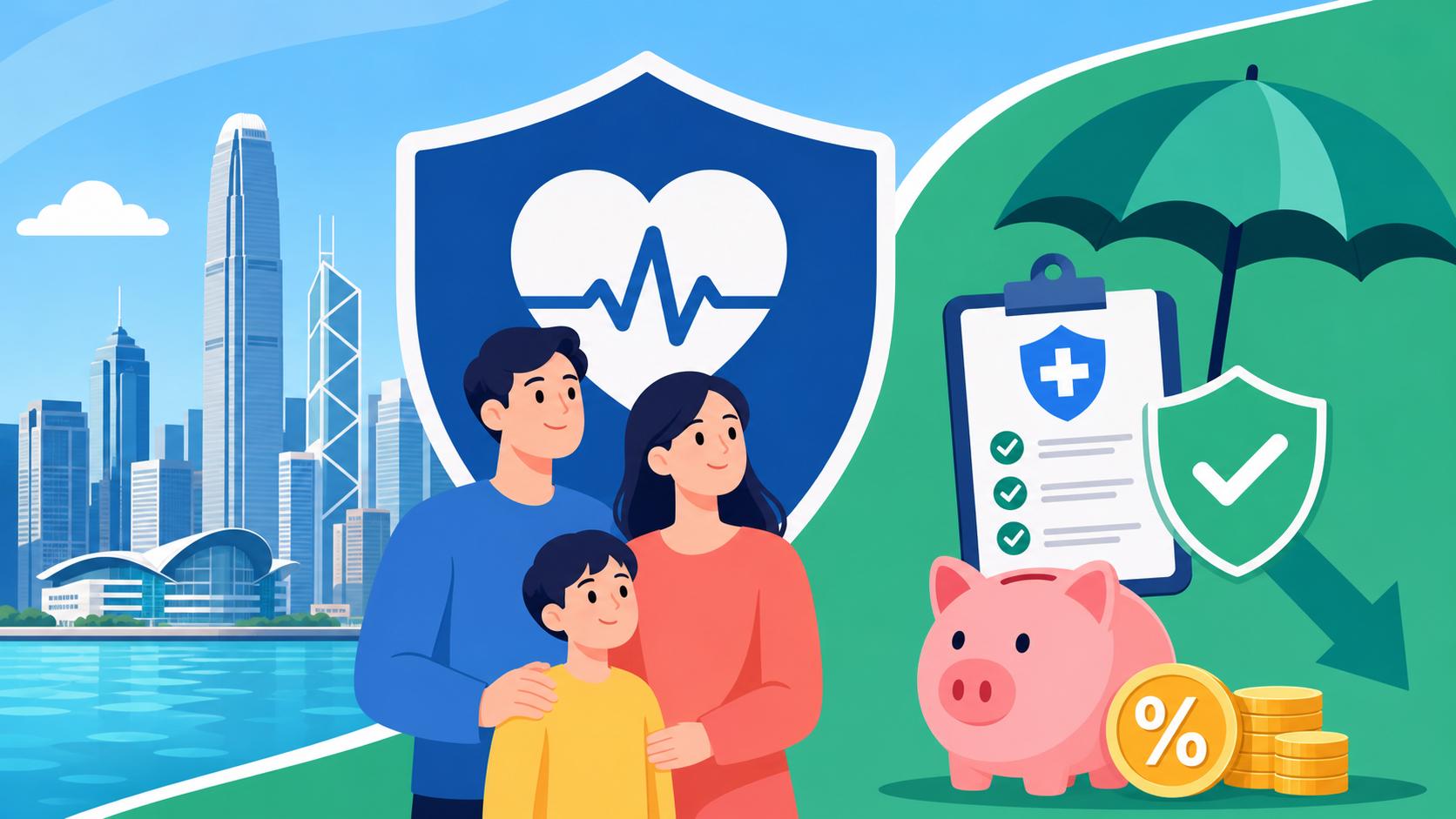
If the health benefits haven't convinced you yet, the tax breaks usually do. Hong Kong is famous for its low tax rates, but we still like to keep as much of our salary as possible. Under the VHIS scheme, you can claim a tax deduction for the premiums you pay for yourself and your "dependents." This is one of the few direct ways to lower your taxable income on your Claiming VHIS Tax Deductions for Yourself and Dependents each year.
The maximum deduction per "insured person" is HKD 8,000. It is important to understand that this is a deduction from your taxable income, not a direct credit against your tax bill. If you are in the 15% tax bracket, a HKD 8,000 deduction saves you HKD 1,200 in actual cash. While that might not sound like a fortune, it effectively acts as a 10% to 20% discount on your insurance premium, depending on your income level.
What makes this truly powerful is the "no cap" on the number of dependents. You can buy VHIS policies for your spouse, your children, and even your (or your spouse's) parents and grandparents, provided they hold a HKID. If you are supporting a large family, these deductions add up. Imagine paying for your own policy, your spouse's, and your two children's. That is a HKD 32,000 deduction from your taxable income.
Who Counts as a Dependent
The Inland Revenue Department (IRD) is quite specific about who qualifies. Your "dependents" include your spouse, your children (under 18, or under 25 if they are full-time students), and your parents or grandparents who are aged 55 or above. The beauty of this system is that you can be the "Policy Holder" (the one paying the bill) while they are the "Insured Person." You get the tax break, and they get the medical coverage.
Many expats use this to provide coverage for their Overseas Dependent Parents who have moved to Hong Kong to help with the grandkids. By putting them on a VHIS plan, you ensure they have access to private care without the long wait times of the public system, and you get to shave a bit off your tax bill at the same time. It’s a rare win-win in the world of financial planning.
How to Claim the Deduction on Your Tax Return
When tax season rolls around in May, you will receive your BIR60 form. There is a specific section for VHIS premiums. You don't need to attach your receipts to the form when you mail it in (or submit via eTAX), but you must keep them for seven years. Your insurance provider will send you a "Certified Premium Statement" every year specifically for tax purposes. It’s a simple one-page document that tells you exactly which figure to enter into the box.
If you are new to the city and still figuring out How to Claim the HKD 8,000 VHIS Tax Deduction on Your BIR60, don't overthink it. The system is surprisingly automated. Most major insurers now sync with the IRD, but it is always best to double-check the numbers. Just remember that the deduction applies to the premiums paid during that specific tax year (April 1st to March 31st). If you pay your annual premium in March, it counts for that year; if you pay in April, it’s for the next.
Coverage Deep Dive: Pre-existing Conditions and Unknowns
The most revolutionary part of the VHIS framework is how it handles pre-existing conditions. In the traditional insurance world, a "pre-existing condition" was often a death sentence for a policy application. If you had high blood pressure or a previous back injury, the insurer would simply "exclude" that body part or condition entirely. VHIS changed the rules of engagement, particularly for "unknown" conditions.
An "Unknown Pre-existing Condition" is something you had before the policy started but were unaware of (and hadn't sought medical advice for). VHIS plans are required to cover these after a waiting period. In the first year, there is 0% coverage. In the second year, they cover 25%. In the third year, 50%. From the fourth year onwards, you get 100% coverage. This is a massive improvement over the "permanent exclusion" model used by many non-VHIS plans.
For "Known Pre-existing Conditions," insurers can still apply exclusions or "loading" (charging a higher premium). However, the standardized nature of VHIS means that the underwriting process is more transparent. If you use a provider like Cigna Global, they might offer a VHIS-compliant plan that handles these conditions with more flexibility than a local-only provider. It pays to be honest on your application; the VHIS framework is designed to eventually bring you into the fold of full coverage.
Psychiatric Treatment and Mental Health
Hong Kong is a high-stress city, and mental health has historically been underserved by insurance. VHIS changed this by making "Psychiatric Treatment" a mandatory benefit for inpatient stays. While the limit is often modest (HKD 30,000 per year in the Standard Plan), it is a vital starting point. This covers the cost of being admitted to a local hospital for mental health crises, which can be life-saving.
If you are looking for Mental Health in Hong Kong: Counseling and Expat Support Services, you should check if your VHIS Flexi Plan offers any outpatient "top-ups" for psychologists. Most VHIS plans are hospital-centric, meaning they focus on what happens when you are admitted. However, the inclusion of psychiatric care in the base model shows that the government is finally taking the city’s mental health seriously.
Day Surgeries and Diagnostic Tests
One of the biggest frustrations I had with my old, non-VHIS policy was the "overnight stay" requirement. The doctor said it would take two hours, but my insurance wouldn't pay unless I checked into a hospital bed for the night. This was a waste of my time and a waste of the hospital's resources. VHIS eliminated this nonsense by mandating coverage for "Day Case" procedures.
Whether it’s a gastroscopy, a cataract surgery, or a small skin biopsy, if it’s on the list of recognized day surgeries, your VHIS plan will cover it. Furthermore, diagnostic imaging like PET scans or CT scans are covered, though usually with a 30% co-insurance. This means the insurer pays 70% and you pay 30%. While 30% of an expensive PET scan can still be a few thousand dollars, it is significantly better than paying the full Private Hospitals in Hong Kong: Admission, Costs, and Insurance price list.
Public vs. Private: Where VHIS Fits in the Ecosystem
Navigating the healthcare system in Hong Kong requires a "hybrid" mindset. You have the public system (the Hospital Authority), which is incredibly cheap but slow, and the private system, which is fast and expensive. VHIS is designed to be your ticket to the private side. But it’s not just about choosing one or the other; it’s about knowing when to use which.
For a serious emergency—think a car accident or a heart attack—you want the public system. The Emergency Medical Services in HK: Calling 999 and A&E Wards are incredibly efficient, and the public hospitals have the best trauma equipment in the city. VHIS isn't really needed here because the public fees for HKID holders are nominal (HKD 180 for an A&E visit). However, once the emergency is over and you need a follow-up surgery or a comfortable room to recover in, that is when you use your VHIS to transfer to a private facility like the Matilda or the Sanatorium.
Many expats use VHIS as a "top-up" strategy. If your employer provides a basic medical plan, it might have very low limits—perhaps only covering HKD 20,000 per surgery. In Hong Kong, that won't get you very far. By having your own VHIS Flexi Plan, you can use your employer's plan to pay the first HKD 20,000 and then use your VHIS to cover the rest. This ensures you are never left with a massive gap in coverage.
Managing Wait Times for Specialists
If you go through the public system for a "non-urgent" issue, like a persistent knee pain, you might wait 12 months just to see a specialist for the first time. If you have a VHIS policy, you can bypass this entirely. You can book an appointment with a private specialist in Central or Tsim Sha Tsui, get your MRI done the next day, and be in surgery by the end of the week.
The Hospital Authority Fees: Eligible Persons (EP) vs Non-Eligible Persons (NEP) are so low that many people feel they don't need insurance. But "Eligible Persons" still have to wait. If you are a working professional or a parent with young children, you don't have the luxury of waiting a year for a diagnosis. VHIS turns that year-long wait into a three-day process.
The "Deductible" Strategy
To keep premiums low, many VHIS Flexi plans offer a "Deductible" (also known as "Excess"). This is an amount you agree to pay out of pocket before the insurance kicks in. For example, if you have a HKD 20,000 deductible, your premium will be much lower. This is a brilliant move if you already have a VHIS vs Employer Group Medical Insurance plan. You use your boss's insurance to pay the first HKD 20,000 (meeting your deductible) and your VHIS covers everything above that. It’s a sophisticated way to get premium coverage for a "budget" price.
How to Choose a Provider and Apply
With dozens of insurance companies offering VHIS plans, the choice can be overwhelming. Don't just look at the brand name; look at the "Certified Plan" number. Every plan is registered with the government. You can visit the official VHIS website to compare the "Standard Benefit Schedule" of any two plans side-by-side. However, the real differences lie in the "Flexi" additions.
When choosing a provider, consider their claims process. Does the insurer have a good mobile app? Do they offer "Direct Billing" (where the hospital bills the insurer directly so you don't have to pay and claim back)? For many expats, providers like Cigna Global are preferred because they are used to dealing with international clients and have a smooth English-language interface. Others might prefer SafetyWing if they are "digital nomads" who need a mix of local VHIS and international travel coverage.
The application process is usually straightforward but requires medical underwriting. You will have to answer a series of questions about your health history. Be honest. Because VHIS covers "Unknown Pre-existing Conditions," there is less incentive to hide things, and being caught in a lie is the fastest way to have a future claim denied. Most applications can now be done entirely online in under 20 minutes.
The Cooling-Off Period
One of the great consumer protections in Hong Kong is the 21-day cooling-off period. After you sign up for a VHIS plan and receive your policy documents, you have three weeks to change your mind. If you decide the plan isn't right for you, you can cancel it and get a full refund of your premium (as long as you haven't made a claim). This takes the pressure off the decision-making process.
Switching from a Non-VHIS Plan
If you already have an old medical insurance policy, your insurer is required to give you the option to migrate to a VHIS-certified plan. This is often a good idea because of the tax benefits and the "guaranteed renewal" feature. However, be careful: if you have developed new health issues since you bought your old plan, the insurer might treat the VHIS migration as a "new application" and apply exclusions. Always ask for a "Preliminary Review" before you cancel your old policy.
Real-World Scenarios: Is VHIS Enough for Expats?
Readers often ask if a VHIS plan is "enough." The answer depends entirely on your lifestyle. If you live and work exclusively in Hong Kong and plan to retire here, a high-end VHIS Flexi Plan is arguably the best value you can find. It’s localized, tax-efficient, and regulated by the Hong Kong government. It covers you in all the local private hospitals like Sanatorium or Union.
However, if you travel frequently for work or spend three months a year back in your home country, you might find VHIS lacking. Most VHIS plans are geographically limited to "Asia" or "Worldwide excluding the USA" for the highest levels of coverage. If you need true global portability, you might need a "Global" plan alongside or instead of a VHIS plan. This is where brands like SafetyWing come in, offering that nomadic flexibility that a local government-regulated plan cannot match.
For families, the Maternity and Childbirth in HK: Public Wards vs Private Packages debate is a big one. Most VHIS plans do not cover routine maternity costs like prenatal checkups or normal delivery. They are designed for "medical necessity." If you are planning a family, you usually need to look at specialized maternity riders or premium global plans, as VHIS is more of a "hospital and surgery" safety net than a "wellness and pregnancy" plan.
Scenario: The "Career Mover"
Imagine you lose your job. In Hong Kong, your work visa is tied to your employment, but so is your insurance. If you only have company insurance, you are suddenly "uninsurable" if you have a pre-existing condition. By having your own VHIS plan, your coverage continues regardless of your job status. This "portability" of health is the single biggest reason I tell every expat to get their own policy the moment they land.
Scenario: The "Ageing Parent"
If you are bringing your parents to Hong Kong on a Dependent Visas in HK: Bringing Spouses and Children, getting them into a VHIS plan is a priority. Private insurance for seniors is usually prohibitively expensive or simply unavailable. VHIS mandates that insurers must accept applicants up to age 80. While the premiums for an 80-year-old are high, the fact that you can get them covered at all—and get a tax deduction for it—is a lifesaver for many families.
Voluntary Health Insurance Scheme (VHIS) Disclaimer
The information provided in this article is for general informational purposes only and does not constitute financial, legal, or medical advice. Insurance products and tax laws in Hong Kong are subject to frequent changes. Always consult with a licensed insurance broker or a qualified tax professional before making any decisions regarding your healthcare coverage or tax filings. We do not guarantee the accuracy of premiums or benefit limits mentioned, as these vary by provider and individual circumstances.