Declaring Prescription Drugs at HK Customs: Forms and Limits
Walking through the Red Channel at Hong Kong International Airport (HKIA) with a bag full of antidepressants or blood pressure meds feels like an interrogation waiting to happen. I remember sweating through my shirt the first time I landed at Chek Lap Kok, clutching a crumpled doctor’s note and wondering if I’d end up in a holding cell over my asthma inhalers. This guide breaks down exactly what you need to declare, the limits on personal supplies, and how to navigate HK Customs without the panic.
Understanding the Personal Use Exemption in Hong Kong
When you land in Hong Kong, the Customs and Excise Department operates on a system that balances strict drug control with the reality that travelers need their medicine. The core concept you need to grasp is the "personal use" exemption. Under the Import and Export Ordinance, pharmaceutical products and drugs must be covered by a license issued by the Department of Health. However, there is a specific carve-out for passengers who are bringing in a "reasonable quantity" for their own use.
The problem, of course, is that the term "reasonable" is frustratingly subjective. In my years of living here and helping others move, the unofficial gold standard for "reasonable" is typically a three-month supply. If you are arriving with a suitcase full of boxes that look like they belong in a warehouse, the officers will suspect you are planning to resell them in the local market. If you have a few bottles clearly labeled with your name, you are usually in the clear.
It is vital to distinguish between standard medications and those falling under the Dangerous Drugs Ordinance. While a month of blood pressure medication might not raise an eyebrow, a week’s worth of a potent narcotic requires much more scrutiny. If you are moving here long-term, your Essential Health Checklist for Your First 30 Days in Hong Kong should include finding a local doctor to take over your prescriptions so you don't have to risk "importing" large batches later.
The Reasonable Quantity Rule for Expats
If you are an expat relocating to Hong Kong, you might be tempted to bring a six-month or even a year-long supply of a specific brand you trust. I strongly advise against this. Customs officers are trained to look for anything that exceeds a typical travel duration. If you must bring more than three months' worth, you are technically entering the territory of requiring an import license, which is a bureaucratic nightmare for an individual to obtain.
Why Original Packaging is Non-Negotiable
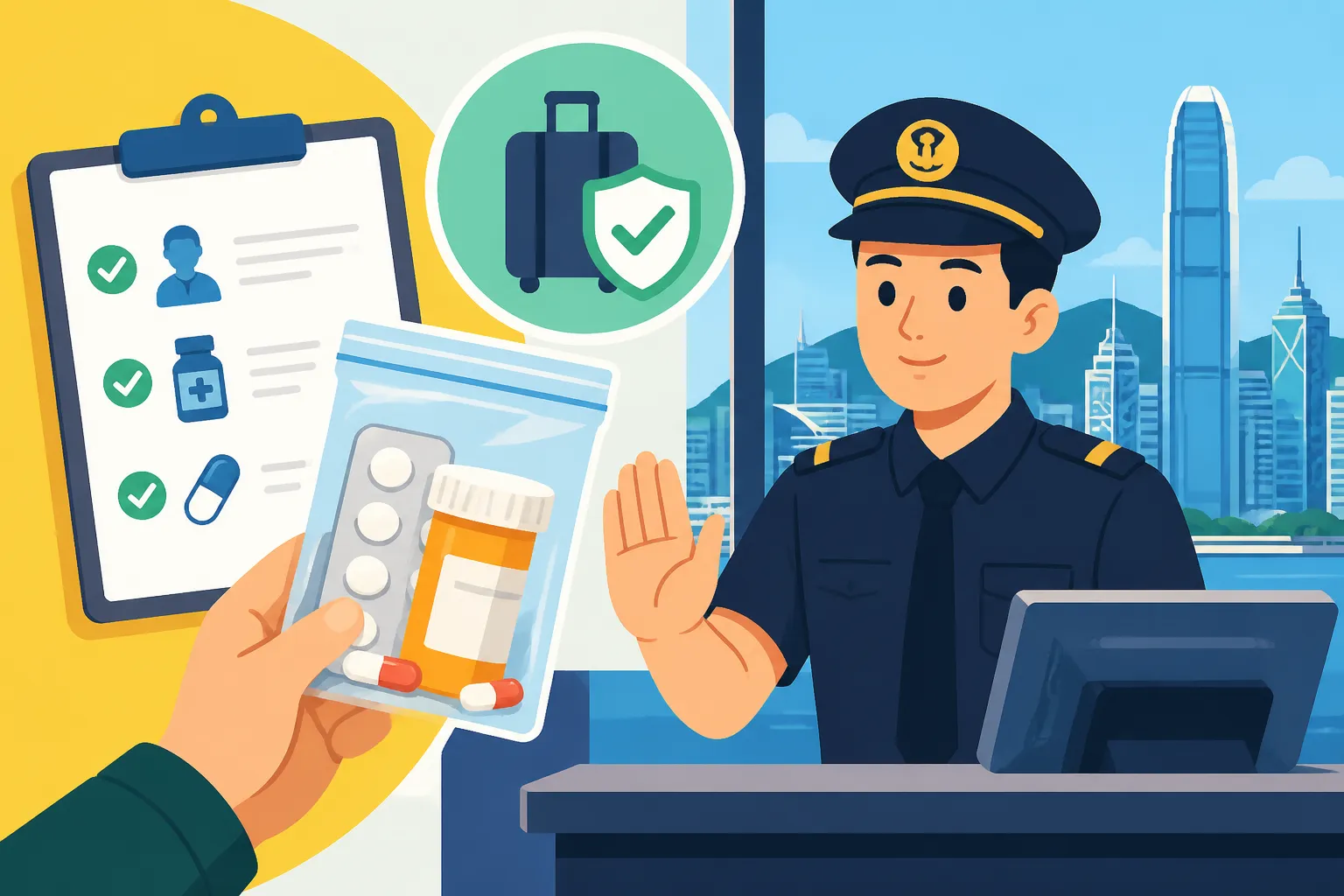
Never, and I mean never, decant your prescription pills into those plastic "Monday to Sunday" organizers before you clear customs. To the customs officer, a loose pill is an unidentified substance. By keeping everything in its original box with the pharmacy label intact, you provide immediate proof of what the substance is and who it is for.
Scenarios of Excess Supply
If you are coming from a country where medicine is significantly cheaper and you try to bring in a massive haul, be prepared for the possibility of seizure. Even if the medicine is for you, exceeding that three-month window puts you at the mercy of the individual officer's discretion. If you find yourself in this situation because of a genuine medical need, having a comprehensive letter from your specialist is your only real defense.
Categories of Controlled Substances and Narcotics
Hong Kong takes a very dim view of unauthorized "Dangerous Drugs." This isn't just about illicit street drugs; it includes many medications that are legally prescribed in the US, UK, or Australia. If your medication contains codeine, fentanyl, morphine, or certain psychotropic substances used for ADHD or severe anxiety, you are moving into high-stakes territory.
Specifically, medications like Ritalin or Concerta (methylphenidate) are heavily regulated. In Hong Kong, these are treated with extreme caution. If you are bringing these in, you cannot simply breeze through the Green Channel. You must have a prescription that matches the name on your passport. I have known parents who were nearly reduced to tears at the airport because they didn't have the right paperwork for their child's ADHD medication. Being prepared means knowing the Prescription Drug Laws: Bringing Foreign Medication into Hong Kong before you even book your flight.
Handling Narcotics and Psychotropic Meds
For these classes of drugs, the documentation requirements are much more rigid. You don't just need a prescription; you need a formal letter from your prescribing physician. This letter should state your diagnosis, the specific dosage, and the total quantity being carried. If you are carrying these for a family member, ensure the relationship is clear and that you have copies of their identification as well.
Antibiotics and the Prescription Requirement
A common mistake tourists make is bringing in "emergency" antibiotics they bought over the counter in other parts of Asia. In Hong Kong, antibiotics are strictly prescription-only. While customs may not always strip-search your bags for a single pack of Amoxicillin, if they find it during a routine check and you don't have a prescription, they can technically seize it. It's always better to understand Pharmacies and Medication in HK: Prescriptions and OTC Rules so you know how to get a legal refill once you arrive.
The Special Case of Sleeping Pills and Anti-Anxiety Meds
Benzodiazepines (like Xanax or Valium) are frequently used by travelers to cope with long-haul flight anxiety. These are psychotropic substances in the eyes of Hong Kong law. Carrying a single blister pack for the flight is rarely an issue, but bringing ten boxes for a long-term stay without a paper trail is a recipe for a long afternoon in a windowless room at HKIA.
| Medication Category | Declaration Recommended? | Documentation Needed | Max "Reasonable" Quantity |
|---|---|---|---|
| Standard OTC (Paracetamol/Ibuprofen) | No | None | Personal use amount |
| Standard Prescription (Blood Pressure/Cholesterol) | No (if under 3 months) | Original Label/Prescription | 3 Months |
| Controlled Psychotropics (ADHD/Anxiety) | Yes | Doctor's Letter + Prescription | 1-3 Months |
| Dangerous Drugs (Narcotic Painkillers) | Yes | Formal Specialist Letter | 1 Month (highly scrutinized) |
| Antibiotics | No (if small amount) | Prescription | 1 Course |
| CBD Products (Any Form) | DO NOT BRING | N/A (Illegal) | ZERO |
The Absolute Ban on CBD Products
This is the one area where I have to be incredibly blunt: do not bring any CBD products into Hong Kong. As of early 2023, CBD (cannabidiol) is classified as a "Dangerous Drug" under the same ordinance that covers heroin and cocaine. It does not matter if the THC content is 0%. It does not matter if it’s a topical oil for your knee, a gummy for sleep, or even pet treats.
The Hong Kong government has a zero-tolerance policy. If customs find CBD in your luggage, you aren't just looking at a fine; you are looking at potential criminal trafficking charges. There have been news reports of people being arrested for a single bottle of CBD oil found in their suitcases. If you are moving here, please read the guide on Bringing CBD Products into HK: Strict Legal Bans and Health Warnings to avoid a life-altering mistake.
The Zero-Threshold Reality
Unlike some countries that allow a 0.3% THC threshold, Hong Kong’s testing is extremely sensitive. They view CBD as inseparable from the cannabis plant in a legal sense. Even if your packaging says "THC-Free," the presence of the CBD molecule itself is the violation. If you have been using CBD for Managing Chronic Conditions: Diabetes and Hypertension in HK or other ailments, you must find an alternative therapy before you land.
What to Do if You Accidently Brought CBD
If you realize while on the plane that you have a tube of CBD cream in your toiletry bag, do not try to hide it. The best course of action is to dispose of it in a bin before you reach the customs hall. Once you cross that line and enter the "Green" or "Red" channel, the crime is technically committed. Do not gamble with your freedom over a bottle of supplements.
Misconceptions About Hemp Seed Oil
Hemp seed oil (which does not contain CBD or THC) is technically legal, but customs officers often can't tell the difference without a lab test. If you bring products labeled with hemp leaves, expect to be stopped, delayed, and your items potentially sent for testing. For your own sanity, just leave anything related to the cannabis plant at home.
Navigating the Red and Green Channels at HKIA
Hong Kong International Airport uses the standard Red/Green channel system. The Green Channel is for those with nothing to declare, while the Red Channel is for those carrying goods that exceed allowances or include controlled items. If you are carrying a standard supply of regular meds, you can usually walk through the Green Channel. However, if you are carrying "Dangerous Drugs" (as defined by HK law), you should technically head to the Red Channel.
If you are unsure, go to the Red Channel. The officers at Chek Lap Kok are generally professional and helpful if you are being proactive. It is much better to say, "I have these prescription painkillers and a doctor's note, do I need to declare them?" than to have them find the pills in the Green Channel, which implies an intent to smuggle. When you are covered by SafetyWing or similar travel insurance, having your paperwork in order also helps in case you need to prove the legality of your meds for a claim later.
The "Nothing to Declare" Risk
Most people choose the Green Channel out of habit. If you are stopped for a random bag check—which happens frequently—and they find a significant amount of medication without a prescription, you are in a difficult spot. While you might not get arrested for a few packs of birth control, the delay and the questioning are stressful. If you have a Private Health Insurance Plans Beyond VHIS for Expat Families provider like Cigna Global, keep their contact info handy in case you need to verify your medical history.
What Happens During a Declaration
When you go to the Red Channel, a Customs officer will ask to see your items and your documentation. They may cross-reference your meds with the "Poisons List" or the "Dangerous Drugs" registry. If everything matches your doctor's letter and the quantities are reasonable, they will simply wave you through. The process usually takes less than ten minutes.
Language Barriers and Assistance
While most customs officers speak excellent English, the medical terminology can sometimes get lost in translation. This is why having a printed doctor's letter is so much more effective than trying to explain a complex neurological condition verbally while tired from a 15-hour flight. If you need a local doctor later for a script, you might want to look into Finding English-Speaking General Practitioners (GPs) in Central to ensure there’s no confusion.
Long-Term Solutions for Expats and Residents
If you are moving to Hong Kong permanently, you cannot rely on bringing meds from home forever. Eventually, your "reasonable quantity" will run out. You need to integrate into the local system. Hong Kong has a dual healthcare system, and while public hospitals are cheap, the waiting times for a specialist who can prescribe controlled meds can be months.
For chronic conditions, I always suggest that new arrivals book a private appointment within their first two weeks. Bring your foreign medical records and your current pill bottles. A local GP can then issue a Hong Kong-valid prescription, which you can fill at a The Difference Between Registered Pharmacies (Rx) and Drug Stores or a hospital pharmacy. This local script is your ultimate legal protection while living in the city.
Using Insurance for Meds
Comprehensive expat plans from providers like Cigna Global often cover the cost of these private consultations and the prescriptions themselves. This is a lifesaver, as some specialized medications are significantly more expensive in Hong Kong than in Europe or North America. If you are just visiting, SafetyWing can be a great safety net for emergency medical needs, though they generally don't cover routine refills of pre-existing meds.
Refills and Public Hospitals
If you are using the public system, you can learn How to Get Repeat Prescriptions from a Public Hospital Pharmacy, but be prepared for the process to be slower. The public system uses a specific formulary, so the exact brand you used back home might not be available. A local doctor will help you find the equivalent brand available in Hong Kong.
Disposing of Excess Medication
If you brought too much or your treatment changes, do not just throw pills in the trash. Hong Kong has specific guidelines on Where to Dispose of Expired Prescription Medications Safely in HK. Many public hospitals and certain pharmacies have collection points to ensure chemicals don't end up in the landfill or the harbor.
Final Advice for a Stress-Free Arrival
The most important thing you can do is stay organized. Treat your medication like you treat your passport: it's a vital document that needs to be presented clearly and honestly. If you are honest about what you are carrying, have the right paperwork, and stay away from the "no-go" items like CBD, you will find that Hong Kong Customs is one of the most efficient and reasonable in the world.
Don't let the fear of a bag check ruin your first impression of this incredible city. I’ve gone through those gates dozens of times, and as long as I’ve had my "expat survival kit" of documents ready, it’s been a breeze. Welcome to Hong Kong—just remember to leave the CBD gummies at the departure gate.
Disclaimer
This guide is for informational purposes only and does not constitute legal or medical advice. Hong Kong's laws and customs regulations can change without notice. Always check the latest updates from the Hong Kong Customs and Excise Department and the Department of Health before traveling. Be aware that the "reasonable quantity" is at the sole discretion of the customs officer on duty.