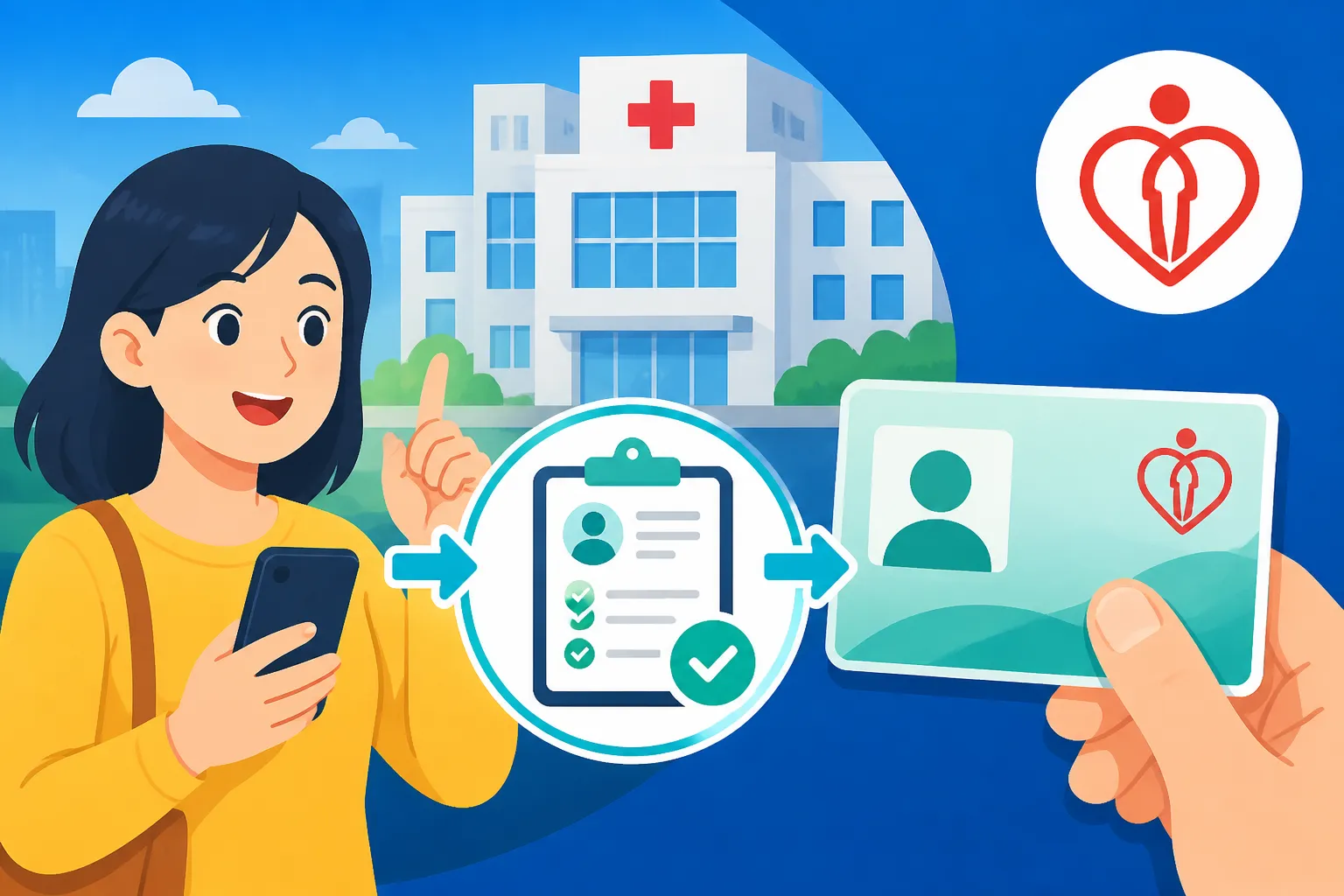
How to Register for a Hospital Authority Patient Number
Imagine waking up with a sharp pain in your side or a persistent high fever, only to realize you have no idea how to access Hong Kong's public medical records system. I remember standing in the fluorescent-lit lobby of a public hospital, clutching my new HKID and feeling completely overwhelmed by the administrative paperwork required just to see a doctor. This guide solves that confusion by walking you through the exact process of registering for a Hospital Authority Patient Number so you can access subsidized care without the stress.
Why a Hospital Authority Patient Number is Essential for Every Expat
In Hong Kong, the healthcare landscape is divided into two distinct worlds: the private sector and the public sector managed by the Hospital Authority (HA). While the private sector offers speed and luxury, the public sector is the backbone of the city’s medical infrastructure, especially for emergencies and chronic condition management. To interact with this massive public system, you need a Hospital Authority Patient Number. This is a unique identifier that links your medical history, prescriptions, and appointment records across all 43 public hospitals and over 120 clinics in the territory.
Having this number is not just about bureaucracy; it is about safety and efficiency. If you are ever rushed to an Accident and Emergency (A&E) ward, having a pre-existing patient record allows doctors to instantly see your blood type, allergies, and past medical history. Without it, you are a "new case," which often involves more redundant paperwork during a time of crisis. Furthermore, the patient number is the key to unlocking the heavily subsidized rates offered to residents. For those who are still waiting for their residency documents to be finalized, products like SafetyWing can provide a crucial safety net, but once you have your HKID, the HA system becomes your primary point of contact for affordable care.
The system is remarkably centralized. Once you register at one facility, your data is available at every other public facility in the city. This level of integration is something many expats from the US or Europe find surprisingly advanced. However, the registration process itself has a few quirks that are much easier to handle if you know what to expect before you step through the hospital doors.
Determining Your Eligibility for Subsidized Rates
Before you rush to register, you need to understand where you fit in the Hospital Authority’s fee structure. The patient number itself is available to anyone, but the cost of the services it tracks depends entirely on your residency status. The HA classifies patients into two main categories: Eligible Persons (EP) and Non-Eligible Persons (NEP).
Eligible Persons include holders of a Hong Kong Identity Card (HKID) issued under the Registration of Persons Ordinance, children under 11 years of age who are Hong Kong residents, and other specific categories approved by the Chief Executive. If you are in Hong Kong on a work visa, a dependent visa, or a student visa, you are an Eligible Person. This status allows you to access Hospital Authority Fees: Eligible Persons (EP) vs Non-Eligible Persons (NEP) at a fraction of the cost of private care. For instance, an A&E visit for an EP is currently HK$180, whereas an NEP would pay over HK$1,200.
If you are a tourist or a short-term visitor without an HKID, you are considered a Non-Eligible Person. While you can still get a patient number and receive treatment, you will be billed at the full market rate. For those in this transitional phase, maintaining international coverage through SafetyWing is highly recommended to avoid staggering bills. Understanding your status is the first step because it dictates which documents you need to present at the registration counter.
The In-Person Registration Process at a Public Hospital
The most traditional way to get your Hospital Authority Patient Number is to visit the registration office of any public hospital. You do not need to be sick to do this; in fact, I highly recommend doing it as part of your Essential Health Checklist for Your First 30 Days in Hong Kong before any medical need arises.
Locating the Registration Office
Every public hospital, such as Queen Mary Hospital on the Island or Queen Elizabeth Hospital in Kowloon, has a dedicated "Admission and Registration" counter. These are usually located near the main entrance or the A&E department. Look for signs in English and Chinese that say "Registration" or "Shau Kei Wan." When you arrive, you will likely need to take a numbered ticket from a small kiosk. The staff at these counters are almost always fluent in English, so do not worry about a language barrier.
Presenting the Required Documentation
To successfully register and receive your patient number, you must bring original documents. Photocopies are rarely accepted. You will need:
- Your original HKID card (or your passport if the HKID is still being processed).
- A valid visa (if applicable), which is now usually an e-visa printout.
- Proof of address in Hong Kong, such as a utility bill or a bank statement issued within the last three months.
The staff will enter your details into the CMS (Clinical Management System). Once finished, they will often give you a small card or a printout containing your unique Patient Number. Keep this number safe; you will need it for every future interaction with the public system, including Using the HA Go App for Booking Public Outpatient Clinics.
Managing Registration for Dependents
If you have children or elderly parents living with you, you can register them at the same time. For children under 11, you will need their birth certificate and their HKID (if they have one). For spouses, you should bring their original HKID. It is much easier to register the whole family in one go than to make multiple trips. If you find the public system's paperwork daunting, some expats prefer to maintain Private Health Insurance Plans Beyond VHIS for Expat Families to have a dedicated agent handle these logistics, but the HA registration is still a mandatory foundation for public emergency access.
Digital Registration via the HA Go Mobile App
In recent years, the Hospital Authority has moved aggressively toward digitalization. The HA Go app is now the primary tool for patients to manage their healthcare. While you can start the registration process on the app, there is a "validation" step that still requires a physical presence, but it is much faster than the traditional counter method.
Downloading and Setting Up the App
The first step is to download the HA Go app from the Apple App Store or Google Play Store. You will need a local Hong Kong mobile number to receive a verification SMS. Once you create an account, the app will ask for your HKID details. At this stage, your account will have "limited" status. You will be able to see some information, but you won't have full access to your medical records or the ability to book certain appointments until your identity is verified.
The Verification Step at a Kiosk or Counter
To fully activate your account and officially secure your patient number in the digital system, you must visit an "HA Go" verification point. These are located in almost every public hospital and many specialist clinics. You can find them by looking for the bright purple HA Go kiosks. You simply scan your HKID and use the app to scan a QR code on the kiosk screen. Alternatively, you can go to the registration counter and tell the staff you need to verify your HA Go account.
Once verified, the app becomes incredibly powerful. You can use it for Registering Your HKID for Subsidized Public Healthcare Rates, viewing your lab results, and even paying your bills. It also lists your patient number clearly in the profile section. For those who travel frequently and use Cigna Global for their international needs, having your local HK records accessible via your phone is a fantastic way to ensure continuity of care if you need to share data with overseas providers.
Required Documents Checklist
To make your trip to the hospital as smooth as possible, refer to the table below to ensure you have everything you need based on your specific situation.
| Patient Category | Primary Identity Document | Supporting Documents |
|---|---|---|
| Hong Kong Resident (Work/Dependent Visa) | HKID Card | Proof of HK address (Utility/Bank) |
| Child (Under 11) | Birth Certificate | Parent's HKID and Proof of Address |
| Newborn Baby | Birth Return from Hospital | Parent's HKID and Marriage Certificate |
| Tourist / Non-Resident | Passport | Entry Slip (from Immigration) |
| New Arrival (HKID Pending) | Passport | HKID Application Receipt (ROOP 140) |
Navigating the Public System Once Registered
Once you have your Hospital Authority Patient Number, you are officially "in the system." However, the public healthcare experience in Hong Kong is very different from the private one. You should be prepared for a triage-based approach.
If you are visiting a General Outpatient Clinic (GOPC), you will find that appointments can be hard to come by. Most people book these through the HA Go app or a dedicated telephone booking system. When you arrive for your appointment, you will go to a self-service kiosk, scan your HKID (which is linked to your patient number), and pay the subsidized fee (usually around HK$50 for a consultation and basic medication).
For specialist care, the process is more complex. You cannot simply book a specialist in the public system. You must first have a referral letter from a local doctor (either a public GOPC doctor or a private GP). Once you have that referral, you take it to the specialist clinic, and they will assign you a priority category based on the urgency of your condition. This is where many expats choose to use Private Hospitals in Hong Kong: Admission, Costs, and Insurance because the wait times for non-urgent public specialist appointments can stretch into months or even years. Companies like Cigna Global are popular among the expat community precisely because they allow you to bypass these public waitlists for elective surgeries while still keeping your public patient number ready for emergencies.
Why You Should Link Your Patient Number to the eHealth System
Beyond the Hospital Authority, Hong Kong has a territory-wide Electronic Health Record Sharing System called eHealth. This is a separate but related system that allows private doctors and public doctors to share your medical records with your consent.
When you register for your HA Patient Number, I highly recommend also signing up for eHealth. This ensures that if you see a private GP in Central for a flu shot, and later end up in a public hospital, the public doctors can see the medications the private GP prescribed. It prevents dangerous drug interactions and saves you from having to remember every medical detail under pressure. You can easily link these during your Healthcare in Hong Kong: Public vs Private Systems Explained (2027) journey through the HA Go app or at the registration counter.
Common Pitfalls and How to Avoid Them
One of the biggest mistakes I see expats make is assuming that a "Medical Card" from their employer is the same as being registered with the Hospital Authority. It is not. Your employer's insurance card is for private clinics; the HA Patient Number is for the public government system. You need both to be fully covered.
Another common issue is outdated address information. If you move from Mid-Levels to Sai Kung, you must update your address with the HA. You can do this via the HA Go app or at any registration counter. If the address on their file doesn't match your current proof of address, it can cause delays in receiving appointment letters or bills, which might affect your Hospital Authority (HA) Guide: Accessing Public Healthcare for Expats experience.
Finally, remember that the public system is extremely strict about the "Eligible Person" status. If your visa has expired and you are waiting for a renewal, you might be charged NEP rates until you can show a valid visa or a "Notice of Application" from the Immigration Department. If you find yourself in a visa limbo, ensure you have travel or transition insurance like SafetyWing to cover the price gap.
Summary of Benefits for Registered Patients
- Subsidized Care: Access to the lowest possible rates for consultations, surgeries, and hospital stays.
- Centralized Records: One medical file accessible across all 43 public hospitals.
- Emergency Readiness: Faster triage and better safety in A&E situations.
- Digital Management: Full use of the HA Go app for payments and appointments.
- Medication Continuity: Easy access to How to Get Repeat Prescriptions from a Public Hospital Pharmacy.
By taking an hour out of your afternoon to visit a local hospital and secure your Hospital Authority Patient Number, you are providing yourself and your family with the ultimate peace of mind. Hong Kong’s public healthcare is world-class in quality; the only hurdle is the initial administrative setup. Once that is done, you can navigate the city with the confidence that you are protected by one of the best medical systems in Asia.
Disclaimer
This guide is for informational purposes only and does not constitute legal or medical advice. Healthcare regulations, fees, and Hospital Authority policies in Hong Kong are subject to change. Always verify the latest requirements with the official Hospital Authority website or a qualified medical professional.